



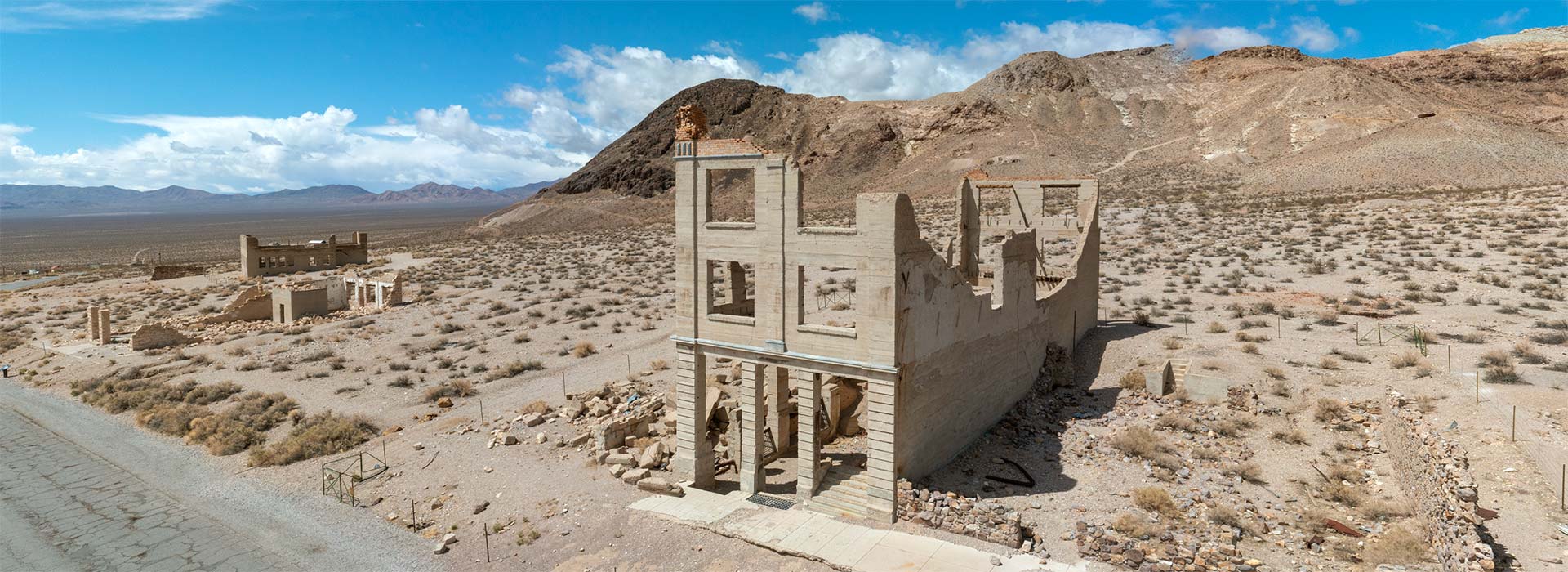
04 Jan Rhyolite: the Life and Death of a Boom Town
In 1903 there were no buildings, no roads, and no people in what was to become Rhyolite. Only five years later some 6,000 optimists lived in an area that was served by three different railroads: the fourth-largest town in Nevada. But less than a decade afterwards silence returned to this remote desert valley, as only a handful of people remained.
Most websites about Rhyolite focus upon its current status as Nevada’s most visited ghost town, with but a passing reference to its brief but incandescent lifetime. While we will expend considerable pixels on the ghost town of Rhyolite, we will begin with an exploration of the town’s brief lifetime, and the people who lived it.
The text below will, however, only tell part of the story. Informational pop-ups found throughout the VR tour will fill in many of the details.
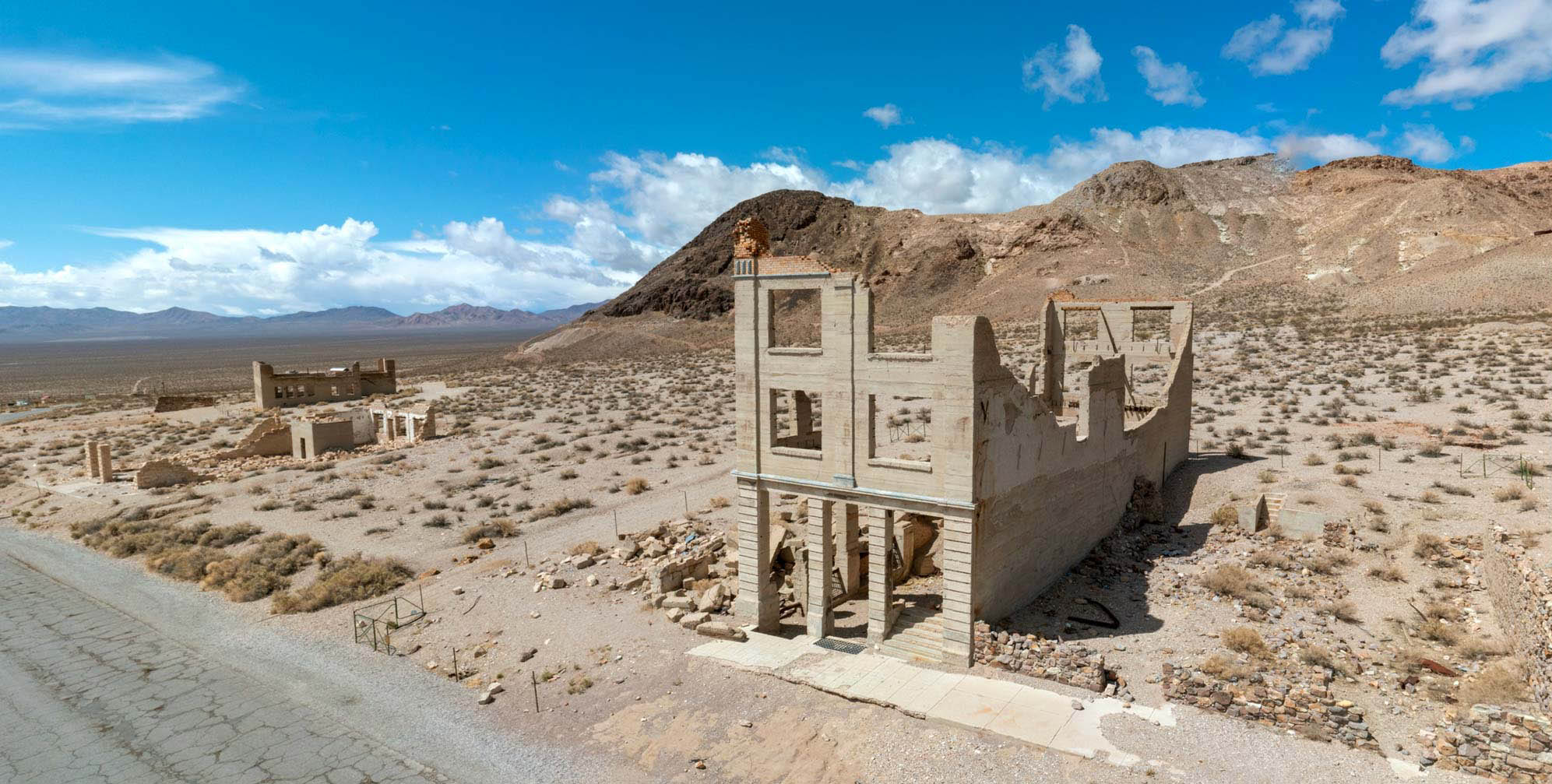
There are some 50 different locations within the tour. Drag to rotate the point of view. Click the red hotspots to navigate to the different locations. Click the blue ⓘ button in the toolbar to toggle the info features. Click the “M” button (or type “m”) to toggle the navigational map.
Rhyolite lies in the Bullfrog Hills of Nye County, about three miles west of Beatty, on the eastern flank of Death Valley and near the Nevada–California line. The townsite sits in an arid basin at the northern edge of the Mojave Desert, within a region shaped by Miocene volcanic activity that produced extensive ash flows and the rhyolitic rocks that gave the town its name.
The town was once the commercial center of what was known as the Bullfrog Mining District, an aggregation of camps and townsites—Bullfrog, Beatty, Rhyolite, Pioneer and others—focused on gold-bearing veins in the Bullfrog Hills and adjacent Grapevine Mountains. This setting meant that any settlement would depend entirely on imported water, food, and capital, while being highly exposed to mining’s boom‑and‑bust cycle.
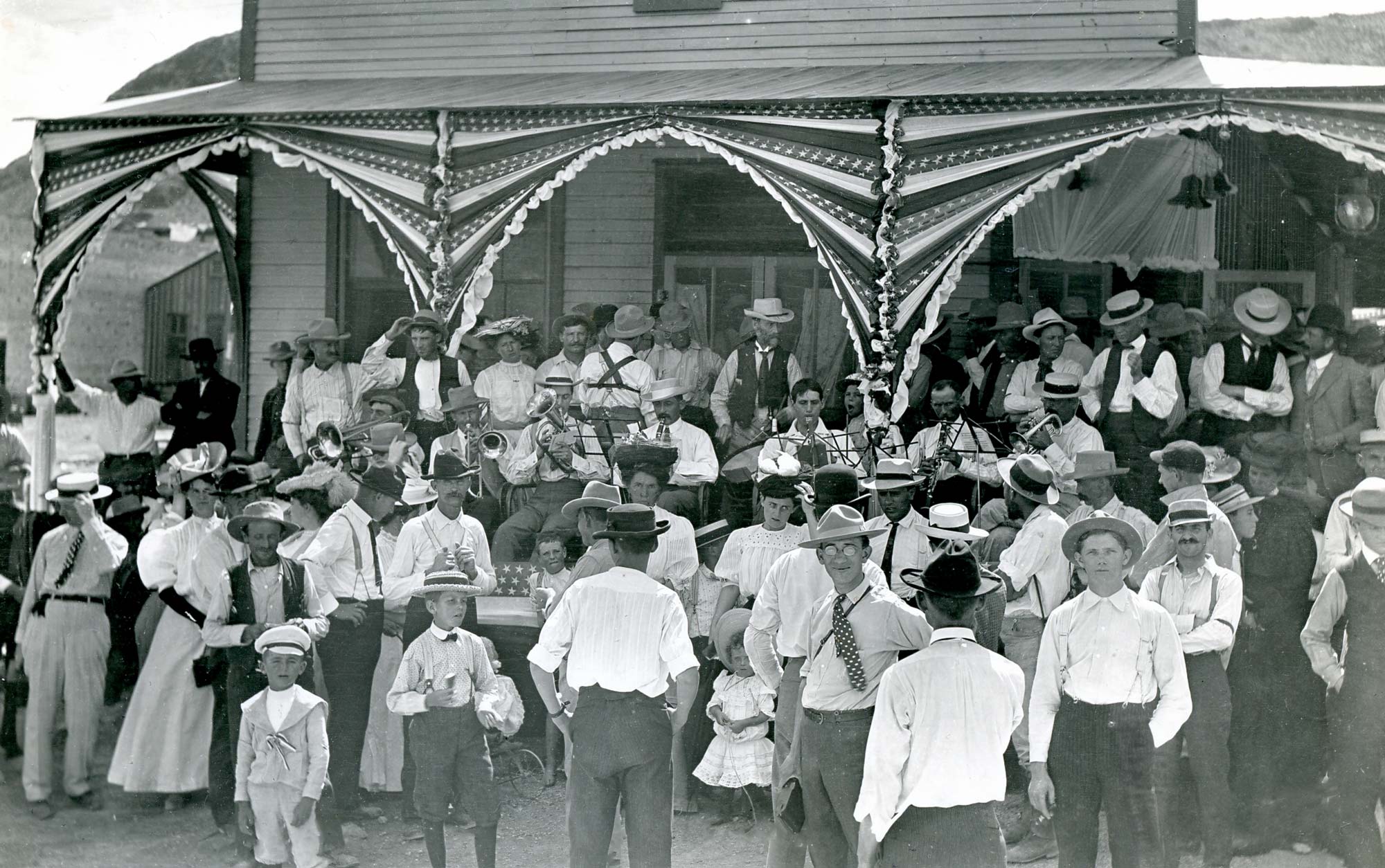
Rhyolite as a Boom Town.
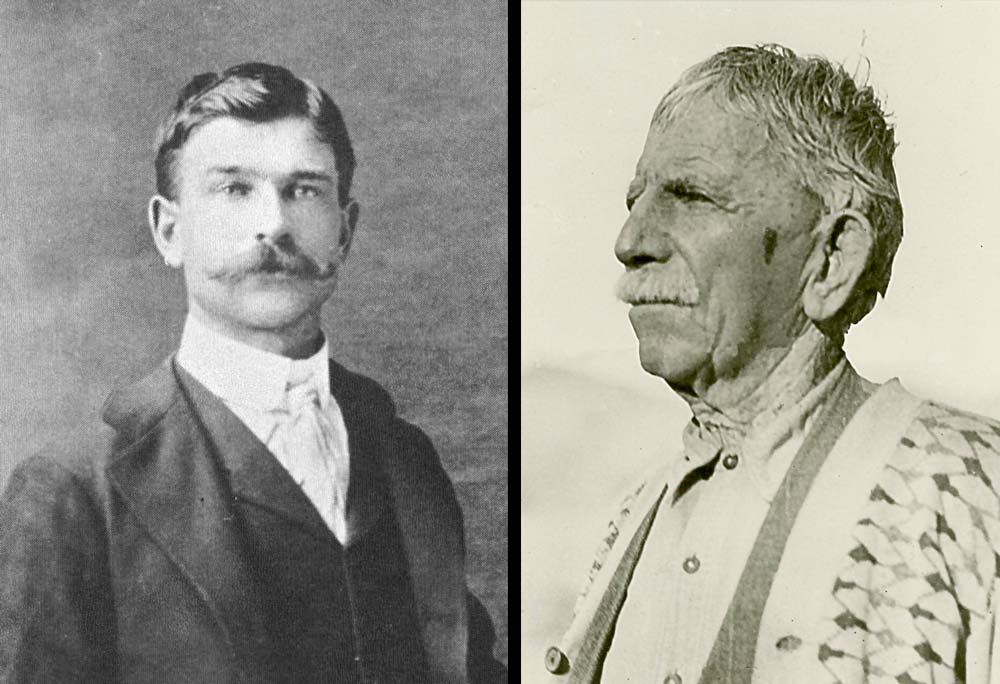
The catalyst for Rhyolite’s birth was the discovery of rich gold ore by Frank “Shorty” Harris and Ernest (Ed) Cross in early August 1904, on ground they named the Bullfrog claim. They found green‑hued quartz “full of free gold,” assaying at hundreds of dollars per ton, and carried samples to Goldfield, where news of the strike triggered an intense rush into what became the Bullfrog District.
Within months, camps with names like Orion, Amargosa, Bonanza, Bullfrog and others appeared, shifted, merged, or disappeared as prospectors chased new showings. In November 1904, promoters A. G. Cushman, Percy Stanley, C. L. Elliott and Frank J. Busch staked out a new townsite called Rhyolite, which was formally platted on 15 January 1905 and began selling lots a month later.
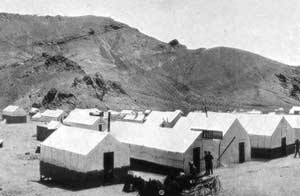
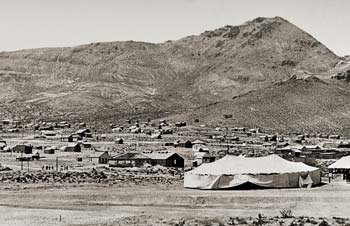
Rhyolite’s location, slightly removed from the earliest Bullfrog workings but central to a ring of mining prospects, gave it an advantage over rivals. Rough canvas tents quickly gave way to more substantial wooden buildings as merchants, freighters, saloon‑keepers, lawyers, and speculators followed the miners into the district.
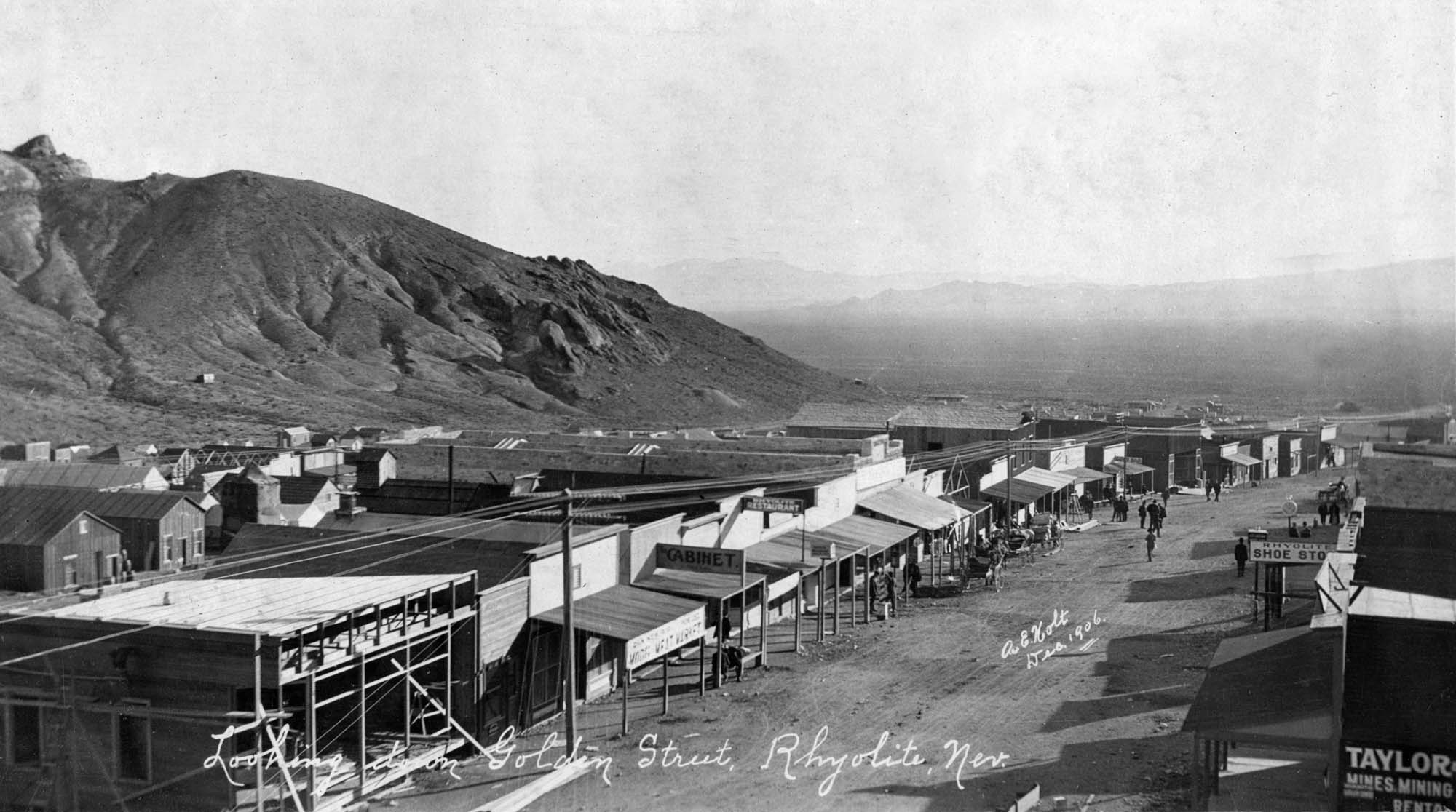
By spring 1905, Rhyolite already boasted dozens of businesses, including saloons, boarding houses, general stores, and a rudimentary postal service.
An actual USPS post office opened on 17 June 1905 in a tent on Golden Street, and telephone service began the same year, linking the rapidly growing town to outside markets.
Growth was explosive. Contemporary accounts suggest that by 1906–1907, Rhyolite’s permanent population was in the low thousands, with a much larger transient population of miners and speculators passing through. Estimates range from 3,000 to perhaps 6,000–8,000 people at peak when the outlying areas and temporary residents are included, making it briefly one of the largest towns in Nevada.
Rhyolite’s boosters set out to build a city, not a canvas camp. By 1907 the town could claim:
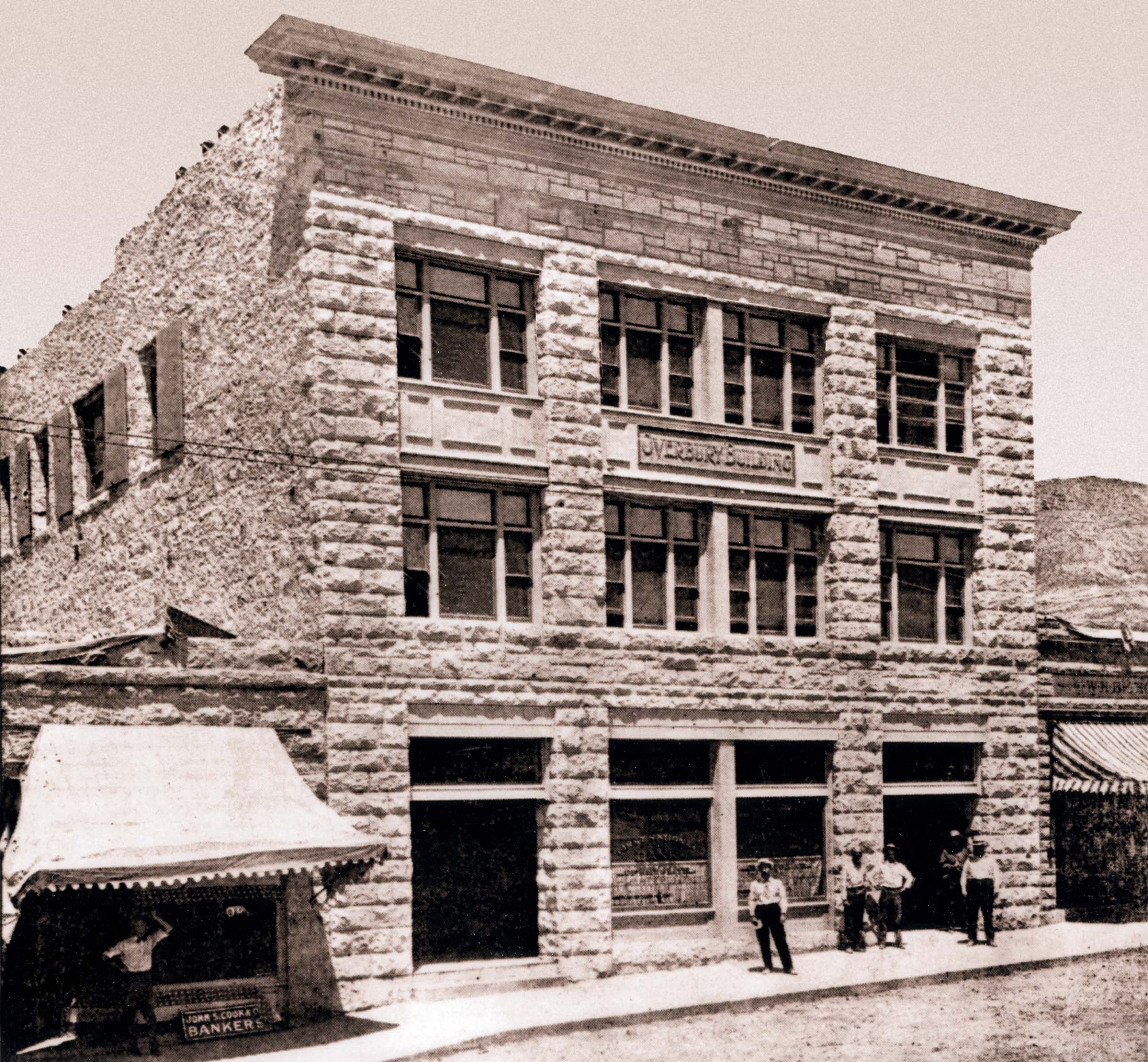
• Multiple banks, including the substantial three‑story reinforced‑concrete Cook Bank building on Golden Street.
• Electric power, with poles erected in early 1907 and lights delivered to town by April 25 of that year.
• Three water systems, piping water from springs near Beatty and Buck Springs over the hills and into town by gravity.
• A telephone exchange behind the Cook Bank and long‑distance connections via Las Vegas and Goldfield.
• A steam laundry, foundries and machine shops, blacksmiths, slaughterhouse, dairies supplied from Amargosa, and a range of retail stores.
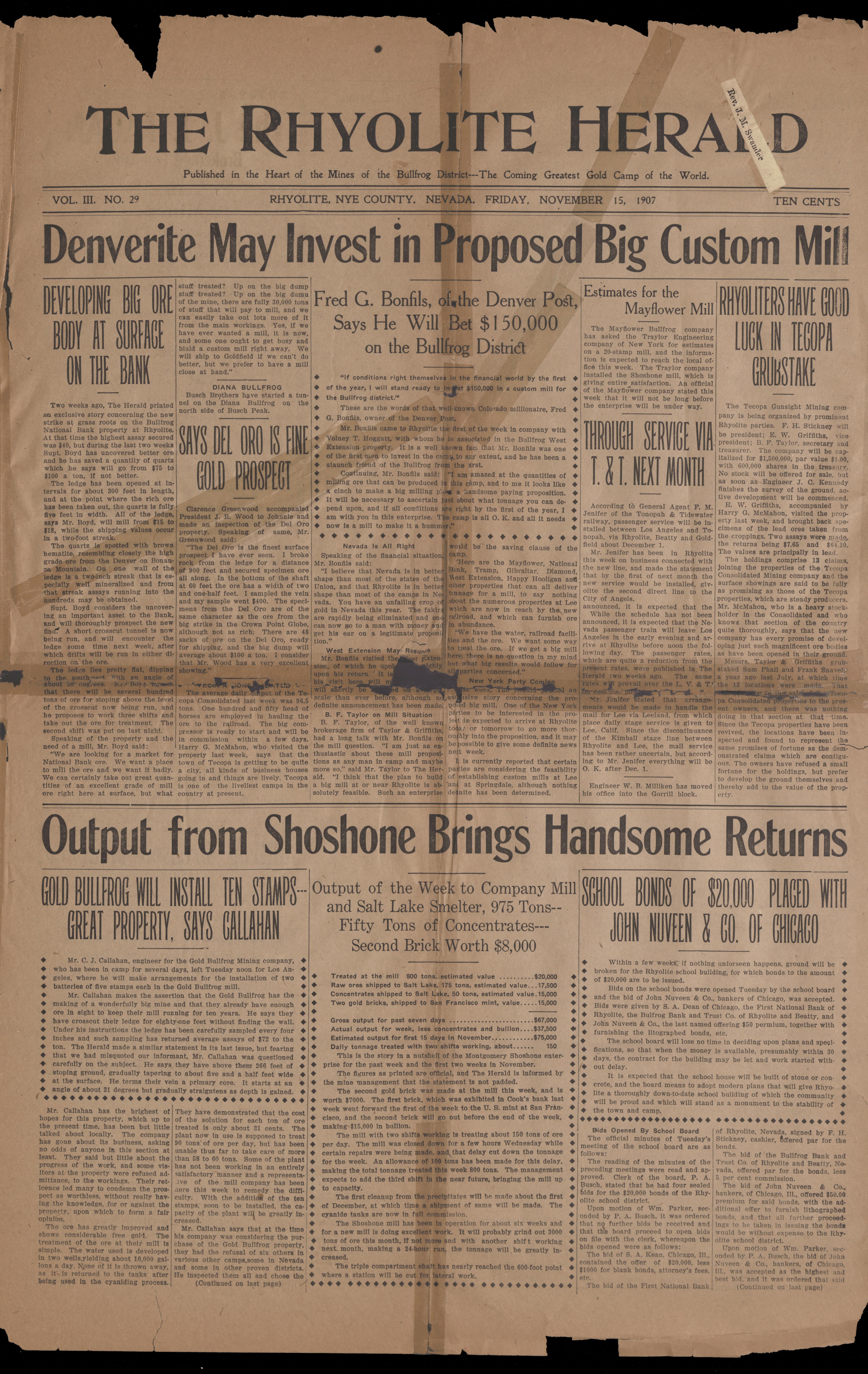
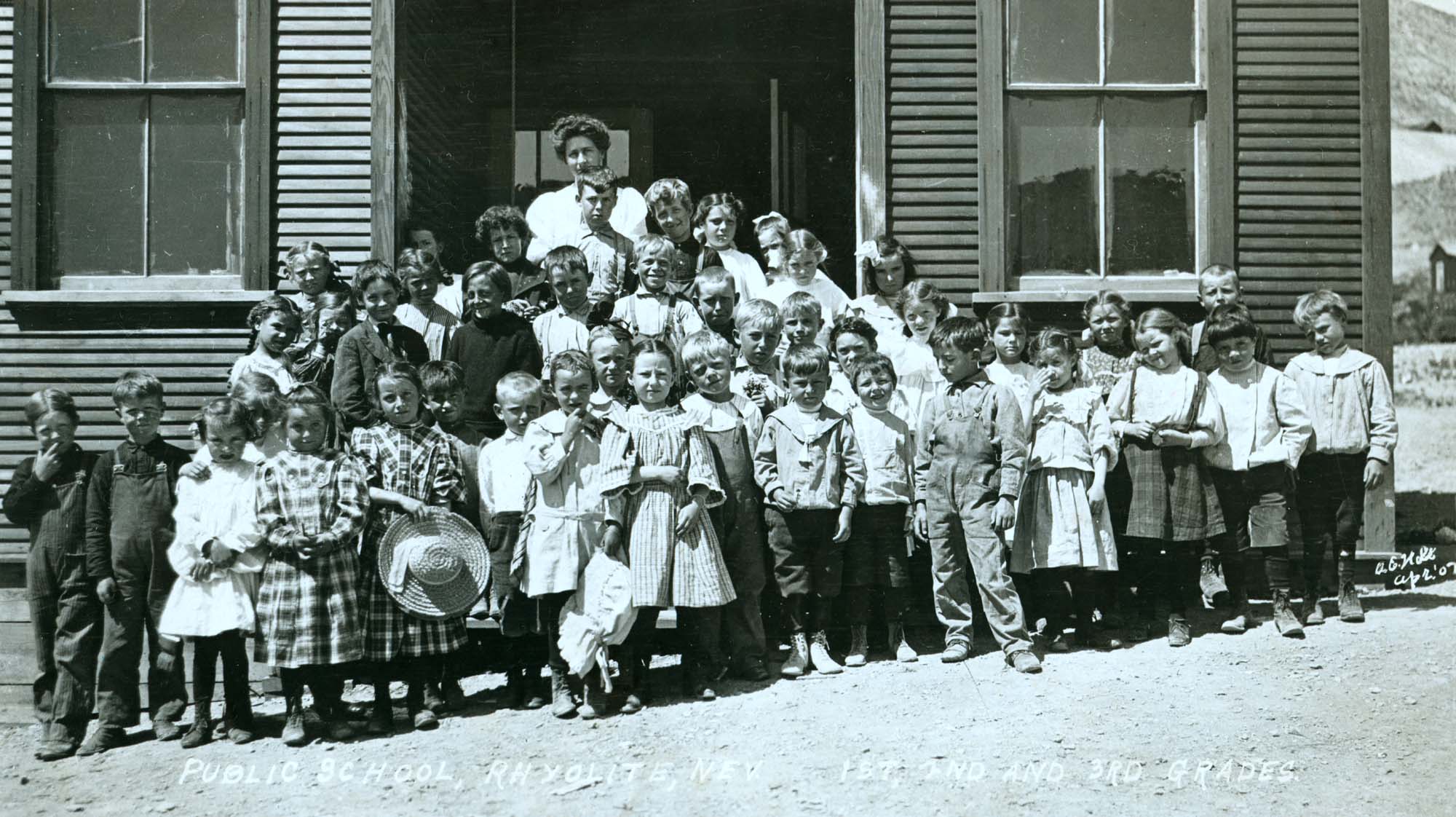
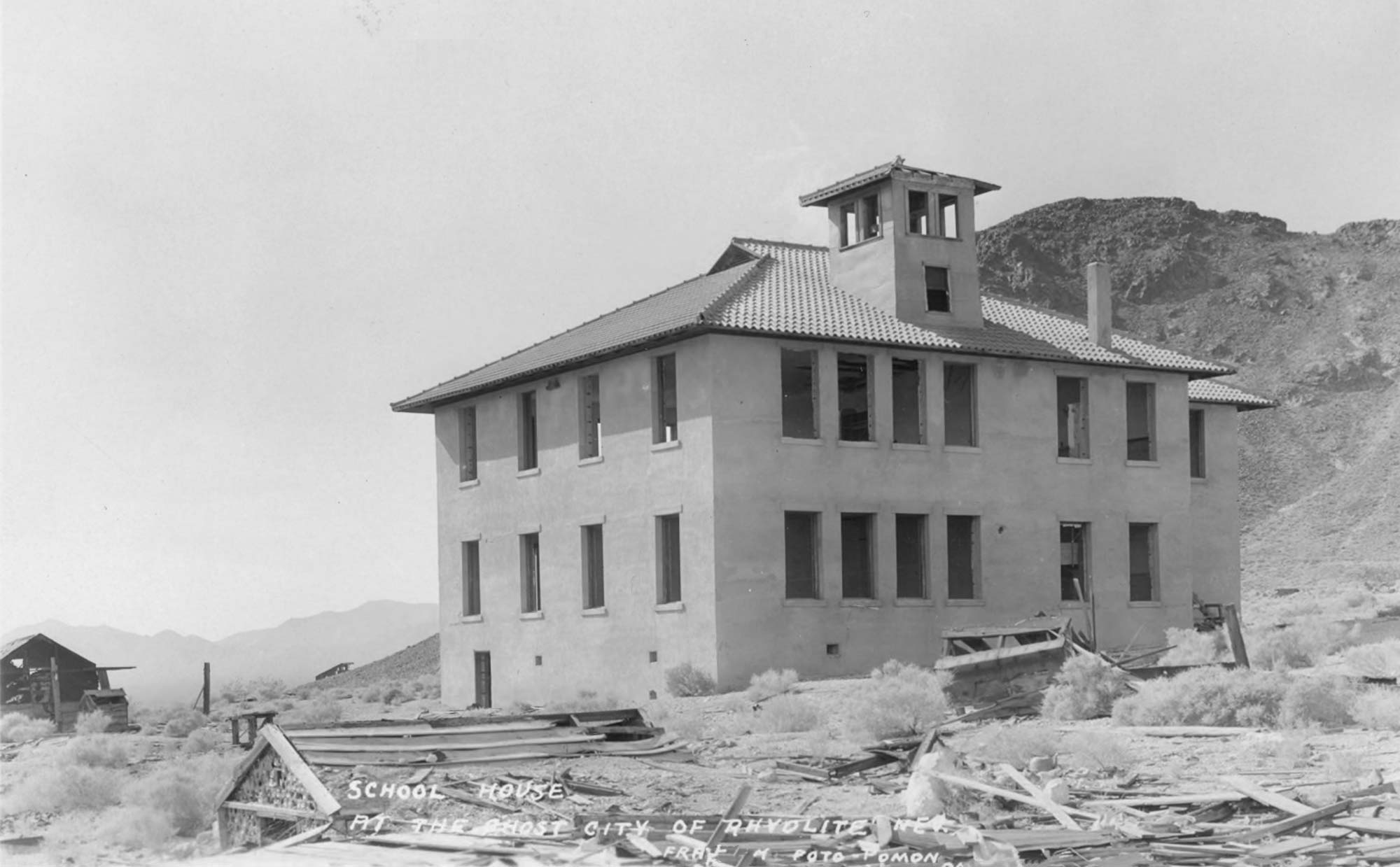
Social and civic institutions were equally ambitious. The town supported newspapers (notably the Rhyolite Herald), a stock exchange, a Board of Trade, fraternal lodges, churches, and a Miners Union Hospital linked to the Bonanza Miners Union. A school district was organized almost as soon as the camp formed; after initial classes in temporary buildings, bonds were approved in 1907 for a large two‑story concrete school completed in late 1908, with elementary school classes as well as a high‑school department.
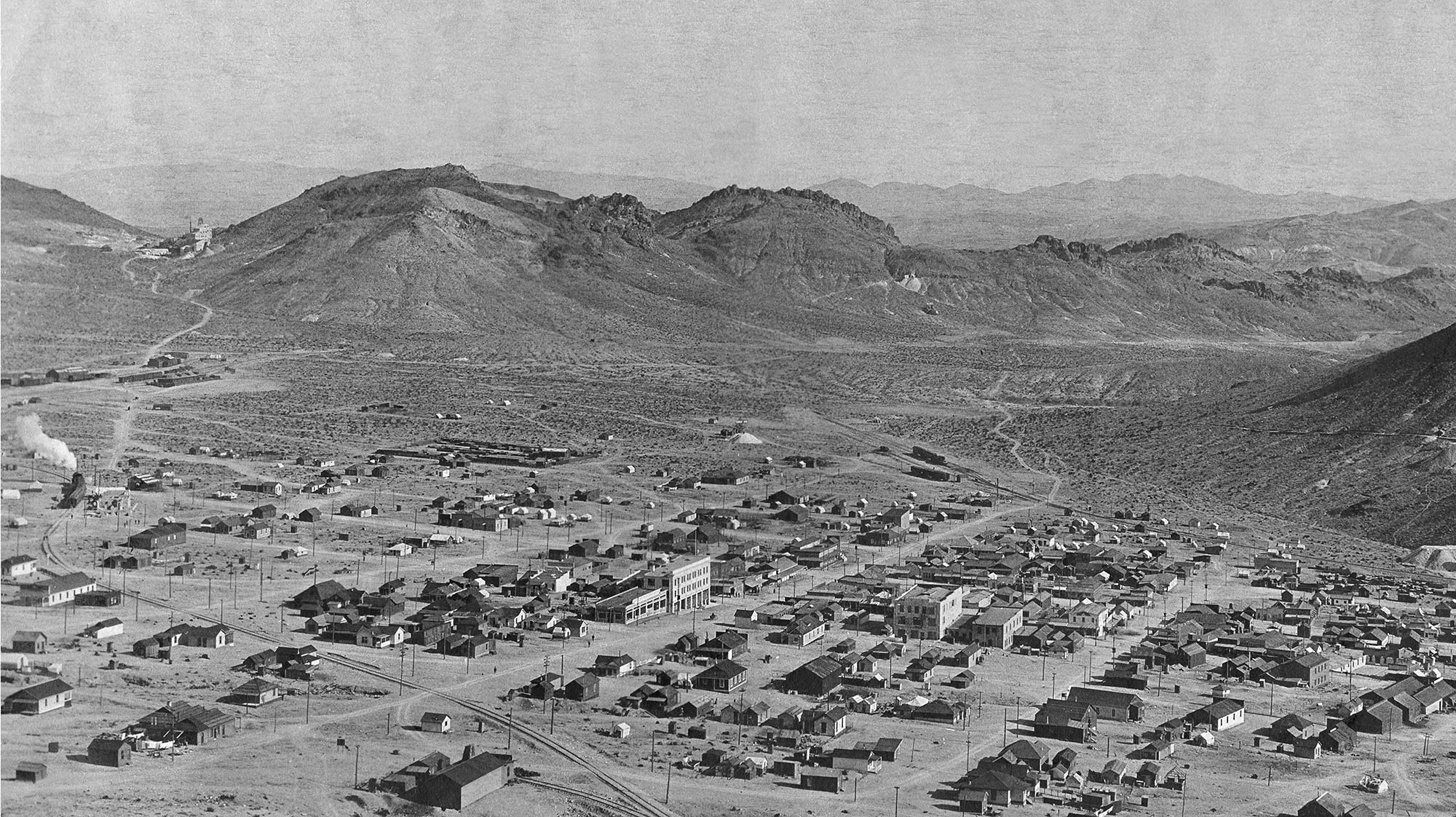
Click the image above for a zoomable high-resolution view of Rhyolite in 1908.
Double-click for full-screen view. Drag to rotate the point of view. Use the + and – buttons to zoom in or out. You can also use the mouse wheel, or pinch on a trackpad/touchscreen. The resolution of this archival image was increased to allow the zoom feature.
To see the town (1908) from up on Ladd Mt., on the other side of the valley, click here.
To see the town after a snowstorm click here.
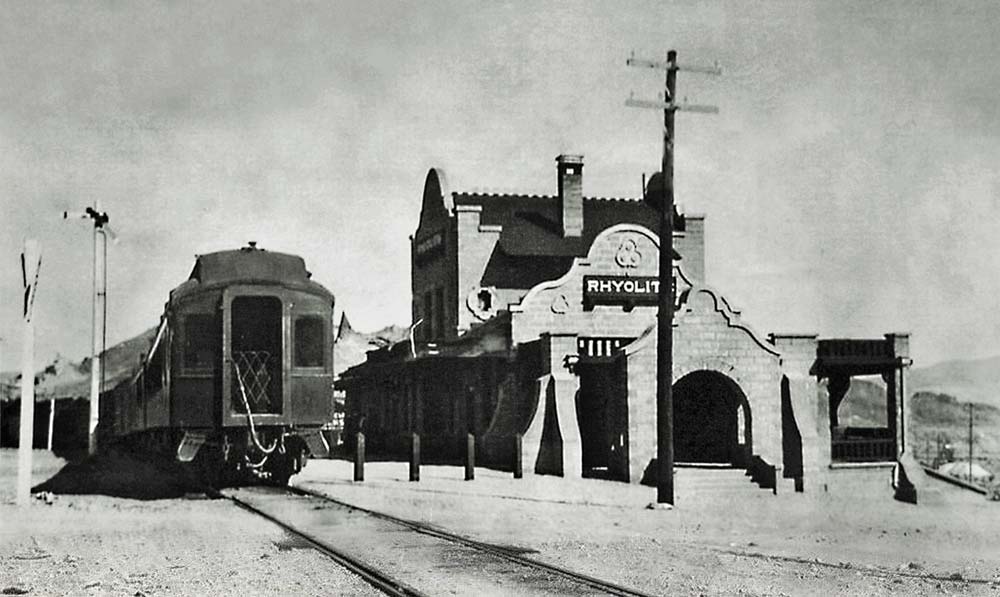
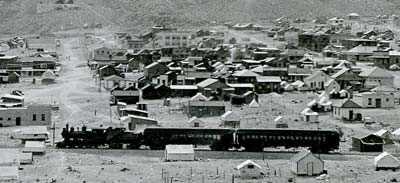
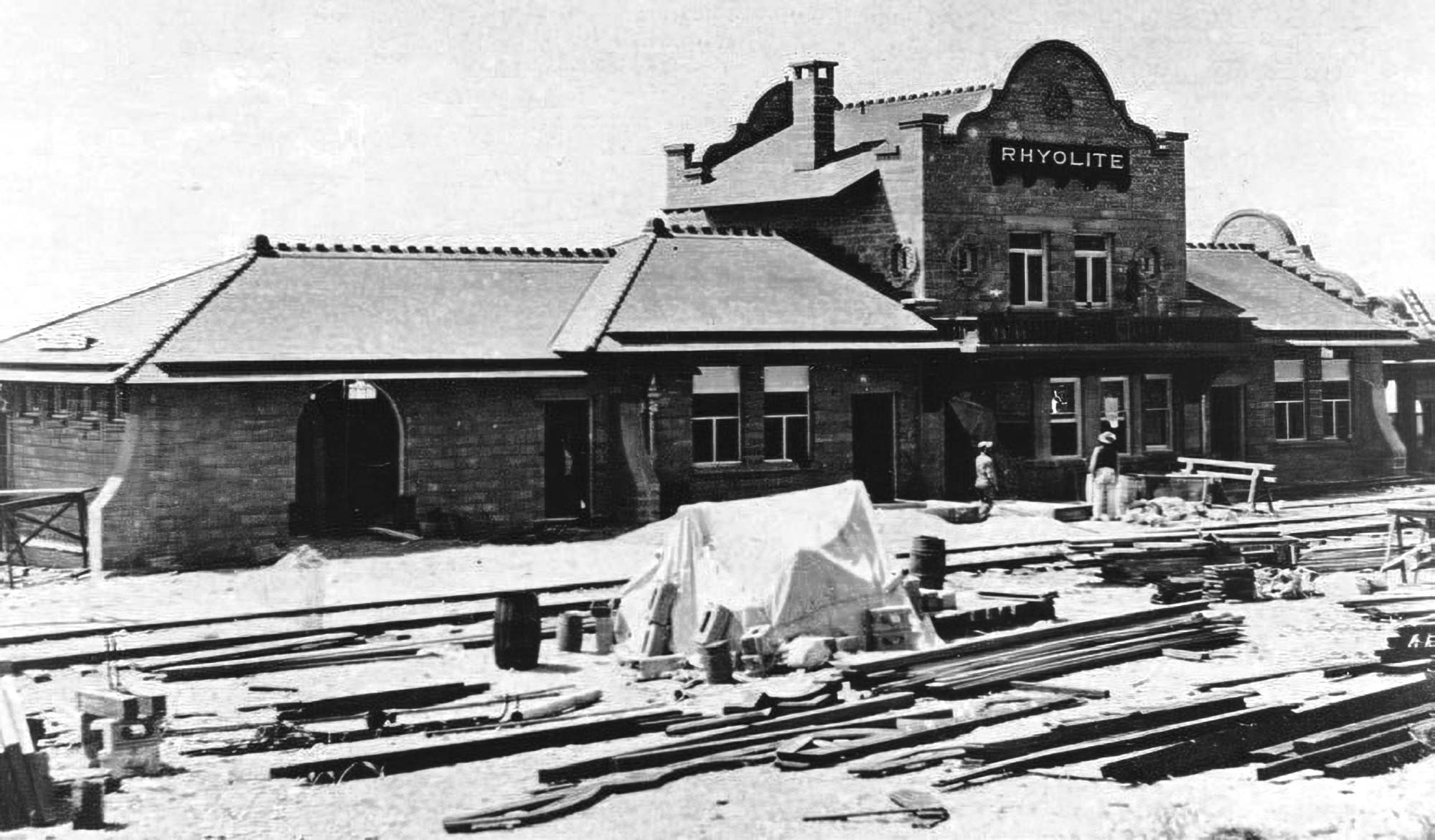
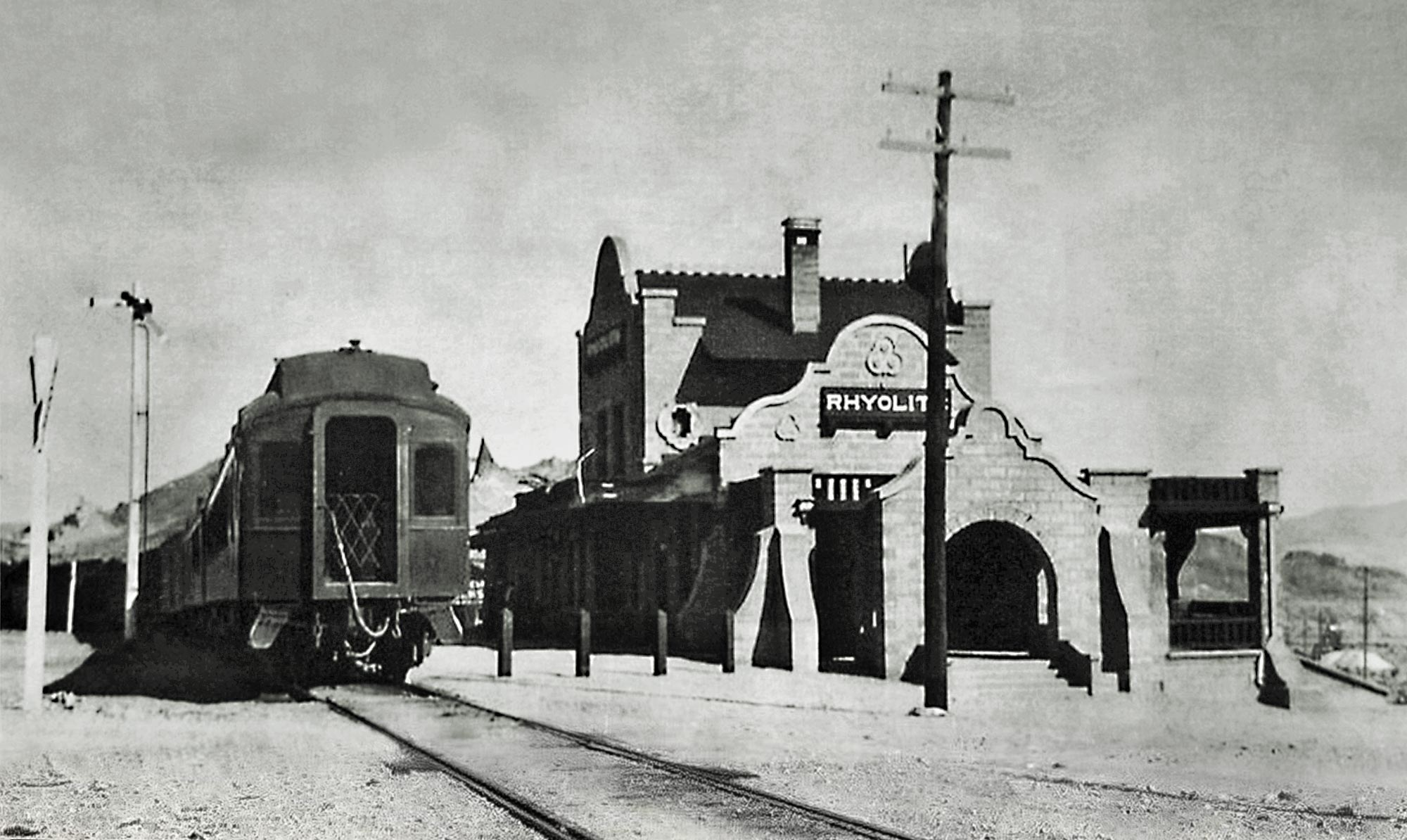
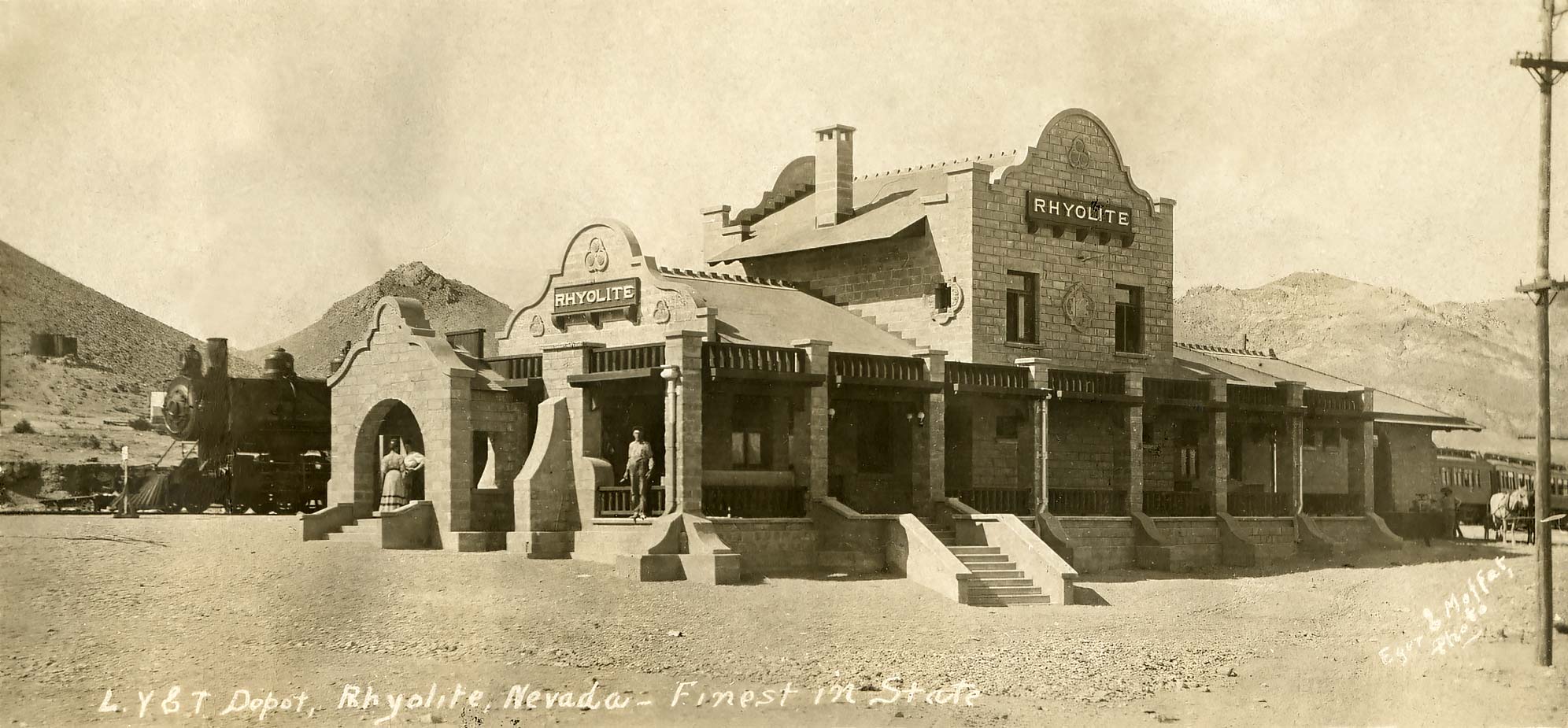
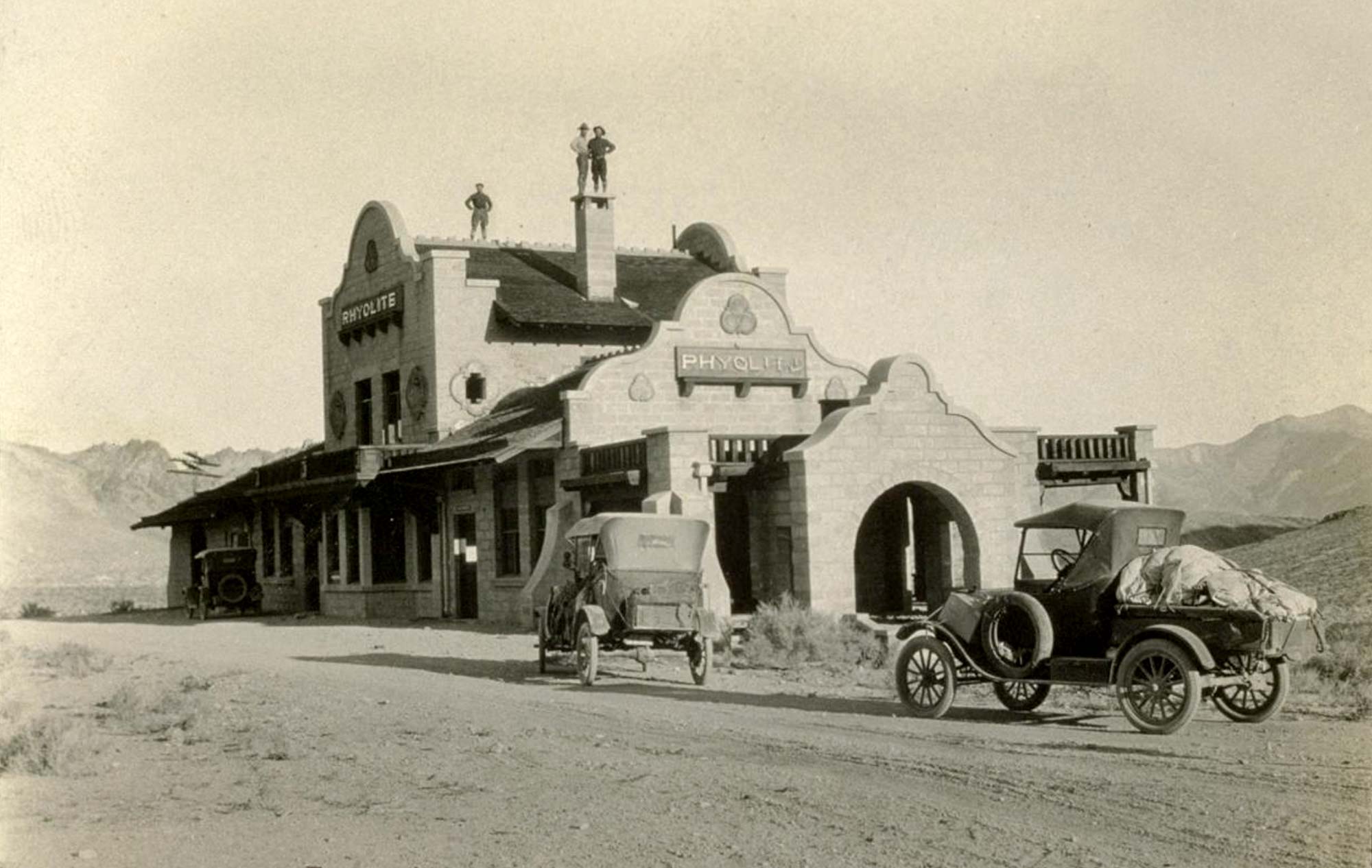
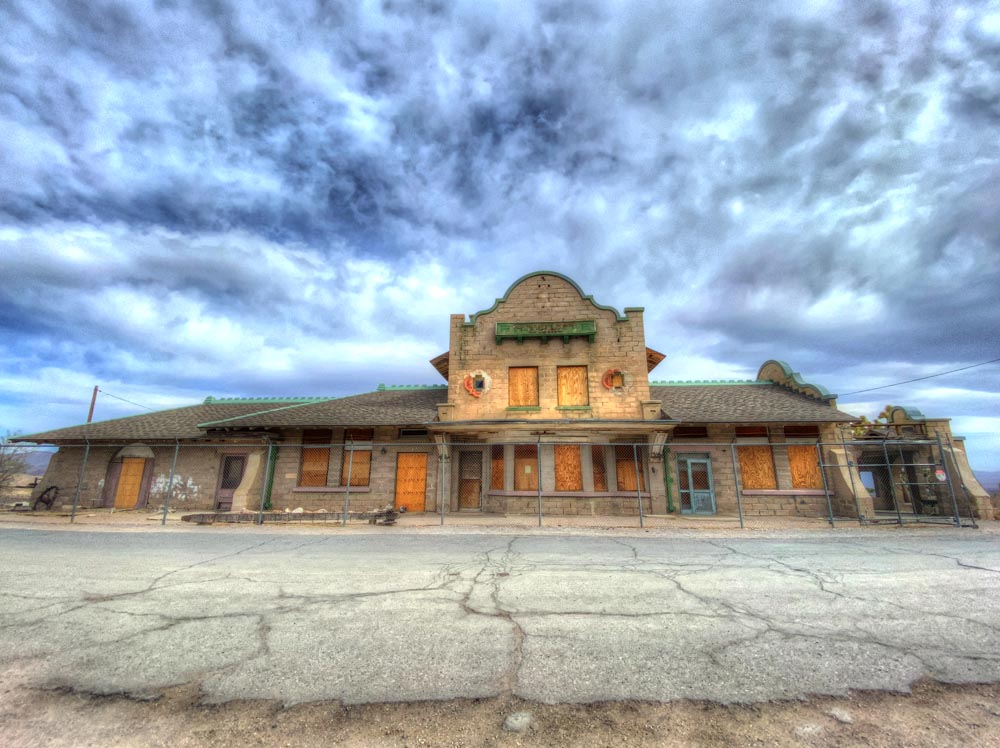
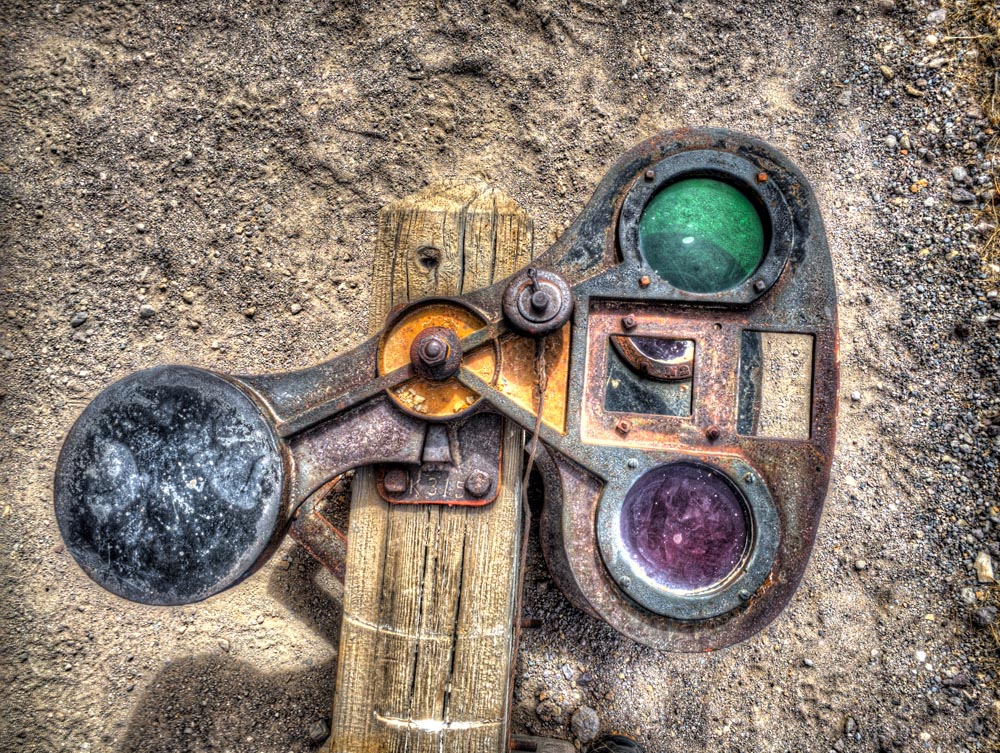
Rail access cemented Rhyolite’s status. Three lines eventually served the town or its immediate vicinity: the Las Vegas & Tonopah (LVT), the Bullfrog Goldfield Railroad, and a connection with the Tonopah & Tidewater through nearby Gold Center. The first passenger train reached the area in late 1906, and by mid‑1907 Rhyolite had one of the most substantial depots in Nevada, built of stone and intended as a showpiece for the LVT. The structure remains standing today, and may be seen in detail within the VR tour.
Railroads brought in building materials, mining machinery, food, and luxuries while exporting ore and bullion, and they enabled a constant flow of visitors, promoters, and entertainers. Traveling shows, musicians, and even the Sells–Floto Circus visited the town. Rhyolite residents enjoyed dances, theatrical performances in the “opera house,” and excursions to nearby ranches and camps.
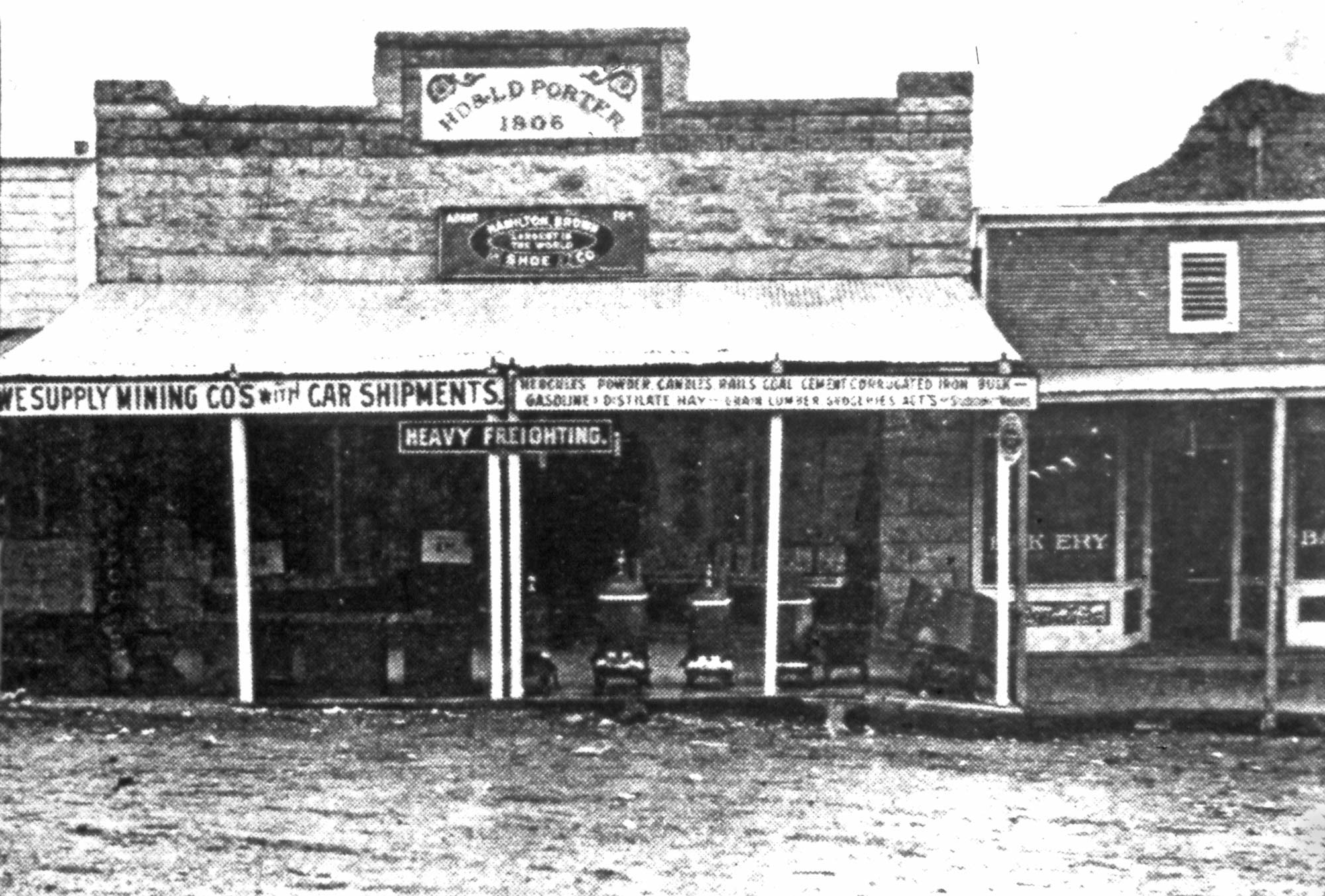
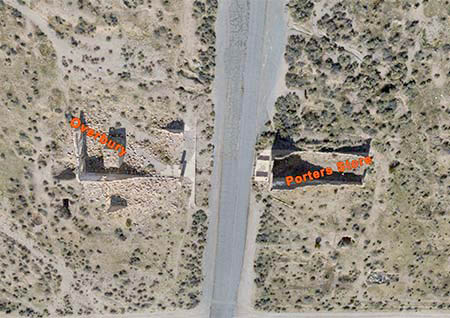
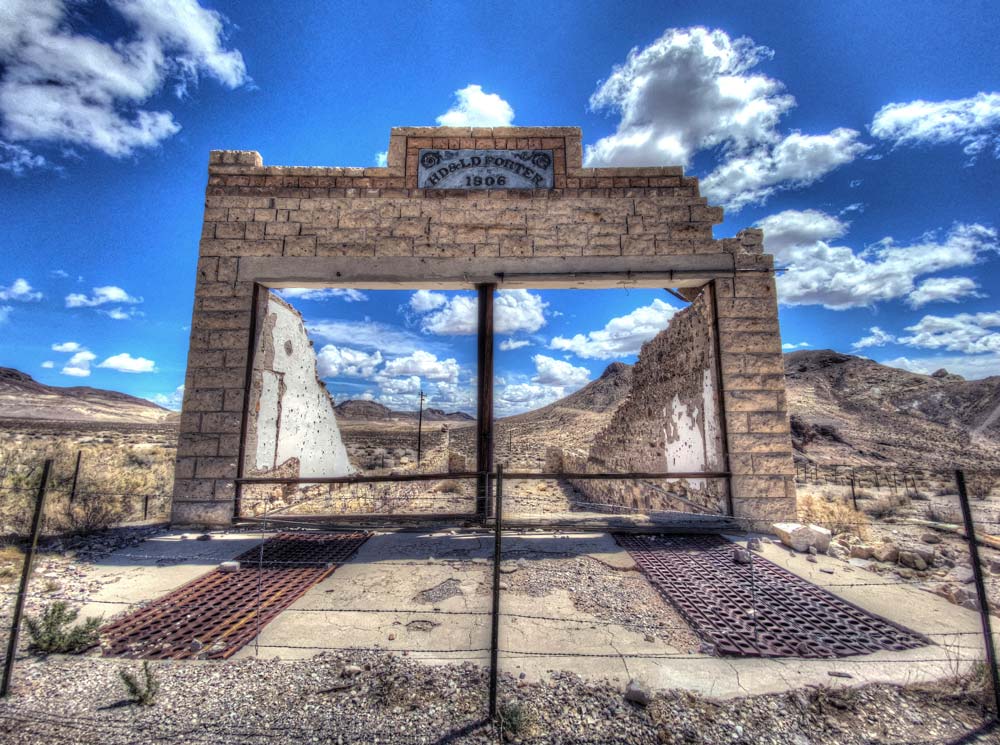
At the same time, Rhyolite was locked in a friendly but sharp rivalry with Beatty, its older neighbor on the Amargosa River. Beatty often managed to host first‑train celebrations and other regional events, while merchants such as the Porter Brothers and Rose & Palmer kept stores in both communities to hedge their bets.
Rhyolite Growth: 1905 – 1908
Double-click for full screen view.
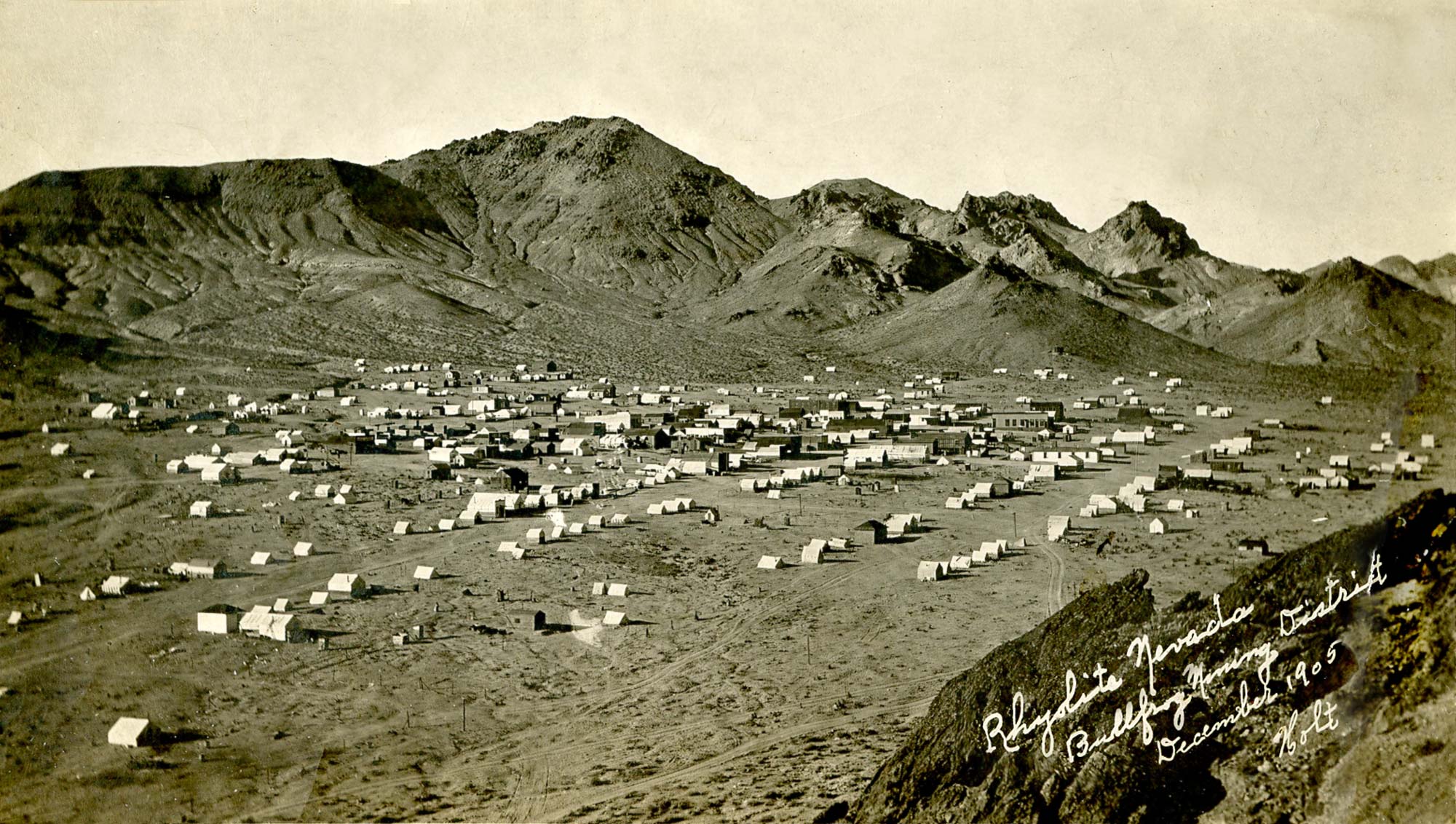
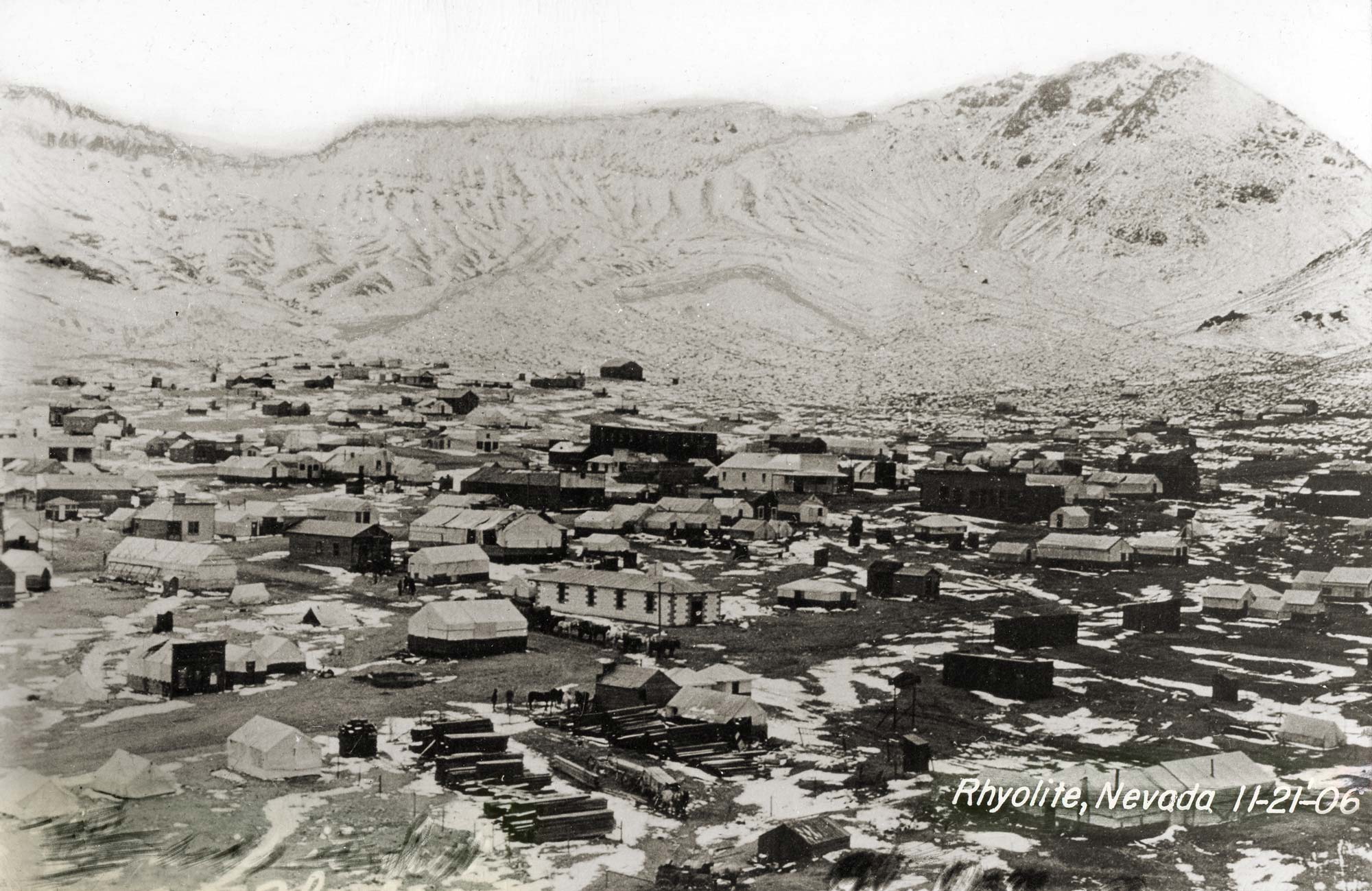
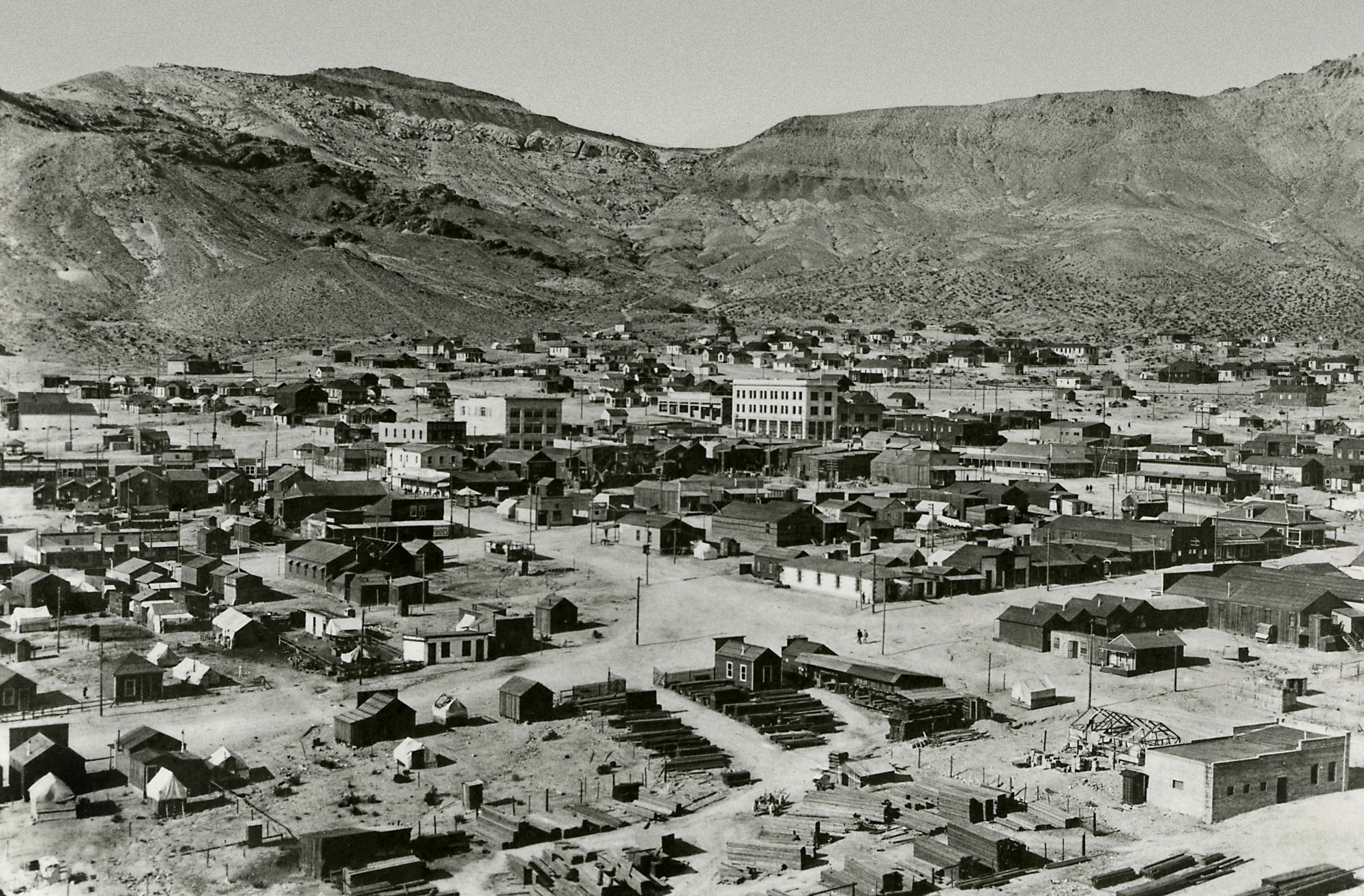
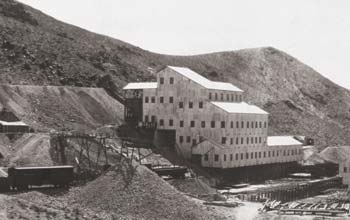
The economic foundation of all this building was gold—above all, the Montgomery Shoshone Mine on a hill just north of town. In 1906 industrialist Charles M. Schwab bought control of the property for about three million dollars, signaling that major outside capital now believed in the district’s prospects.
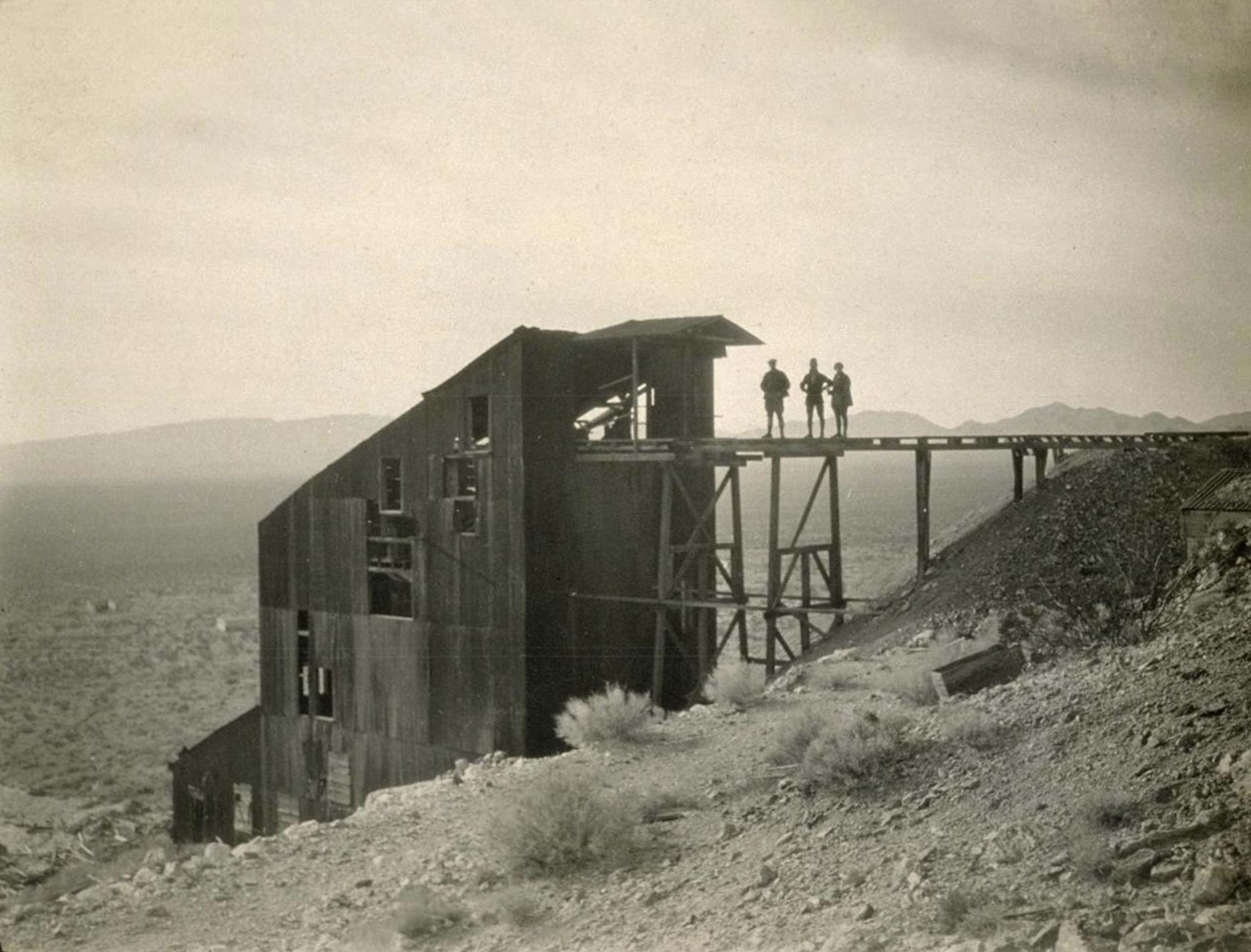
The Montgomery Shoshone constructed a modern mill, which began operation in September 1907, and for a time was a strong producer with gross output approaching two million dollars before closure. Numerous smaller mines and prospects in the “Golden Horseshoe” around Rhyolite employed hundreds more miners, feeding the town’s payroll and its speculative stock market.
Everyday life and social landscape
Accounts by residents and later historians emphasize how “modern” and urban Rhyolite appeared compared with the stereotypical frontier camp. There were substantial homes, lawns, and flower gardens for some leading citizens, at least while water and money were abundant. Merchants and professionals invested heavily in concrete and stone structures, assuming a long future for the town.
Women in Rhyolite occupied varied roles, such as teachers, telephone operators, and clerks. Most worked under strict moral expectations and limited social freedom. This did not apply, of course, to the sex workers in the town’s sizable red‑light district centered along Amargosa Street near the jail, which ranged from the most basic “cribs,” to the higher‑end brothels like “Jewel’s.”
There were also some woman miners, and professionals who ran households, baked bread and pies for sale, and sometimes operated boarding houses or small businesses.
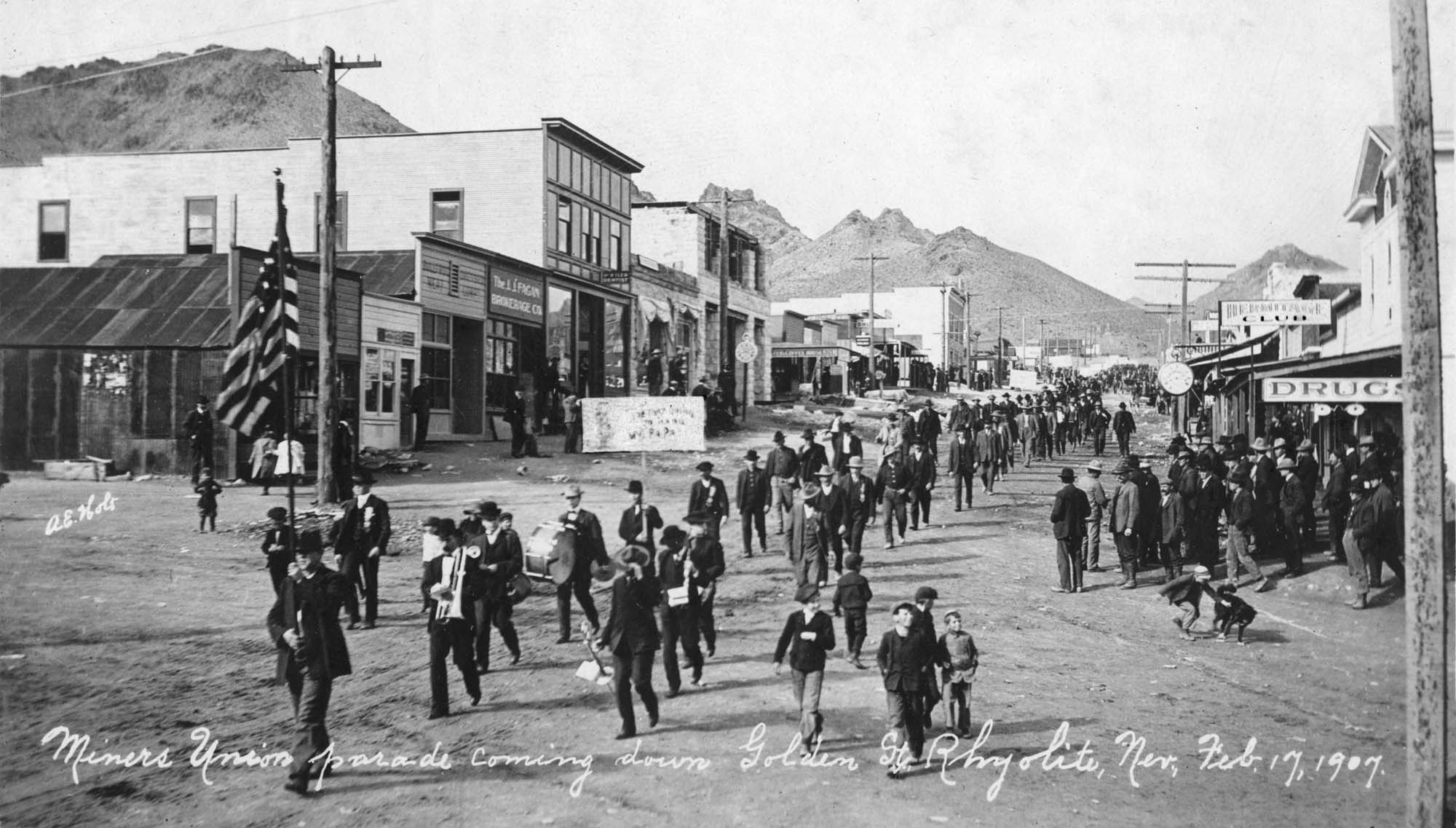
The town also had an active miners’ union culture. The Bonanza Miners Union maintained a hall and hospital and organized parades and protests, including a notable march in sympathy with labor disputes in Goldfield. Union influence helped shape local policies, such as informal bans on Chinese labor in the mines and efforts to confine prostitution to designated blocks.
Gallery: The History of the Bullfrog District in Photographs
Double-click for full screen view.
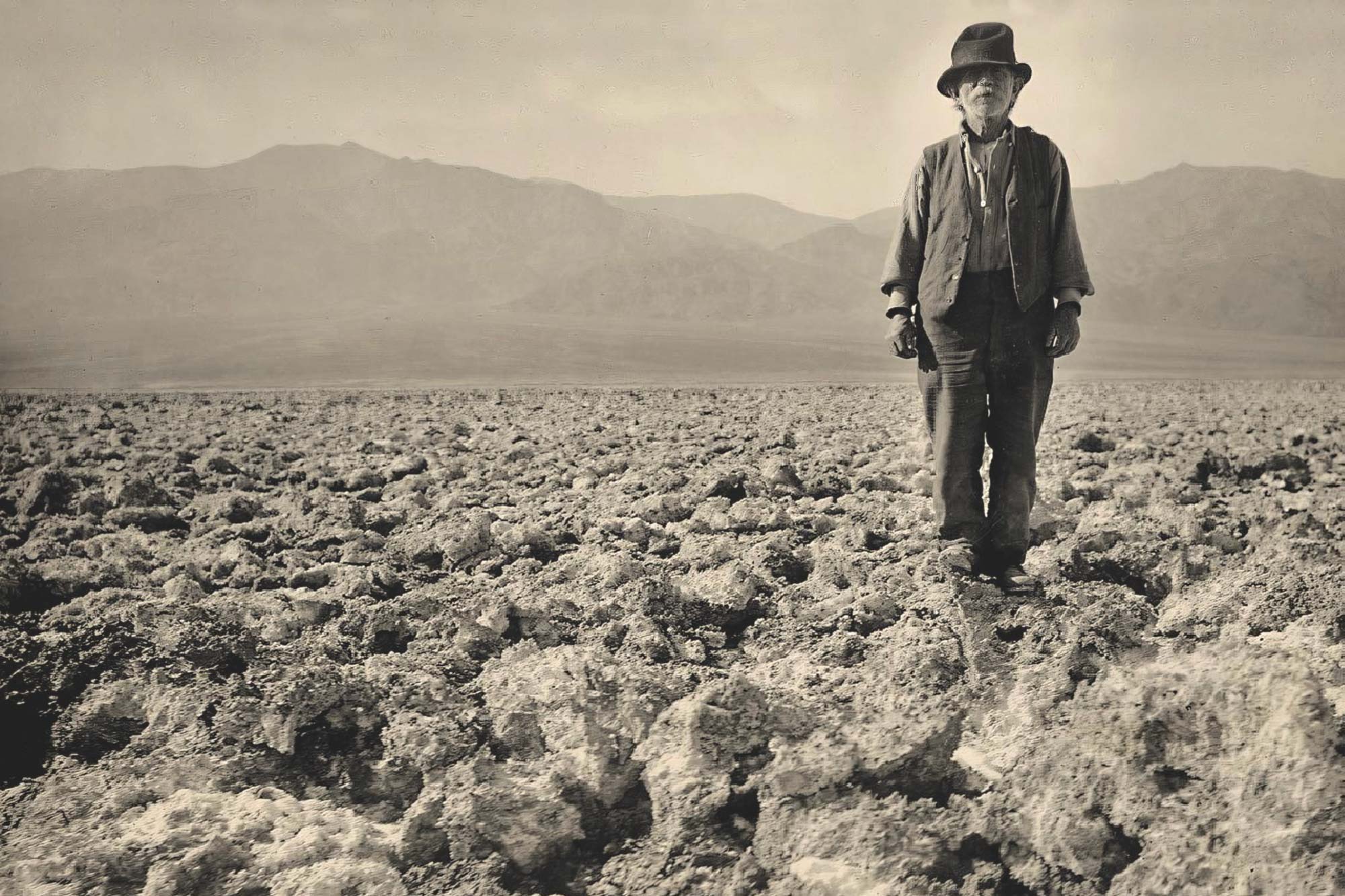
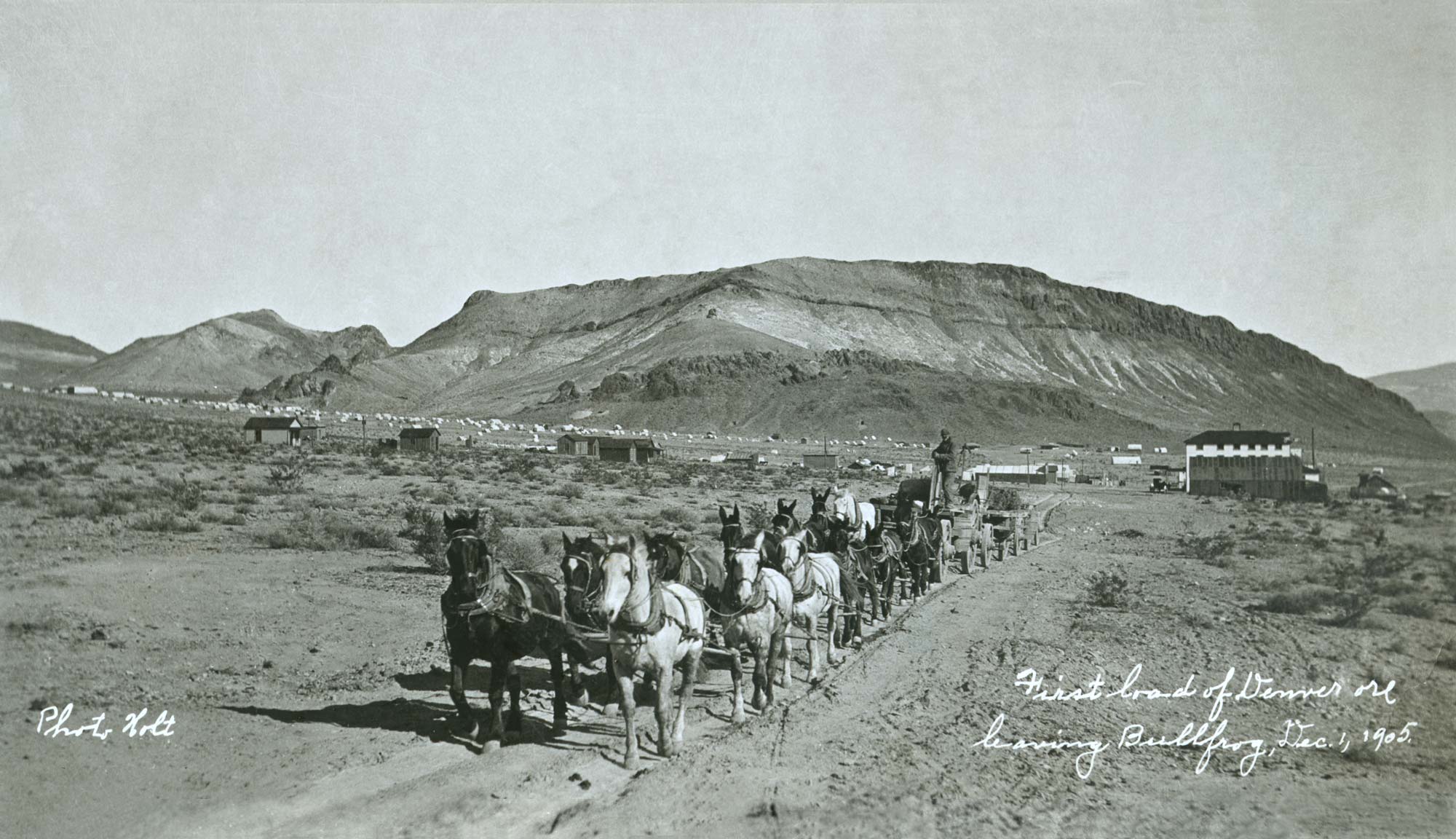
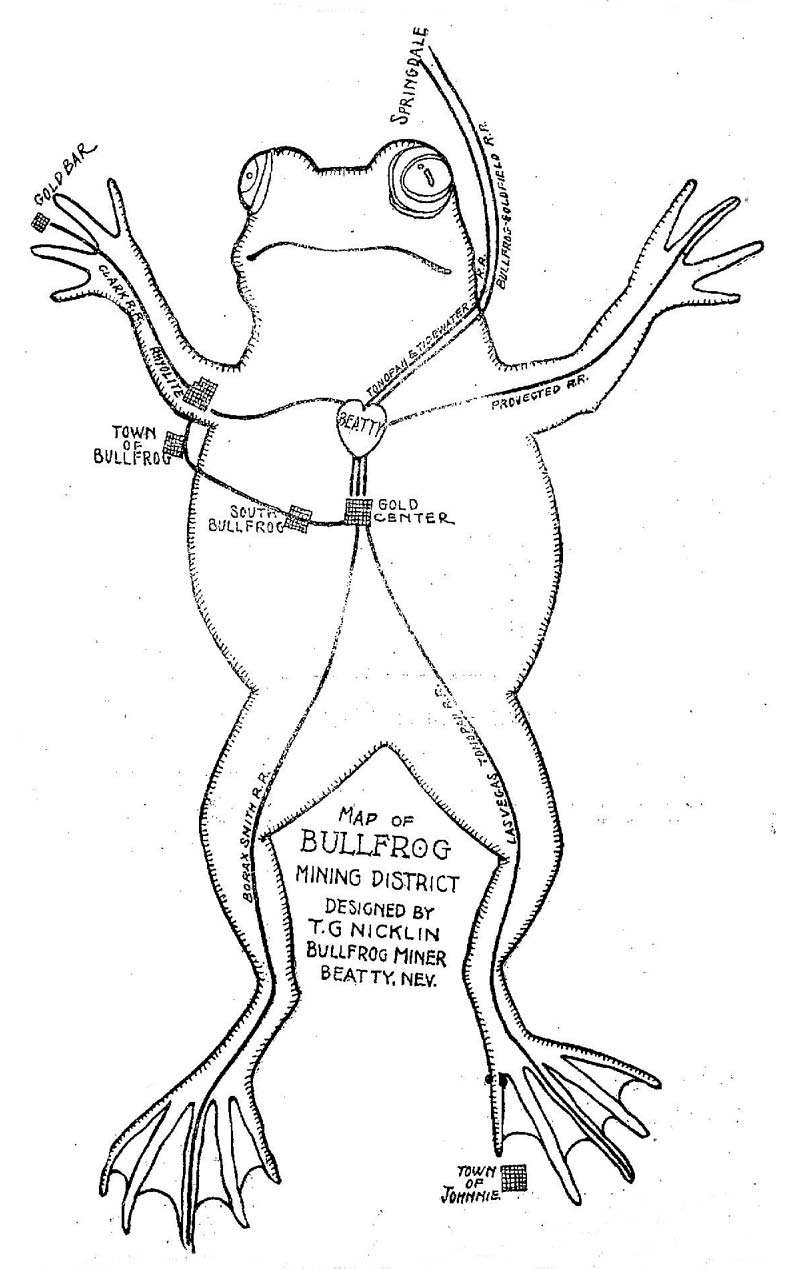
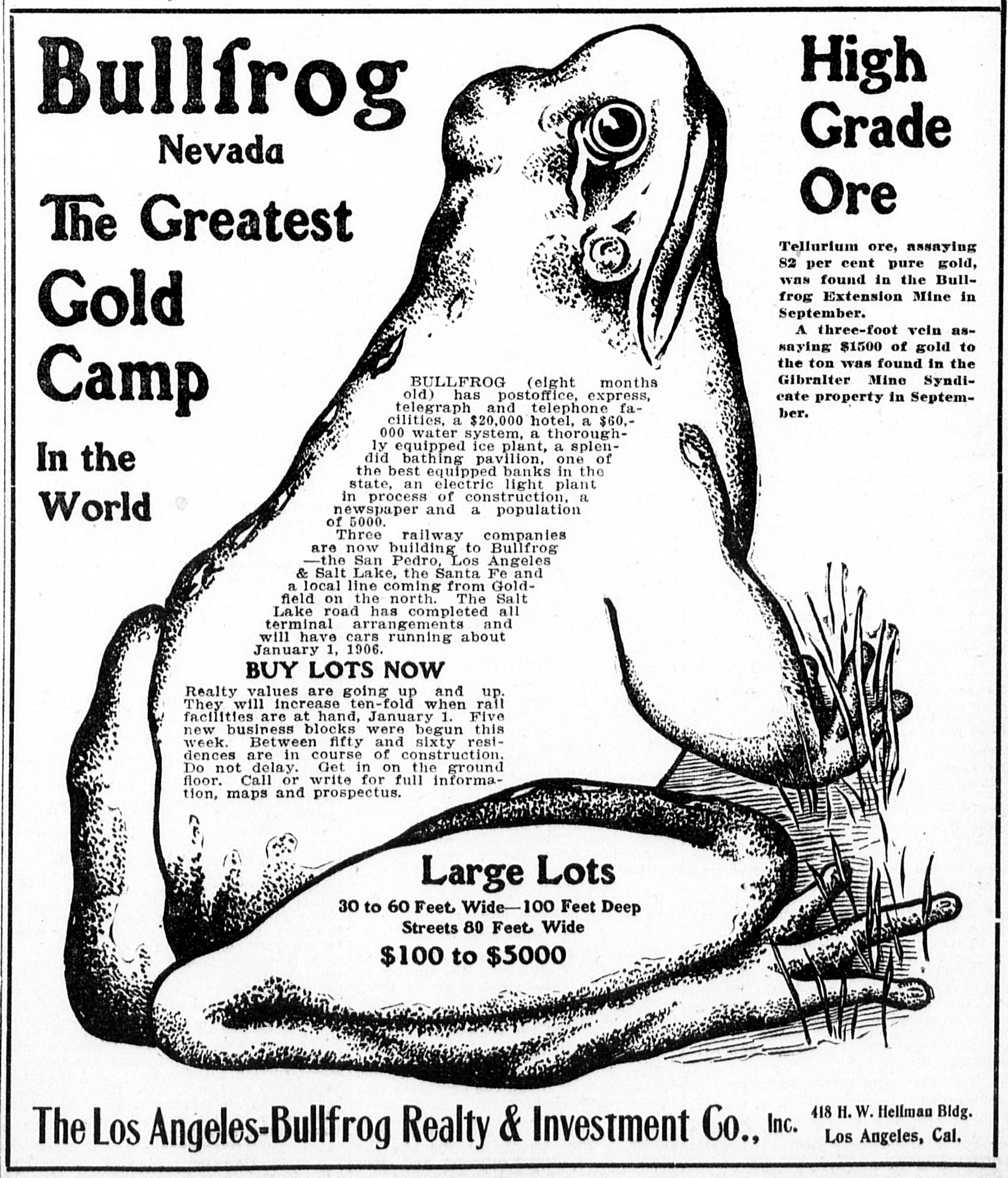
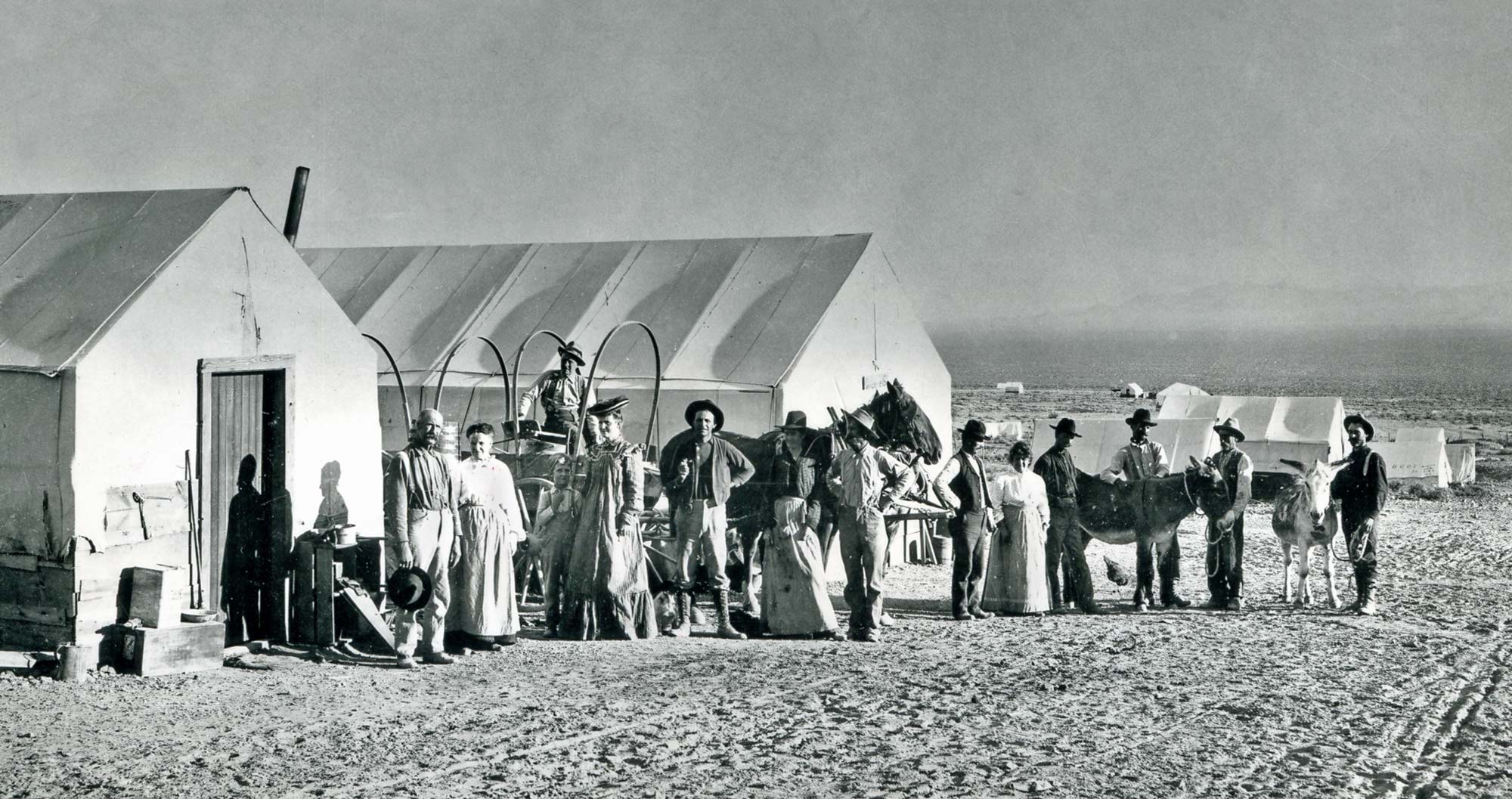
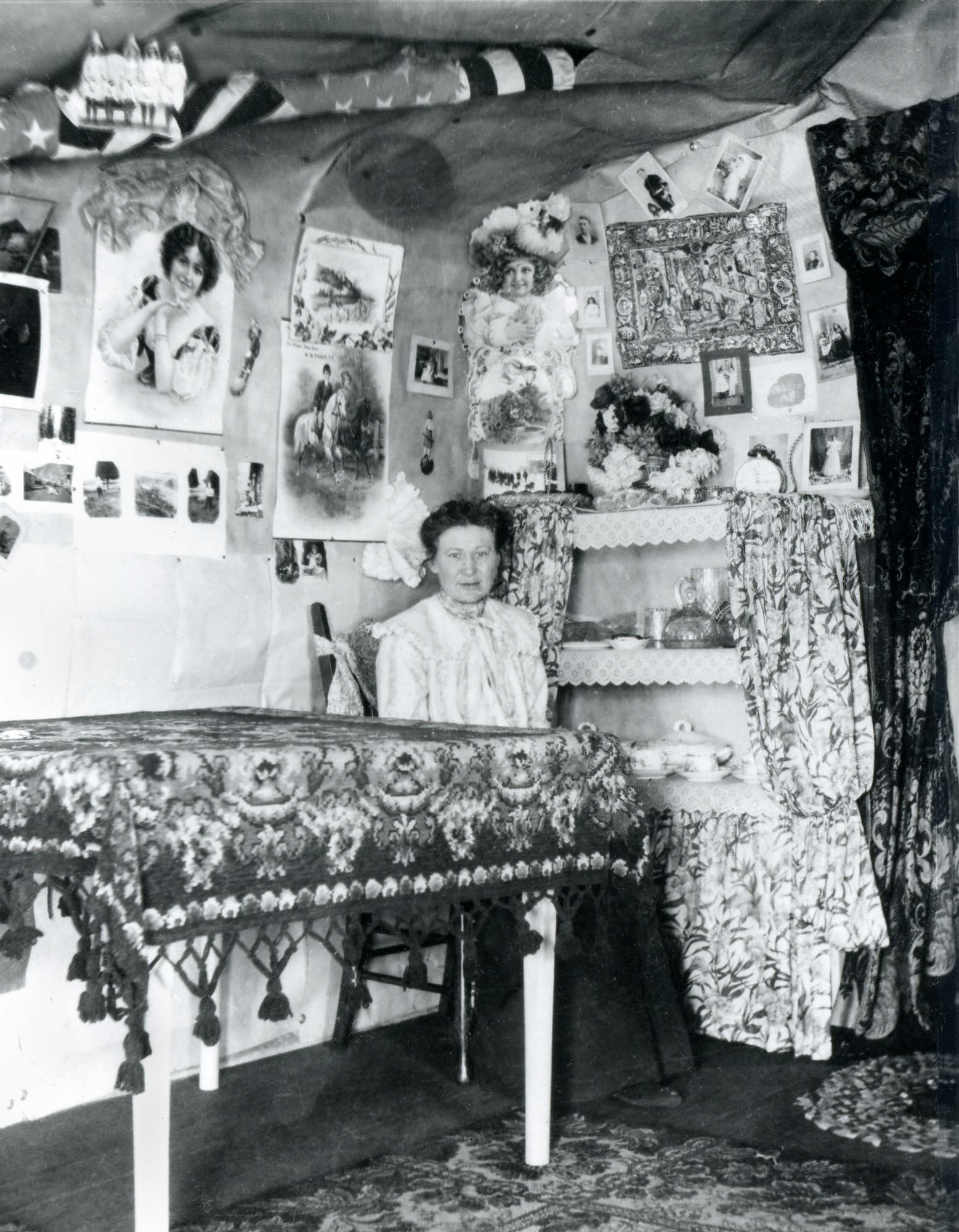
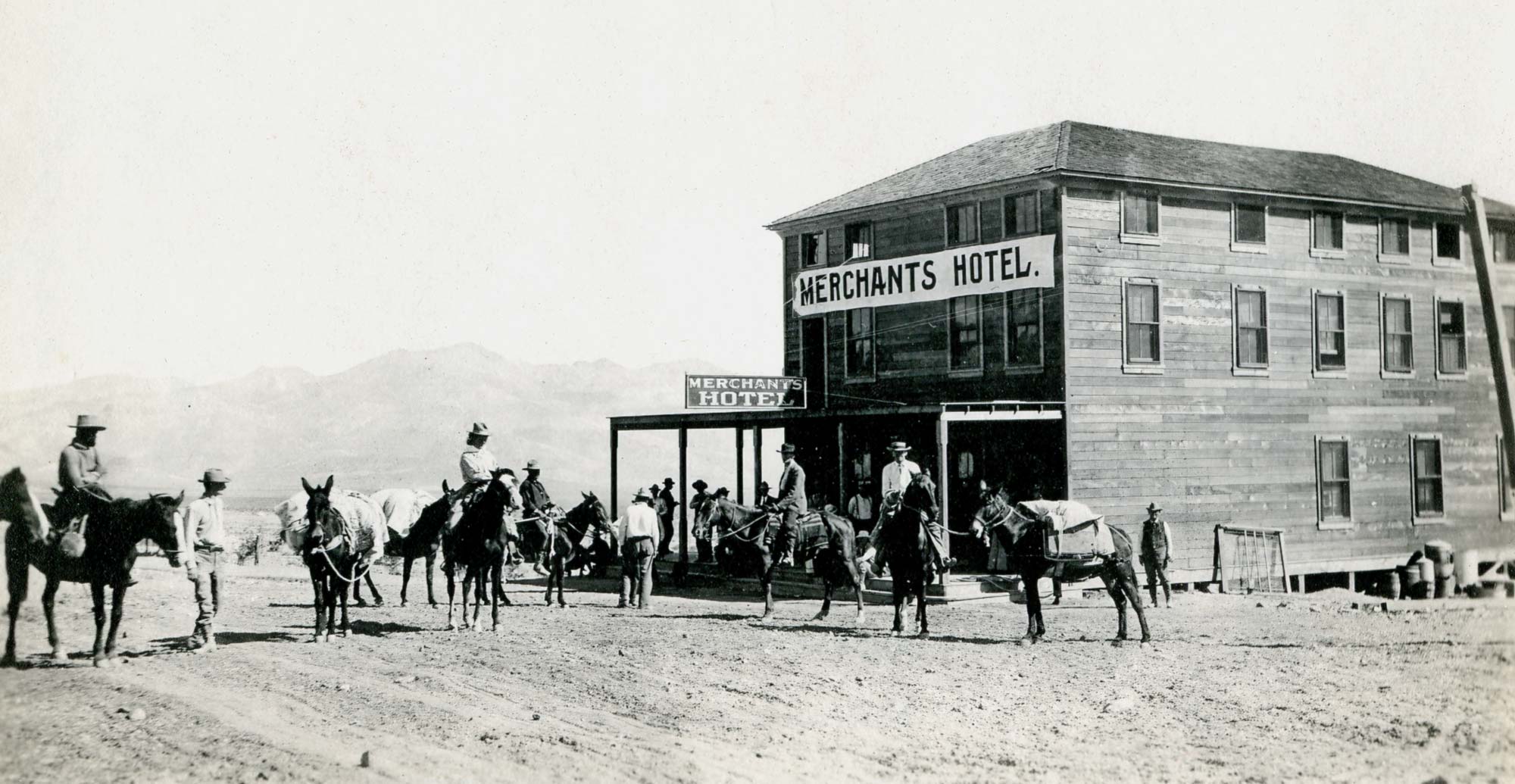
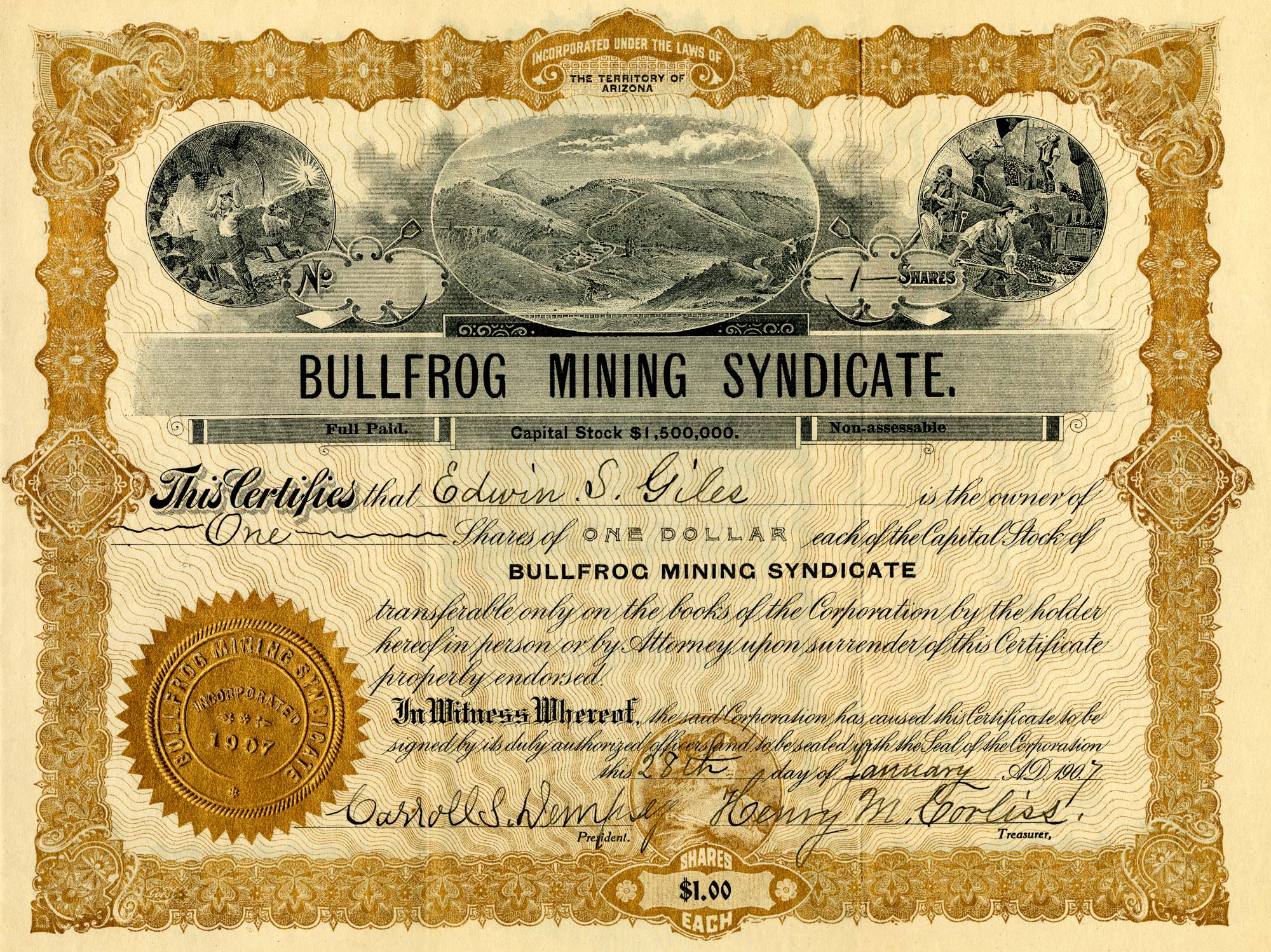
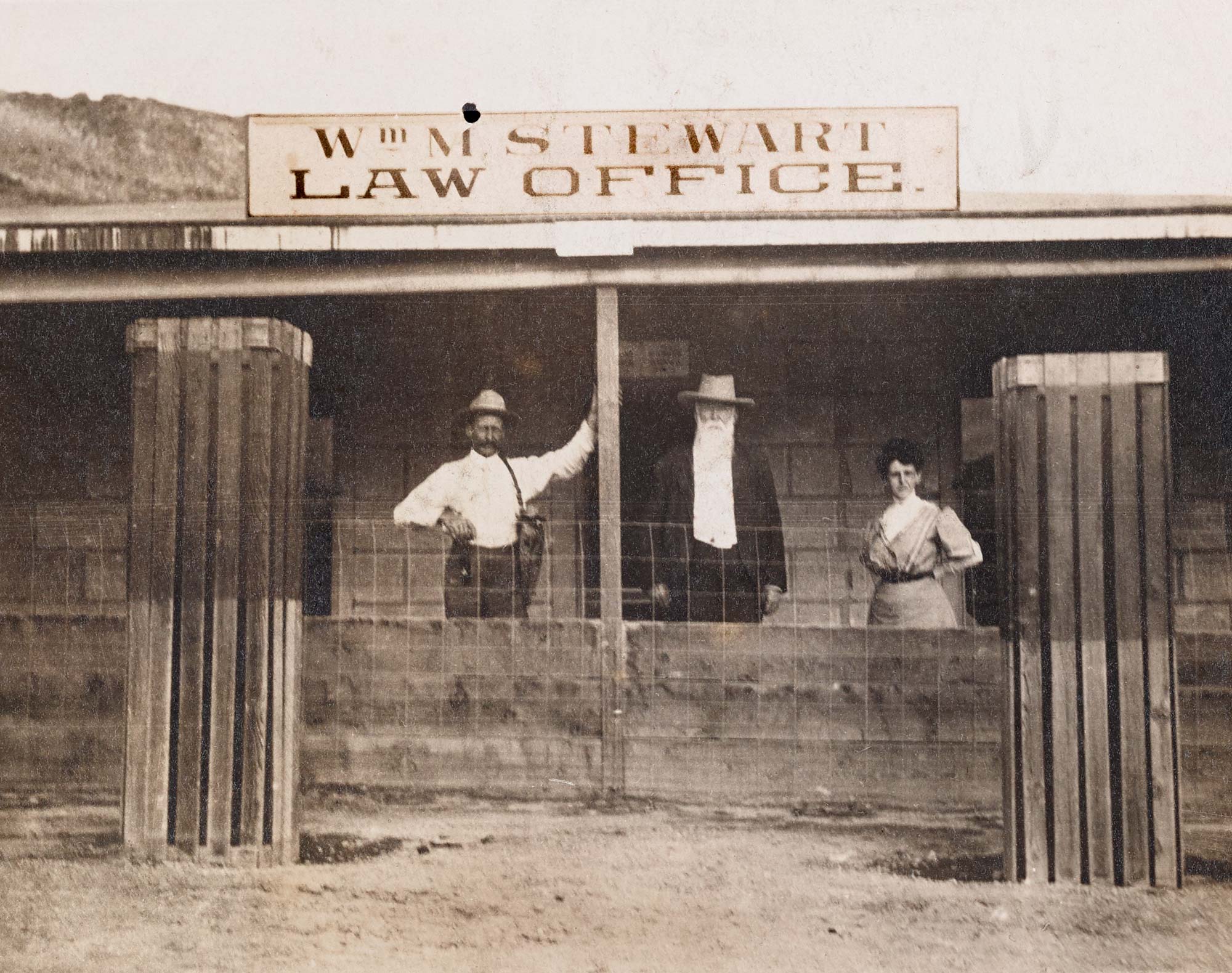

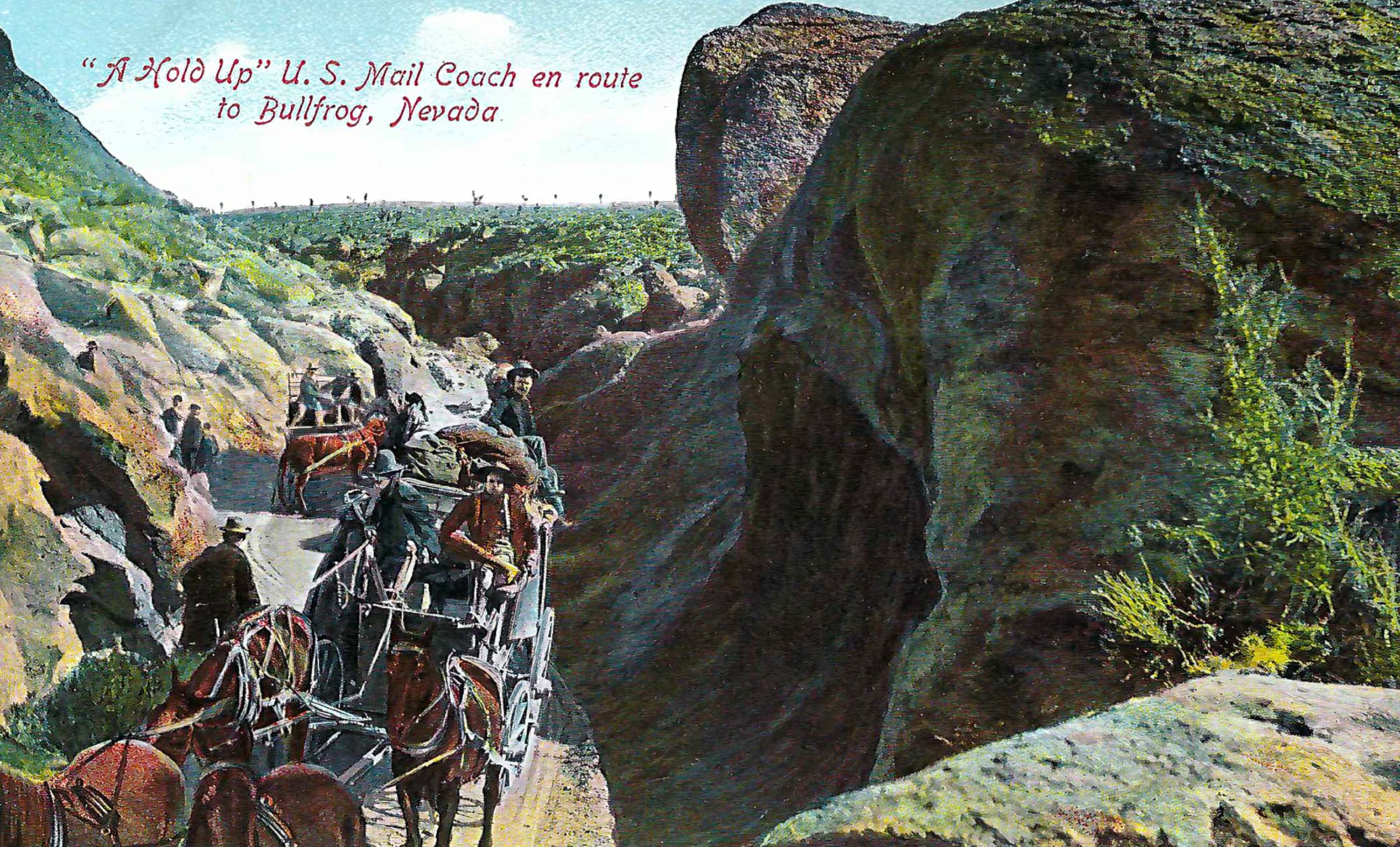
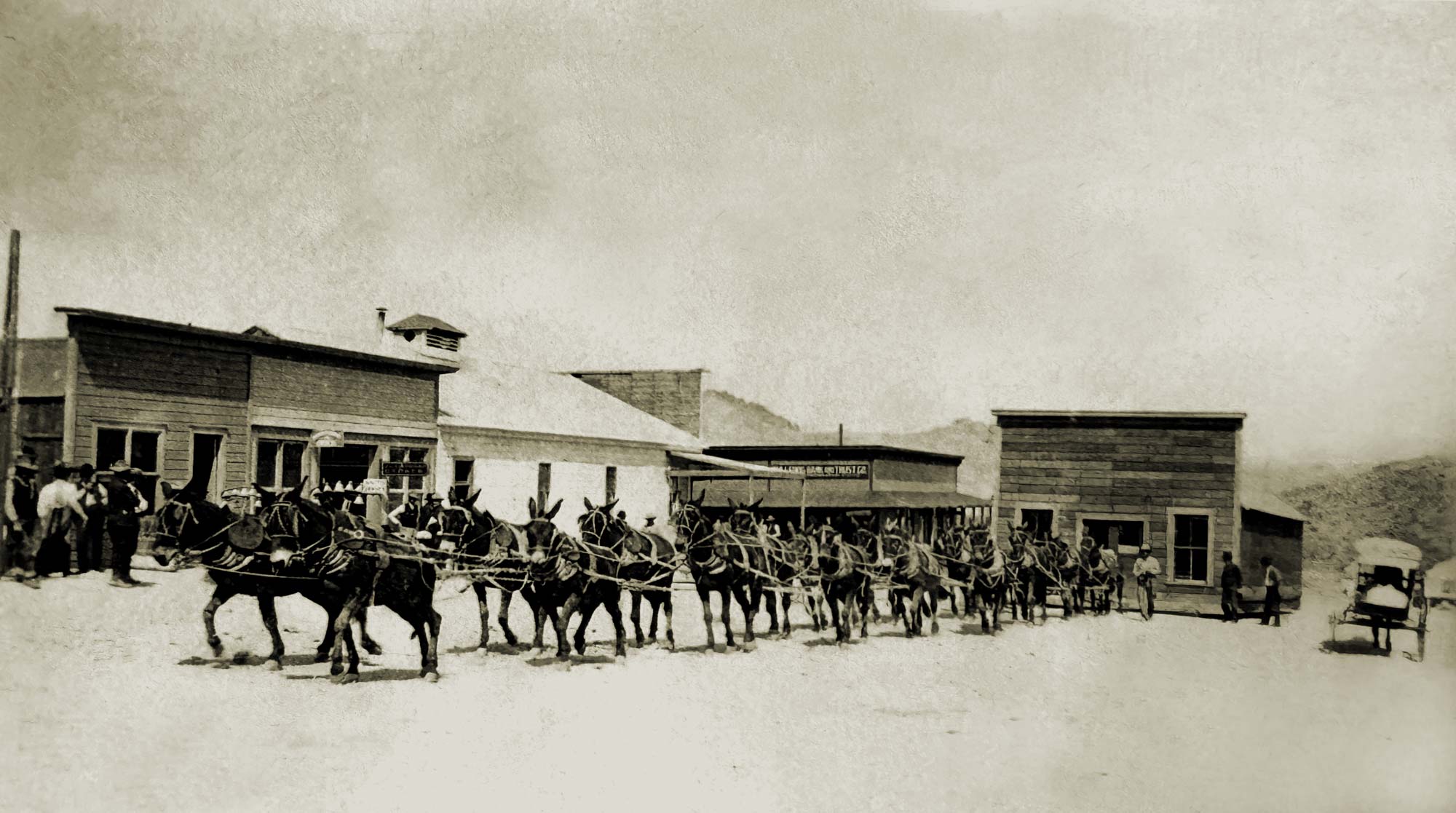
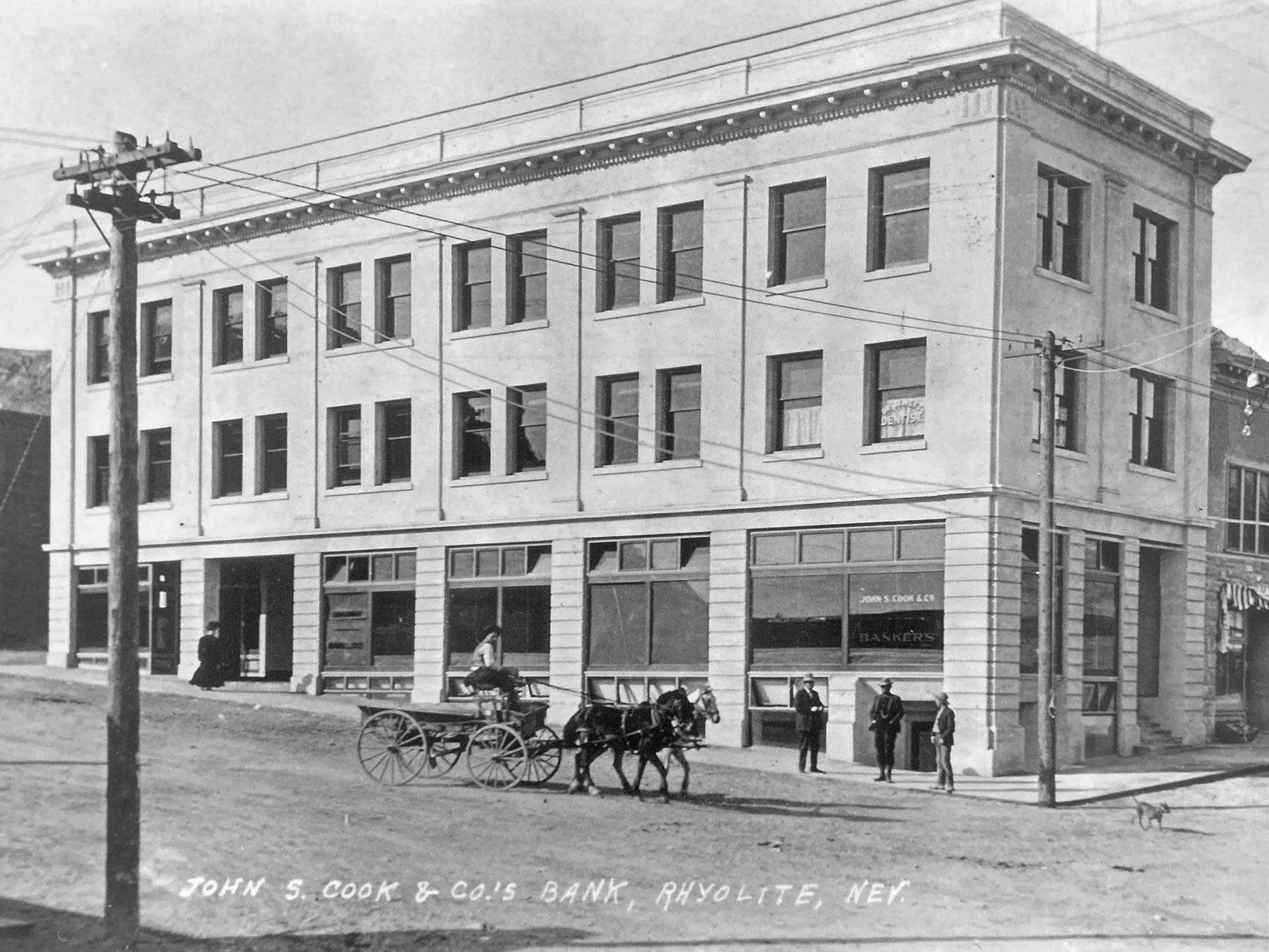
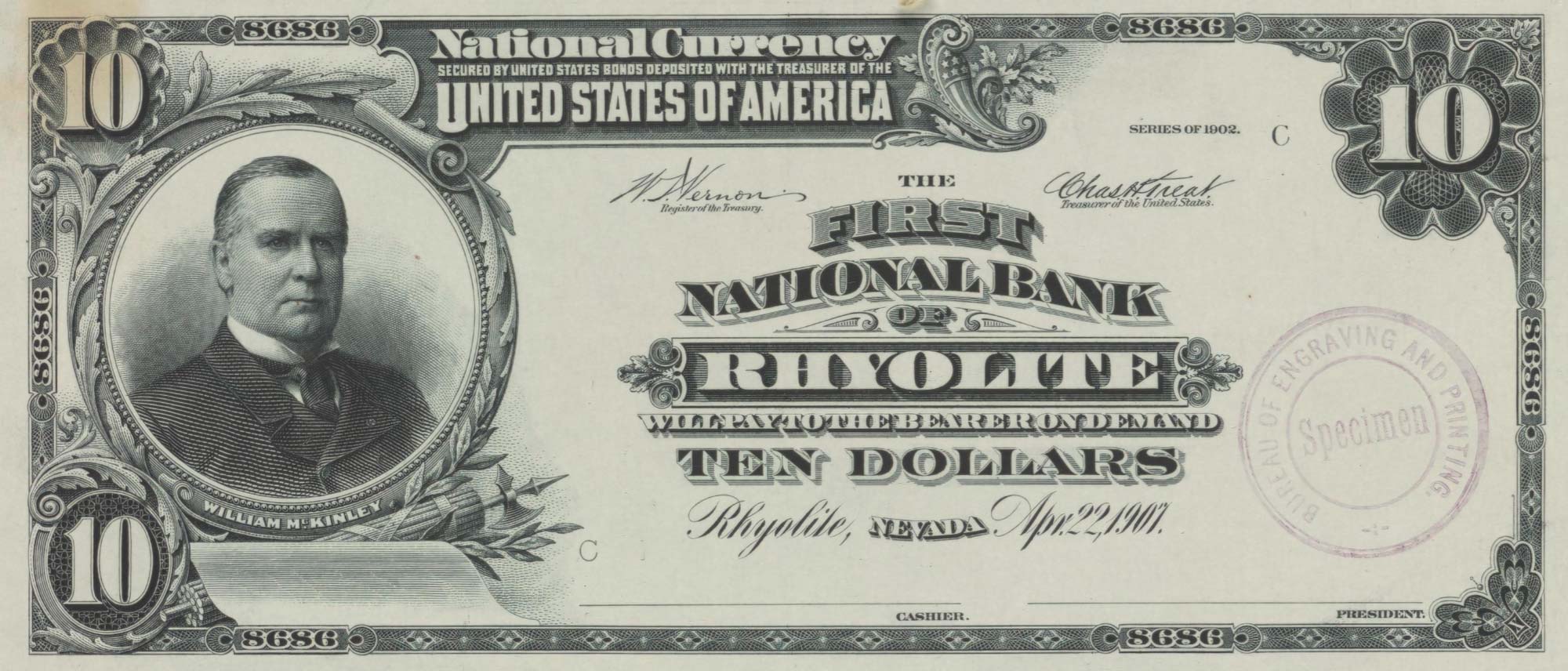
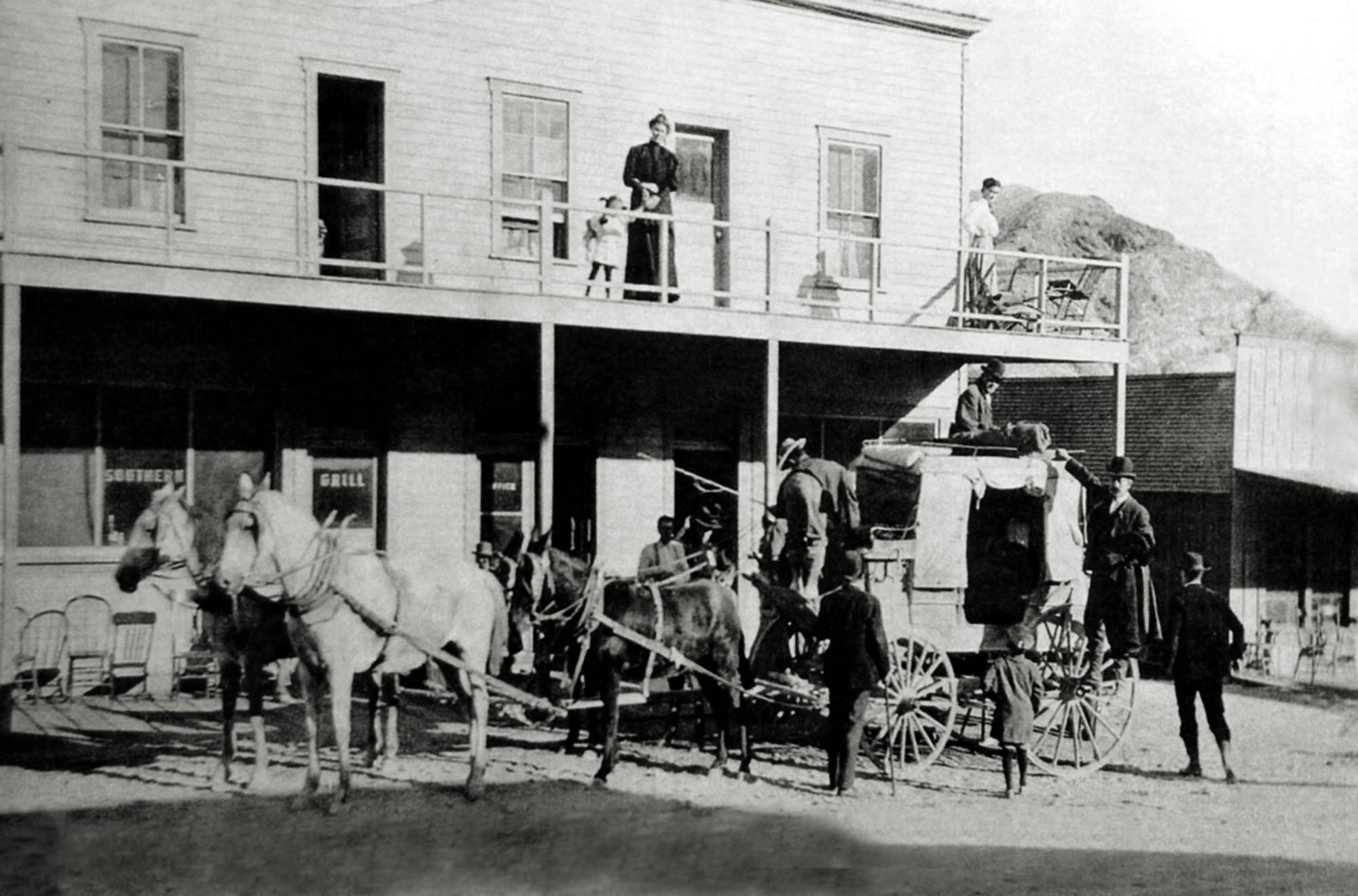
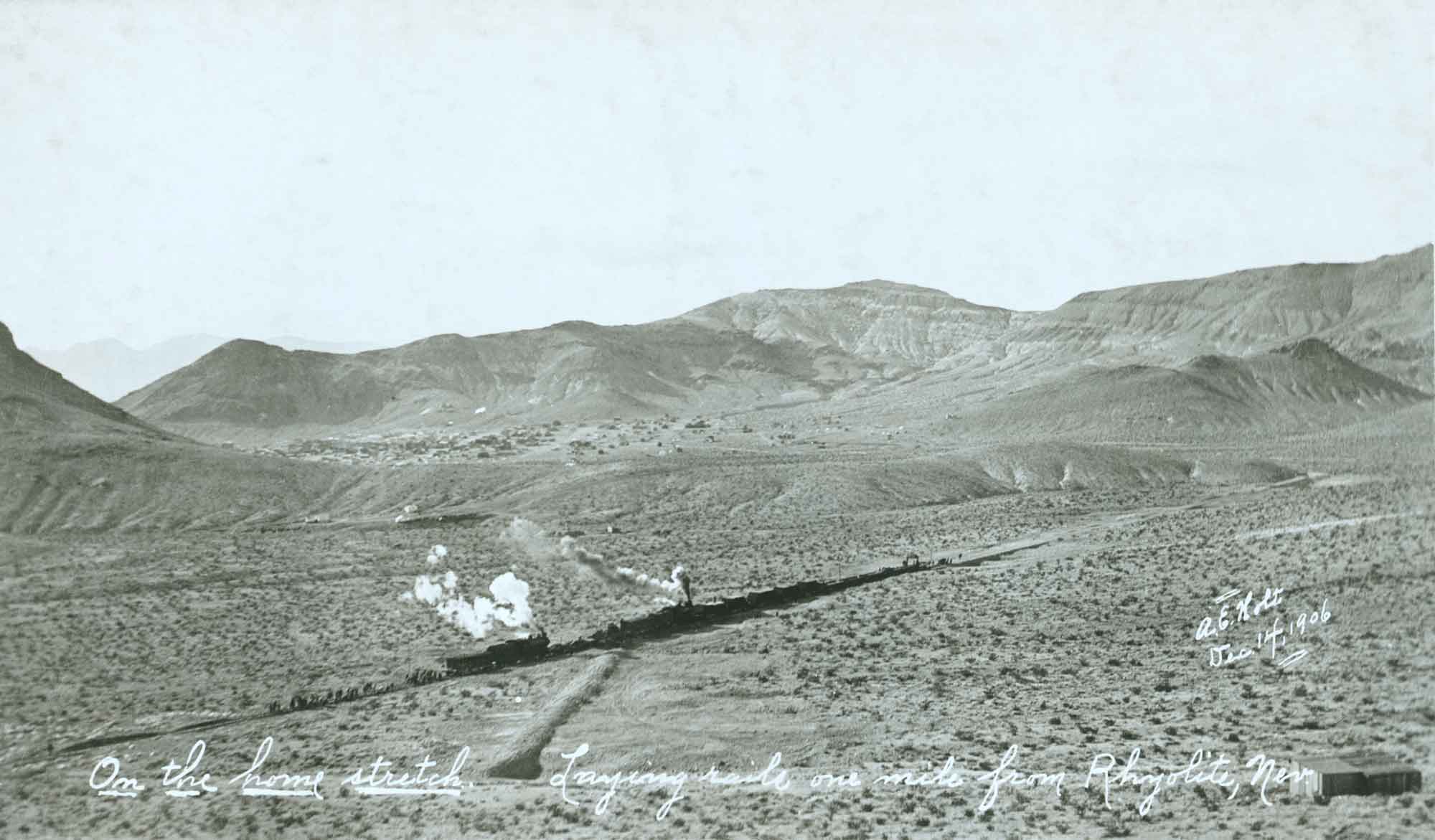
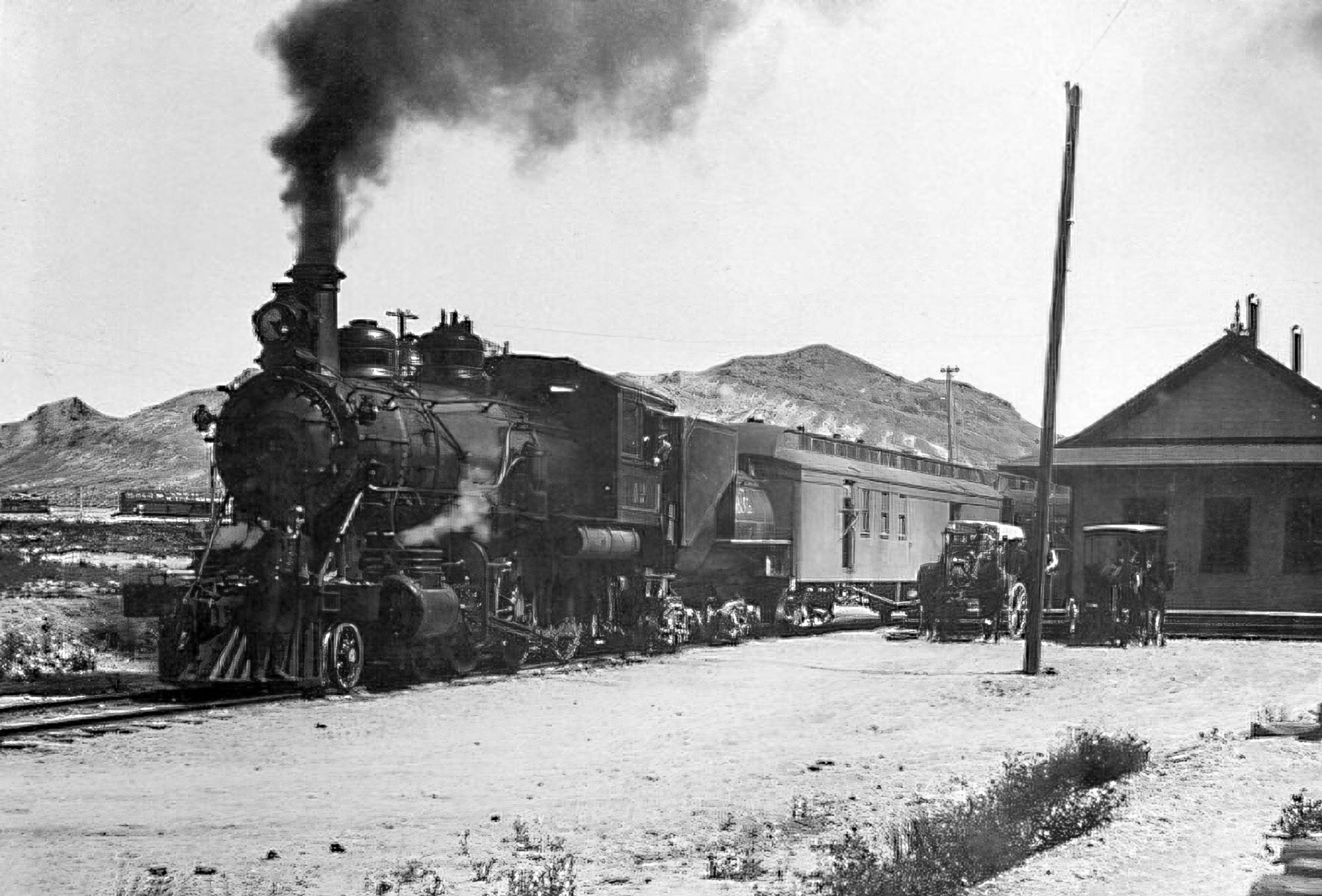
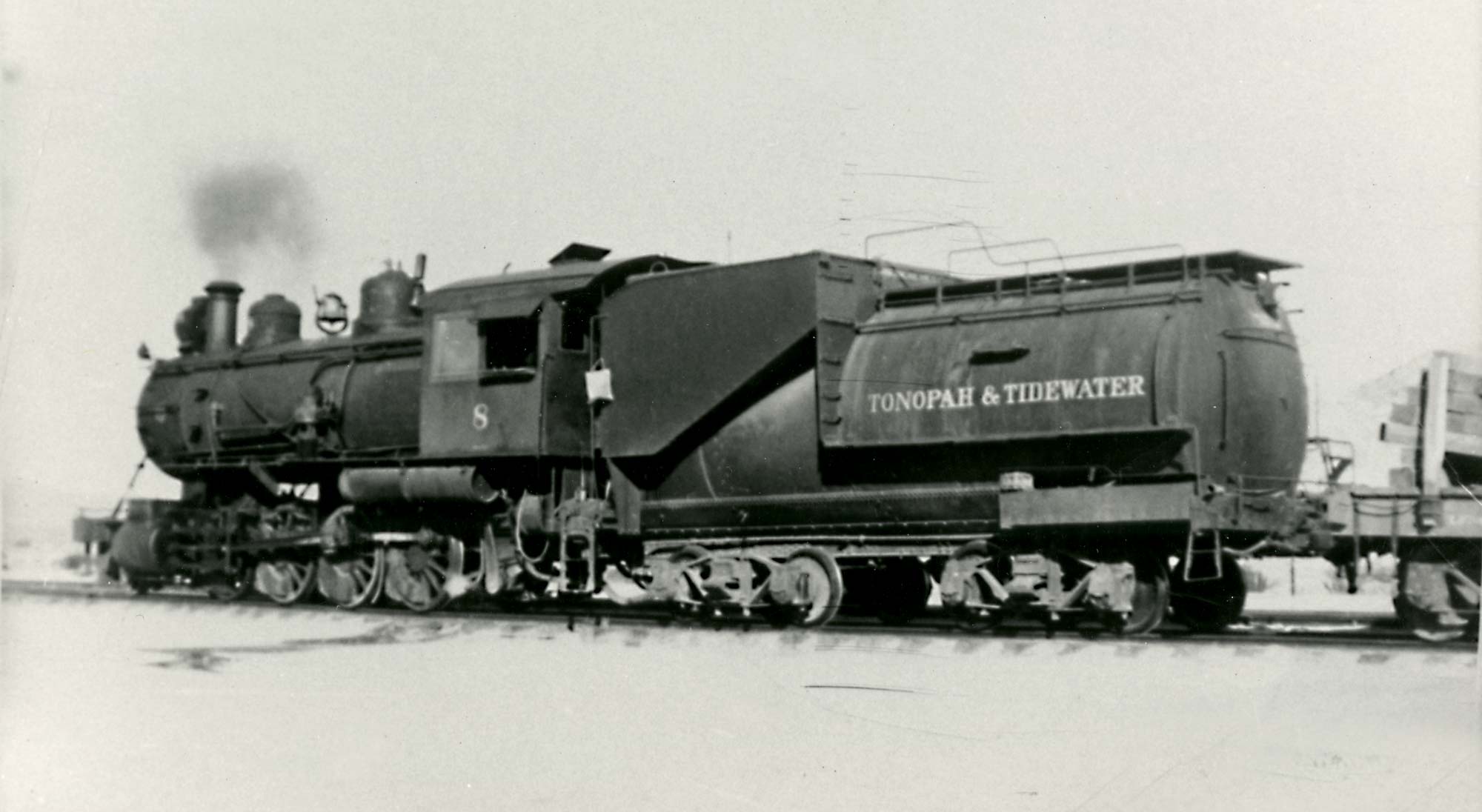
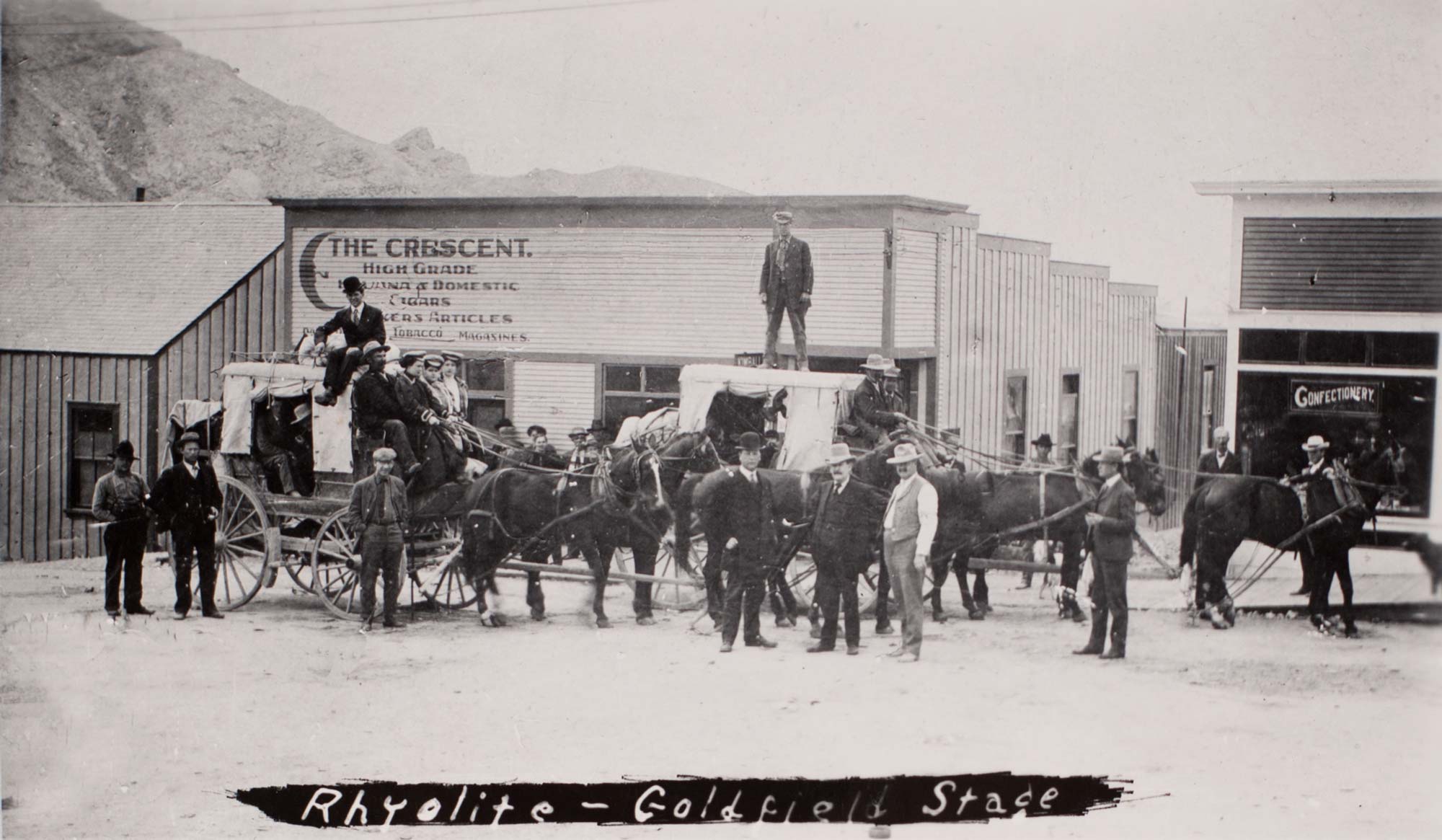
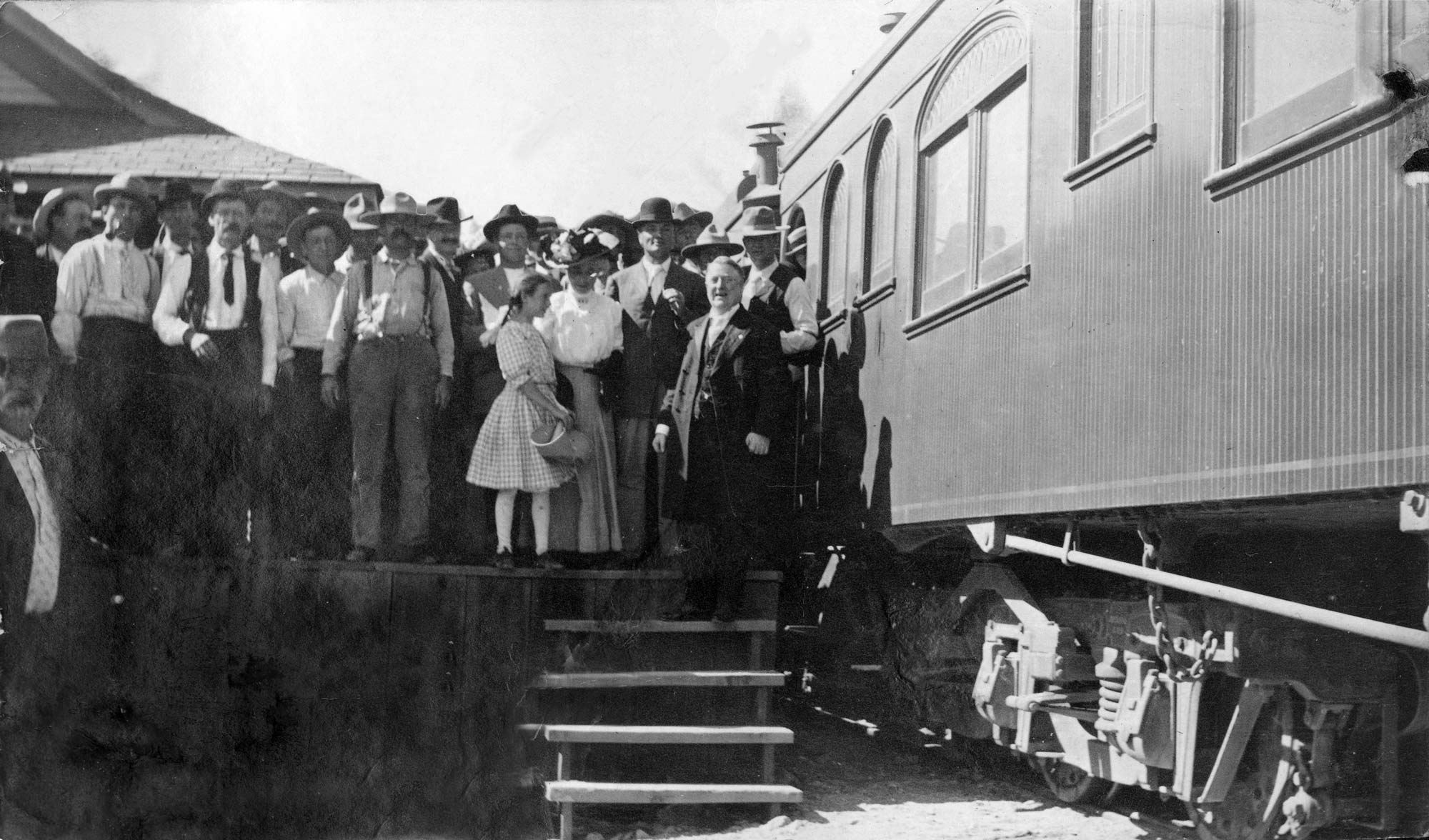
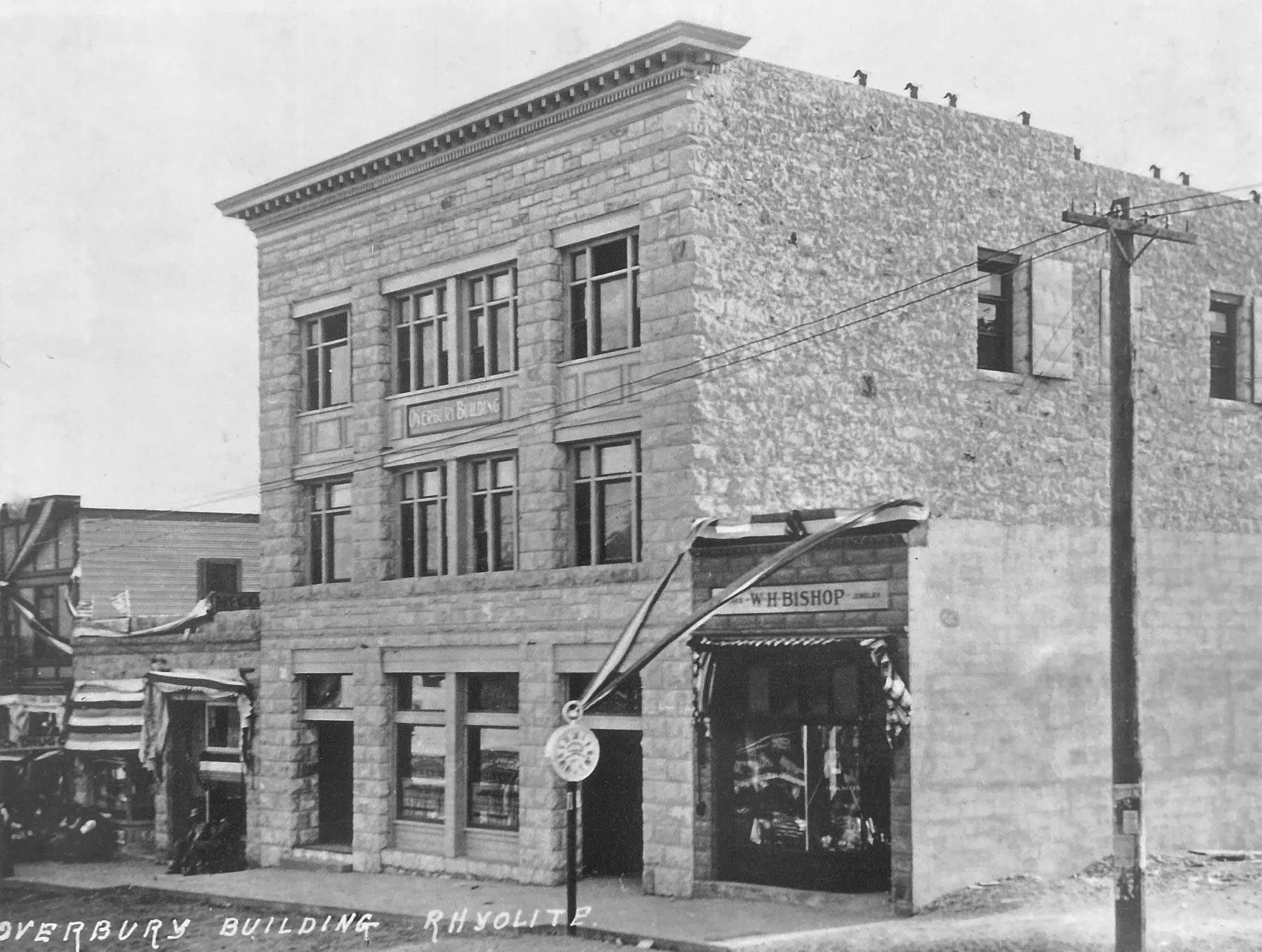
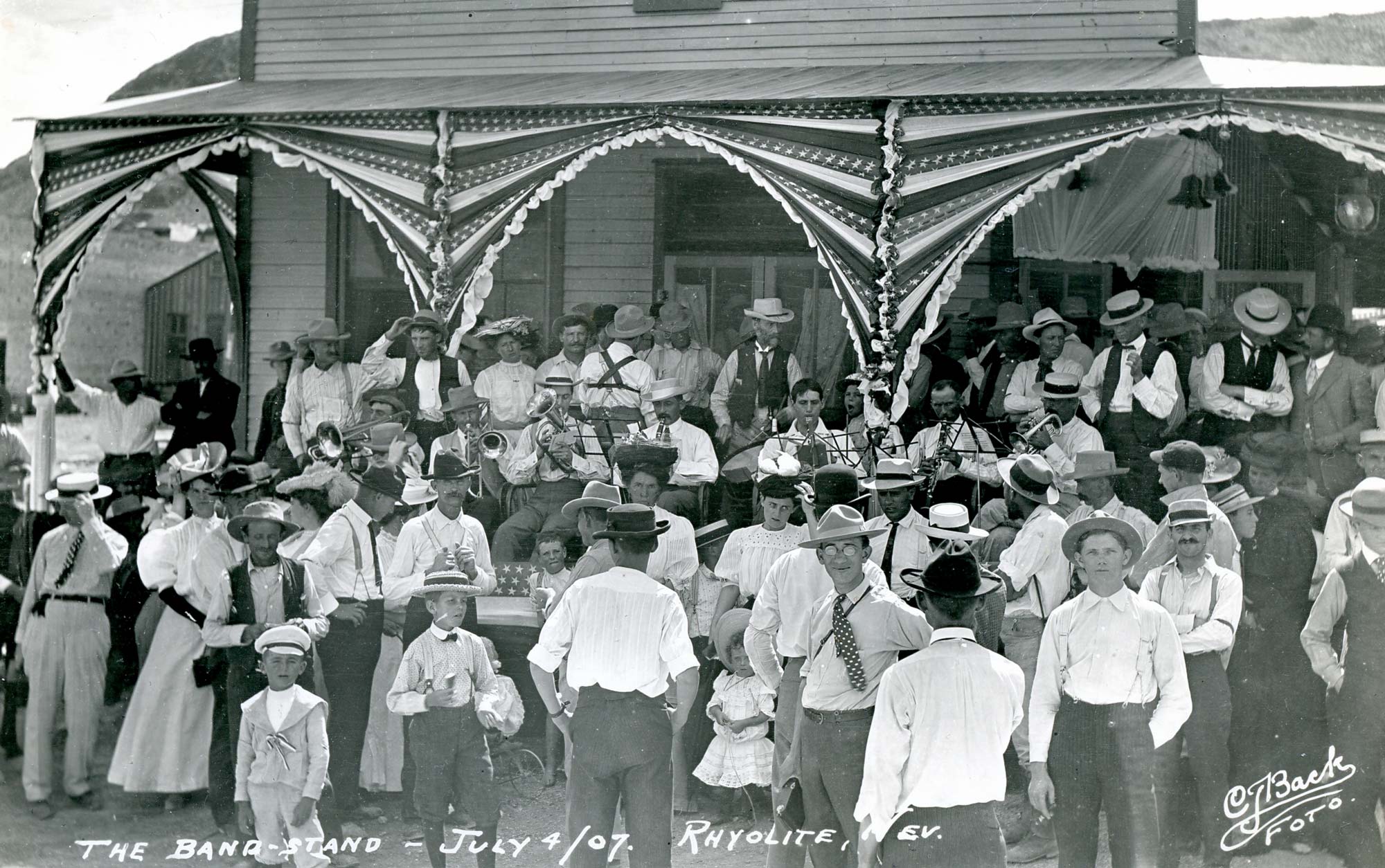
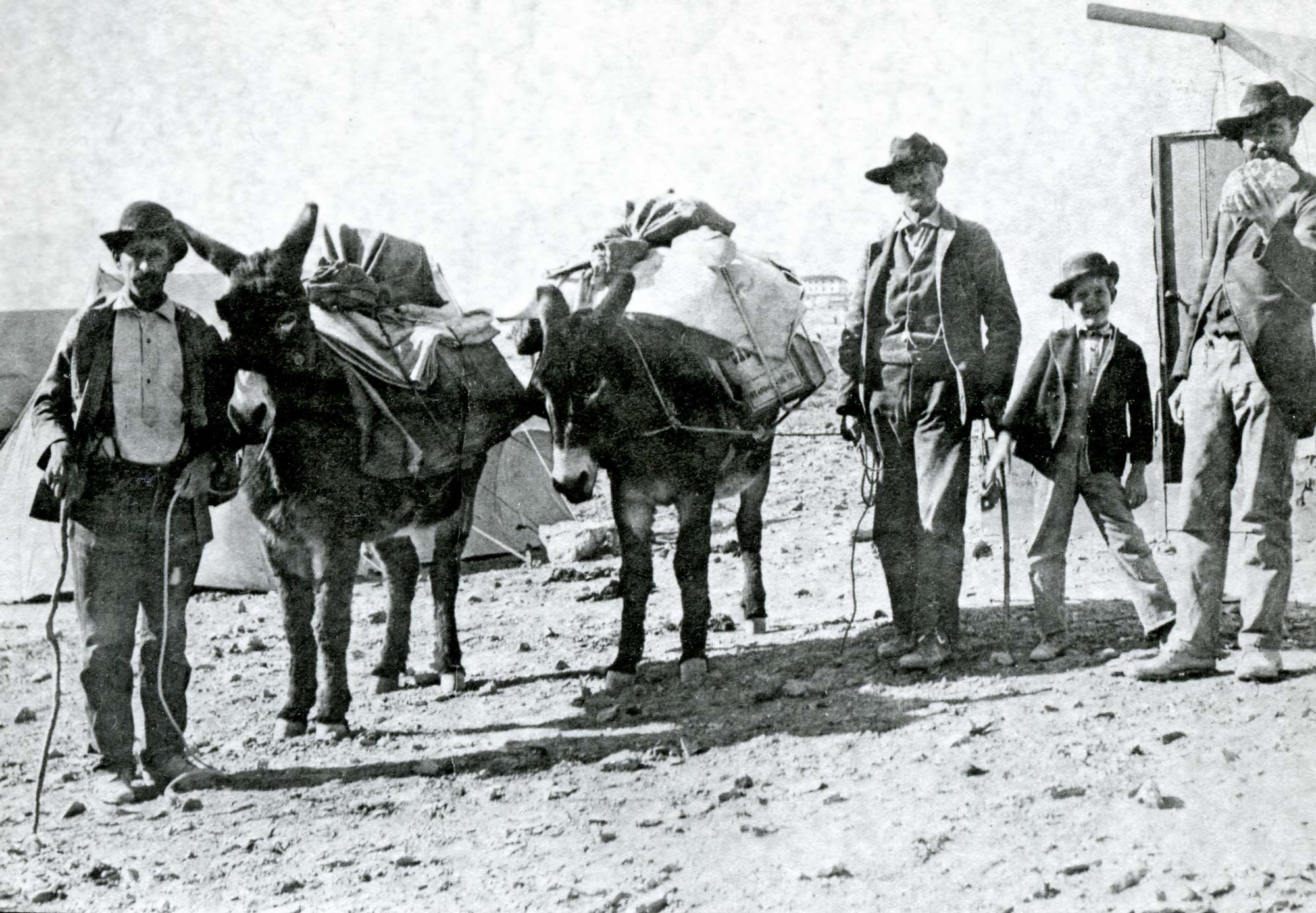
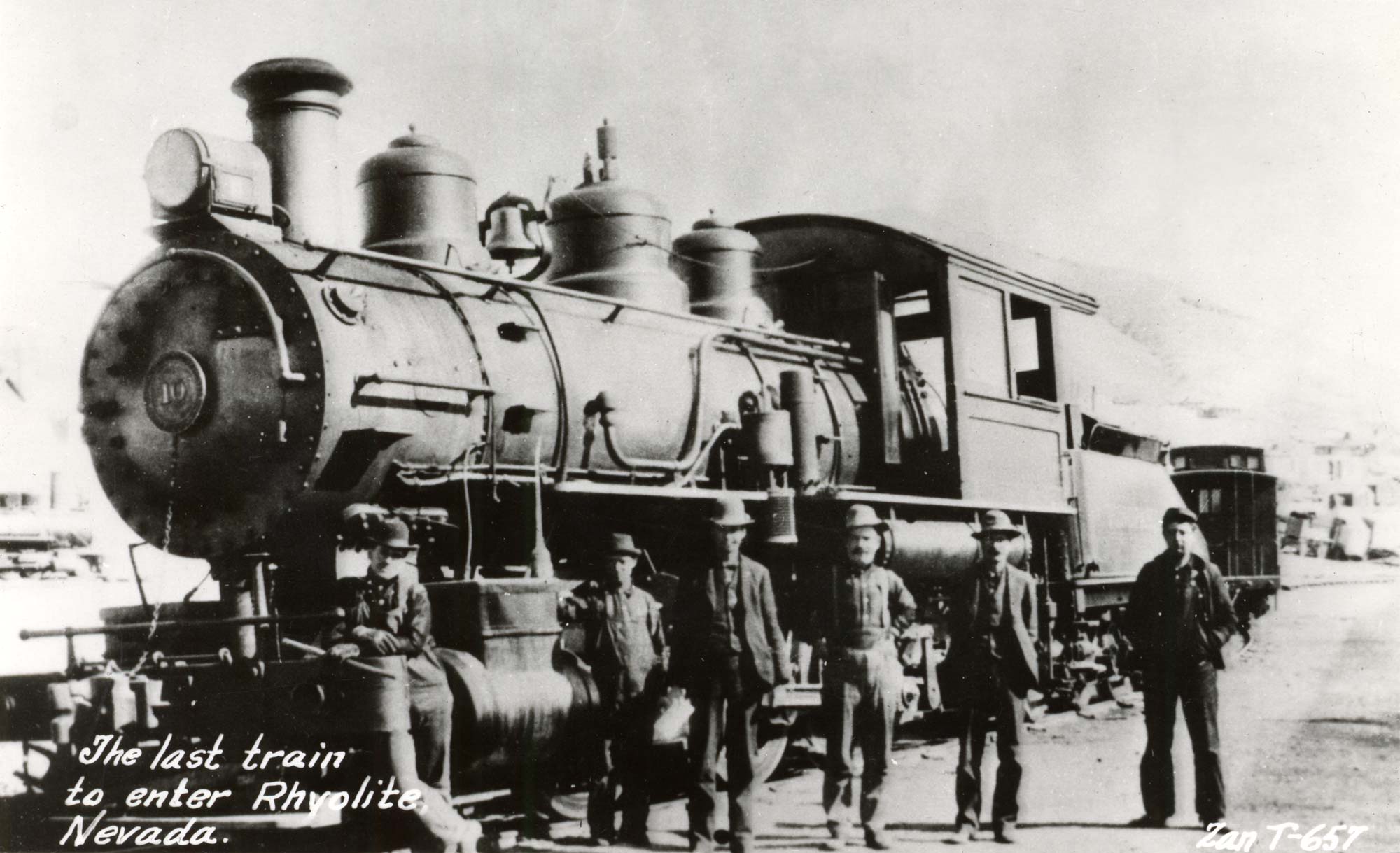
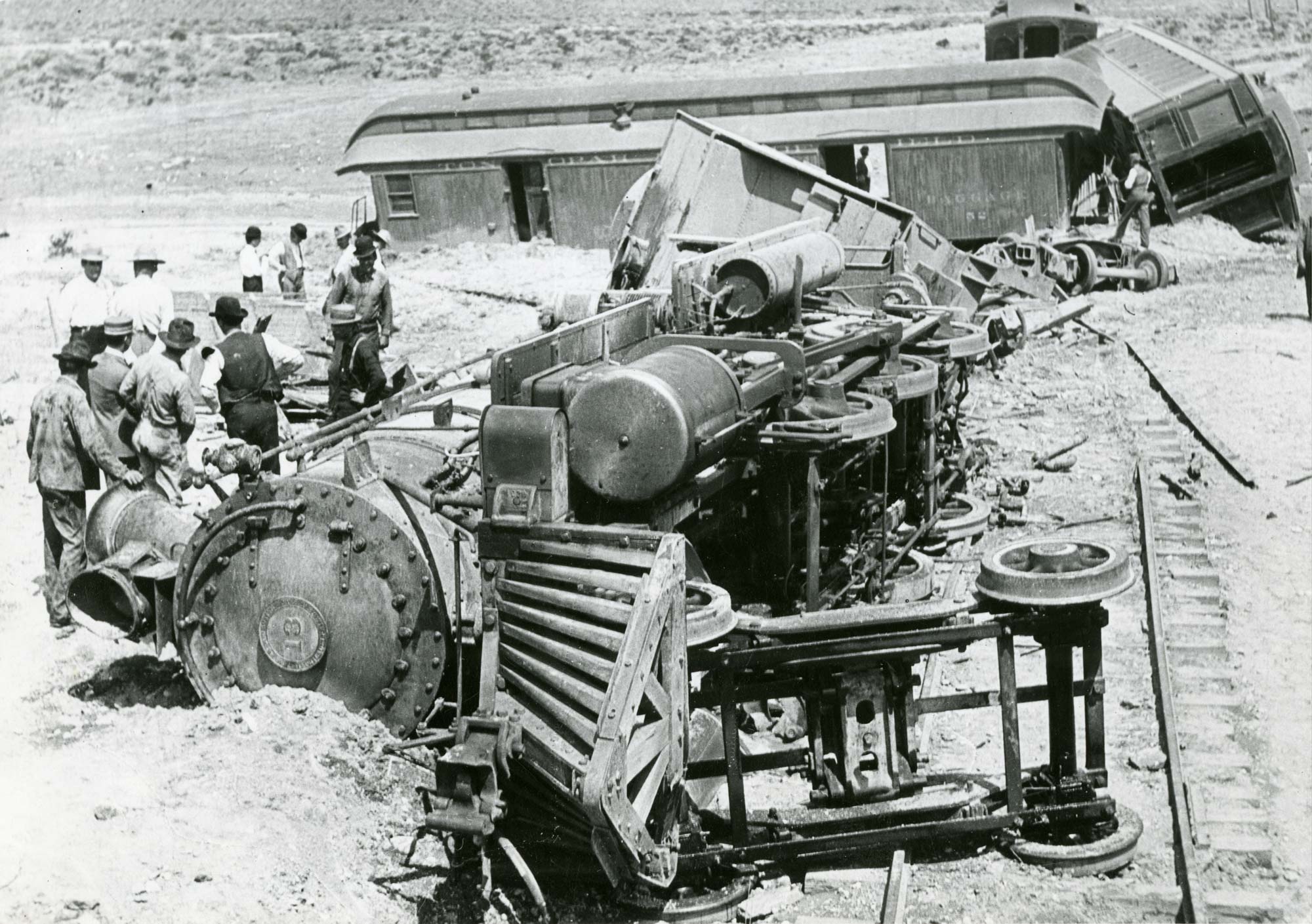
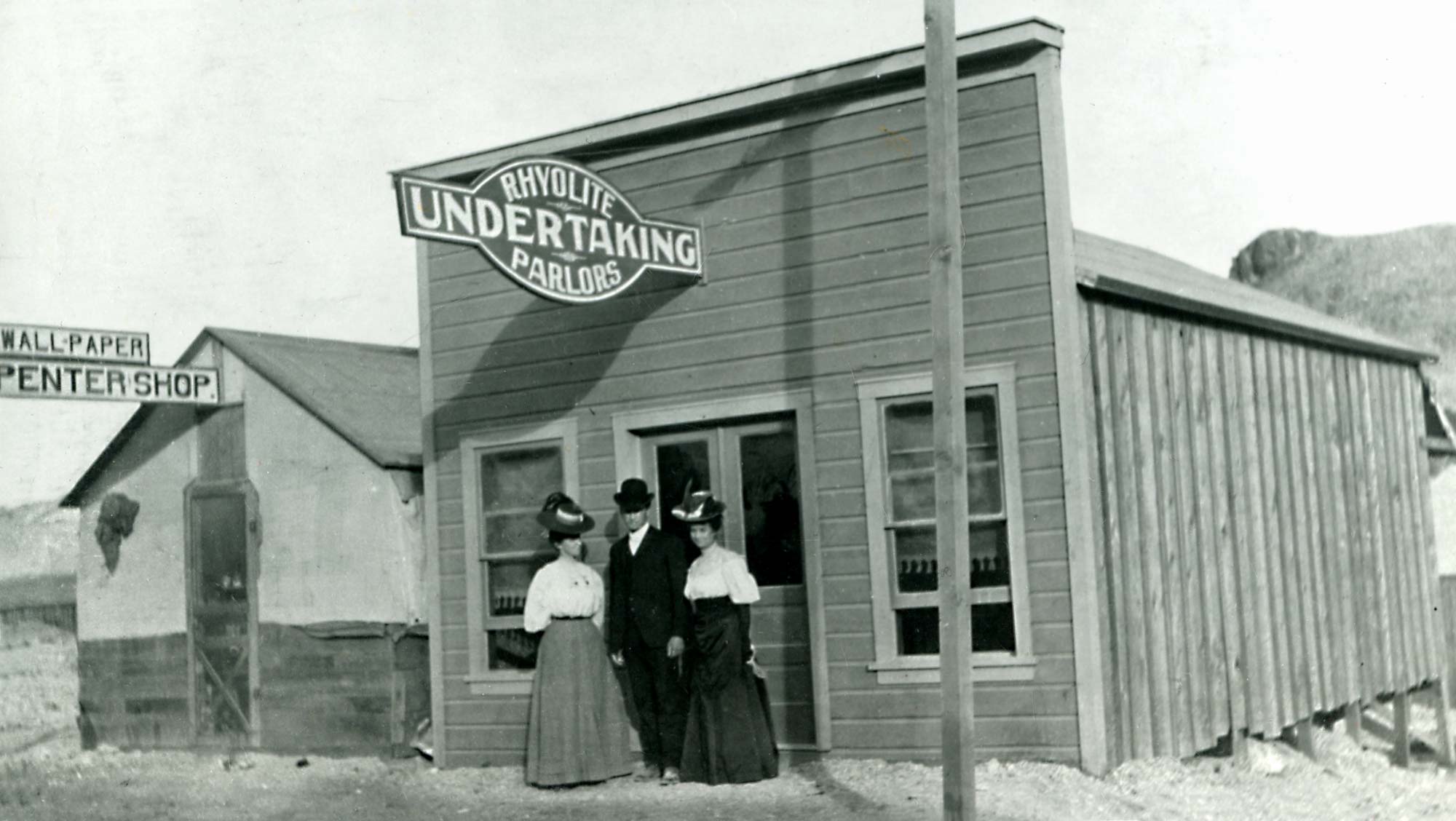
Rhyolite Photographer A.E. Holt
Of all the Nevada ghost towns, Rhyolite had the most spectacular growth, followed by a symmetrically steep and precipitous fall. In the other short-lived boomtowns, there may be nothing to remind the world of what once was, beyond a pile of jumbled concrete or twisted and decayed wooden boards. We may have but a few photographs of the people who rushed to a bonanza rumor or followed a speculative folly even after it was melting into mirage.
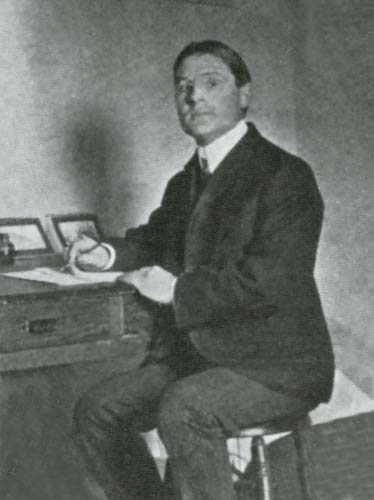
In Rhyolite, however, we are fortunate that among the people who stampeded to the Bullfrog discovery was a young man who came to town in late April of 1905 with a printing press. Allan Eugene Holt was hired in Salt Lake City by the soon-to-be Rhyolite Herald’s publisher, Earl. R. Clemens, to accompany the nascent newspaper’s printing press to town. They took the new Salt Lake, Los Angeles & San Pedro Railroad to Caliente, Nevada, followed by a dusty wagon ride to Goldfield and on to Rhyolite. Clemens and Holt saw the first edition of the Rhyolite Herald published on May 5, 1905.
“By June 23, the Herald was on sale in Goldfield, Los Angeles, San Francisco, Denver, and Salt Lake City….Three weeks later the Herald published its first photograph, a front-page panorama of Rhyolite and its mines. It was taken by Allan Holt, who soon became the leading photographer of the newspaper and of the Bullfrog District.”
“Earle Clemens and the Rhyolite Herald: Twentieth-Century Nevada Pioneers,” by Alan Hensher. Southern California Quarterly, September 1967, p. 313.
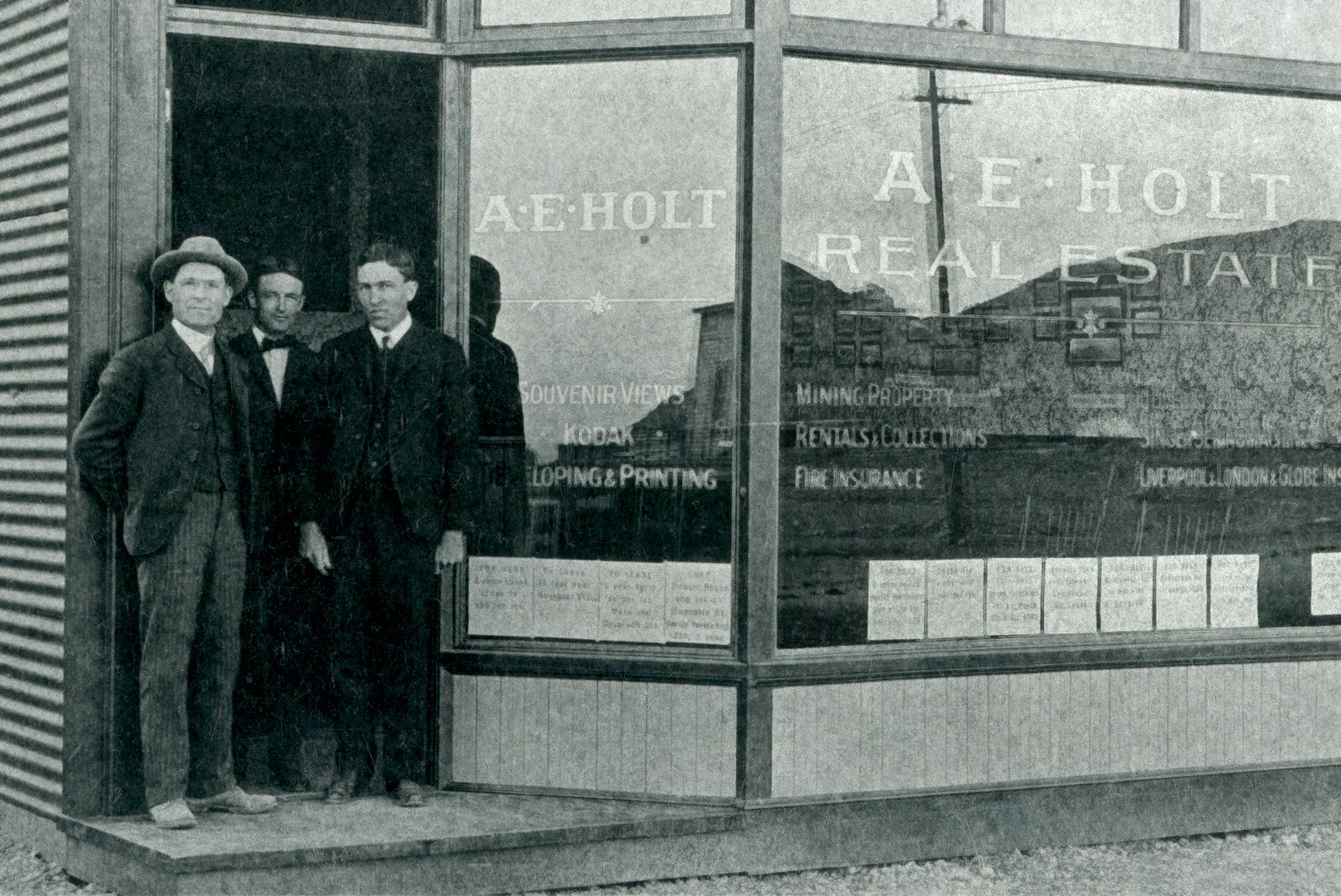
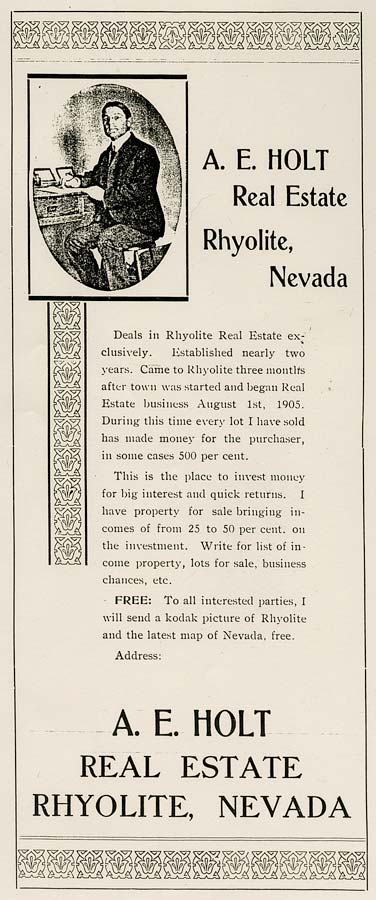
Holt, however, then sought to make his fortune not in printer’s ink or gold mining, but in the town’s red-hot real estate market. As he wrote on the photo-postcard of his new storefront (below),
“Here is a picture of my office….Better come down here and see Rhyolite. Good luck to you. A.E. Holt”
Holt, also known as “Gene,” was clearly proud of his new establishment, and his burgeoning community, as it promised a bright future for a real estate broker. But Holt continued in his other occupation, as noted by the signage on his windows:
“Souvenir Views. Kodak Developing and Printing.”
With his innate sense of composition and his instinct for the decisive moment, Holt documented each of the Bullfrog mines, and all of the milestones of Rhyolite’s ascent, such as the departure of the first shipment of gold ore, or the arrival of the first passenger train. The distribution of these images, many as postcards, served to publicize the town’s rising status and thus likely did no harm to the photographer’s bread and butter, his real estate business.
We have no record of his success in real estate, but with his darkroom likely behind his office, and his zeal to record both everyday life and the commercial milestones of Rhyolite’s ascent, we are indebted to Holt for providing more insights to the town’s life than we can ever know from the few skeletal remnants standing today.
Gallery: Rhyolite Life by A.E. Holt
Double-click for full screen view.
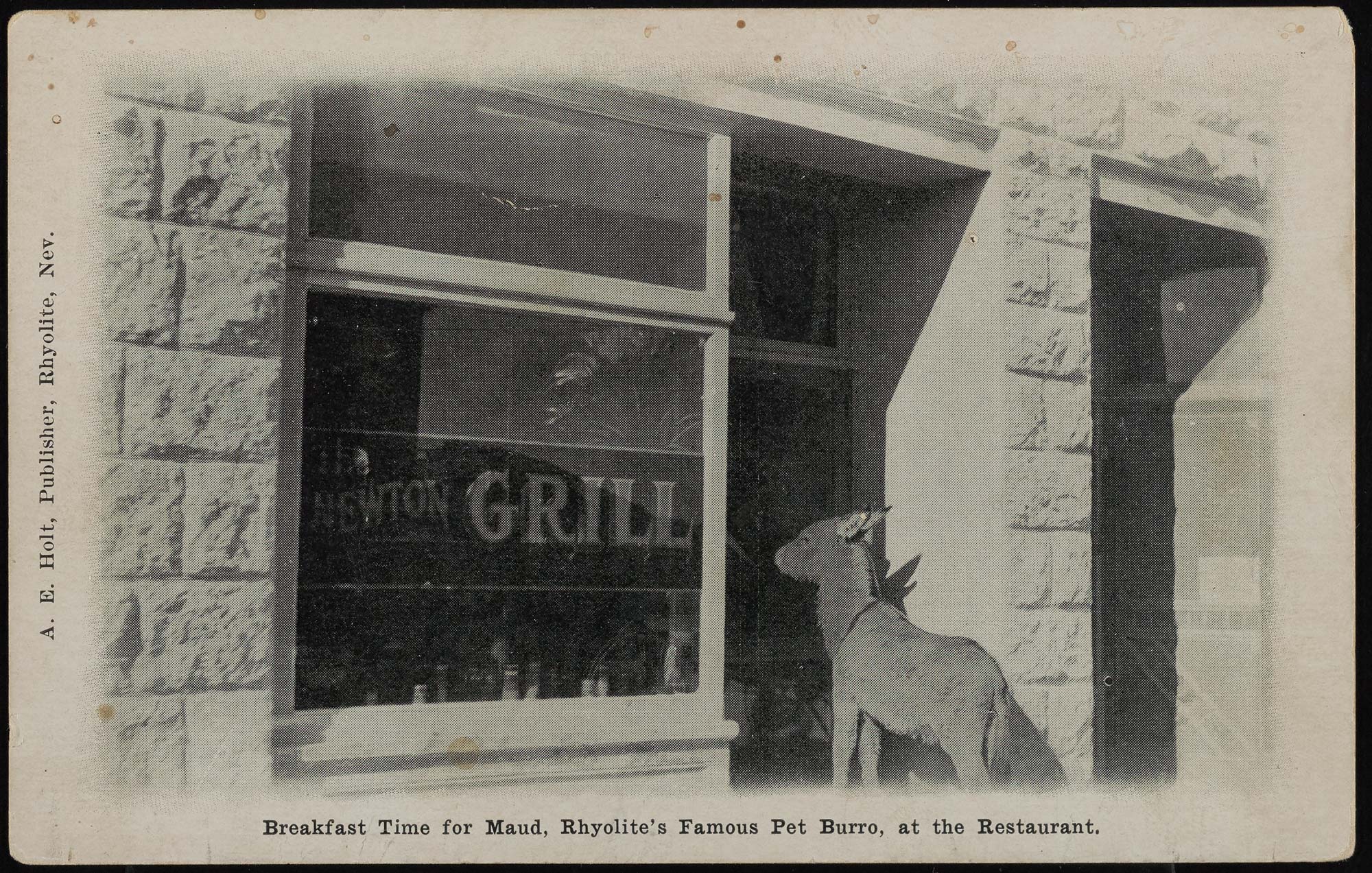
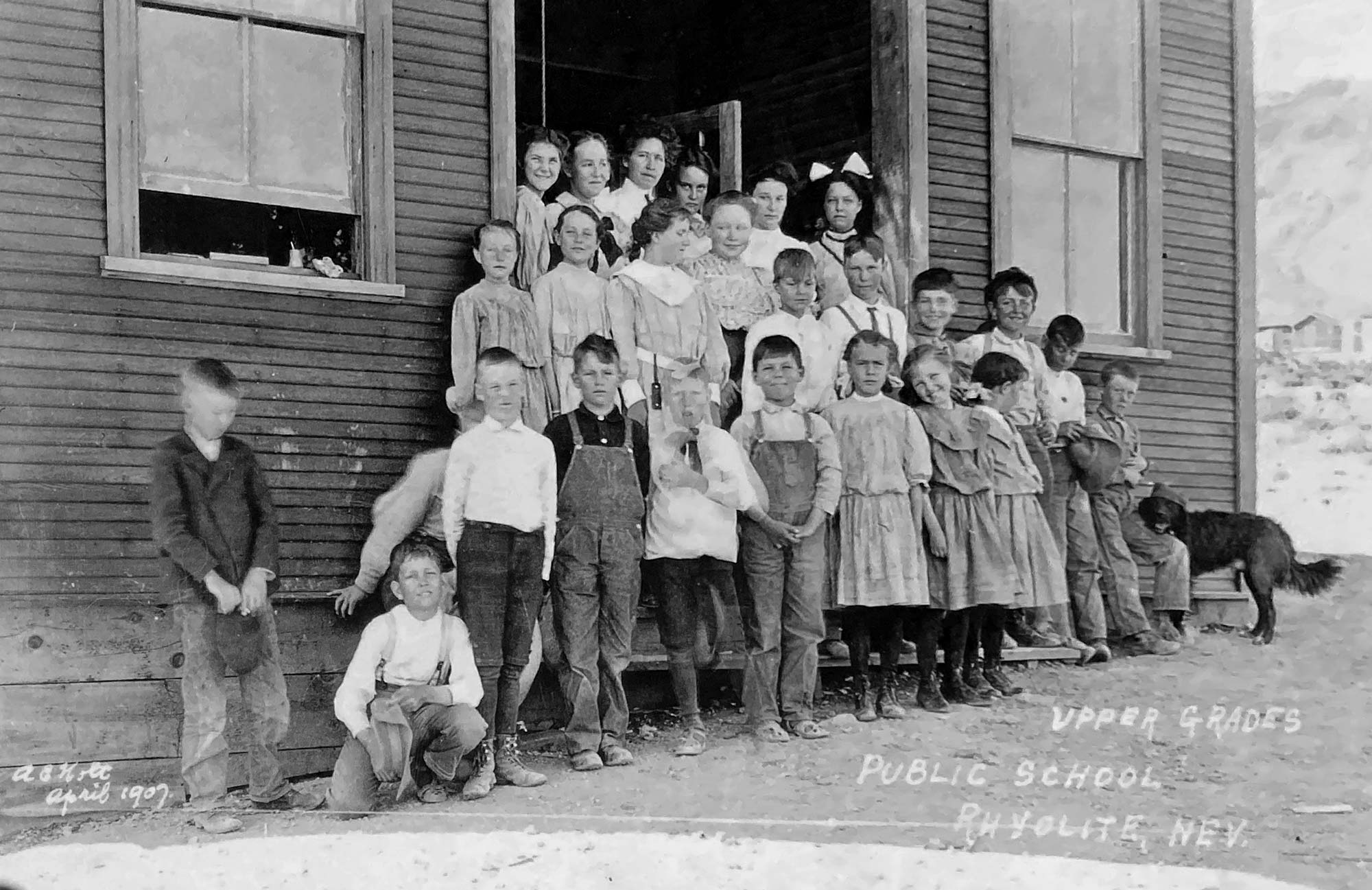
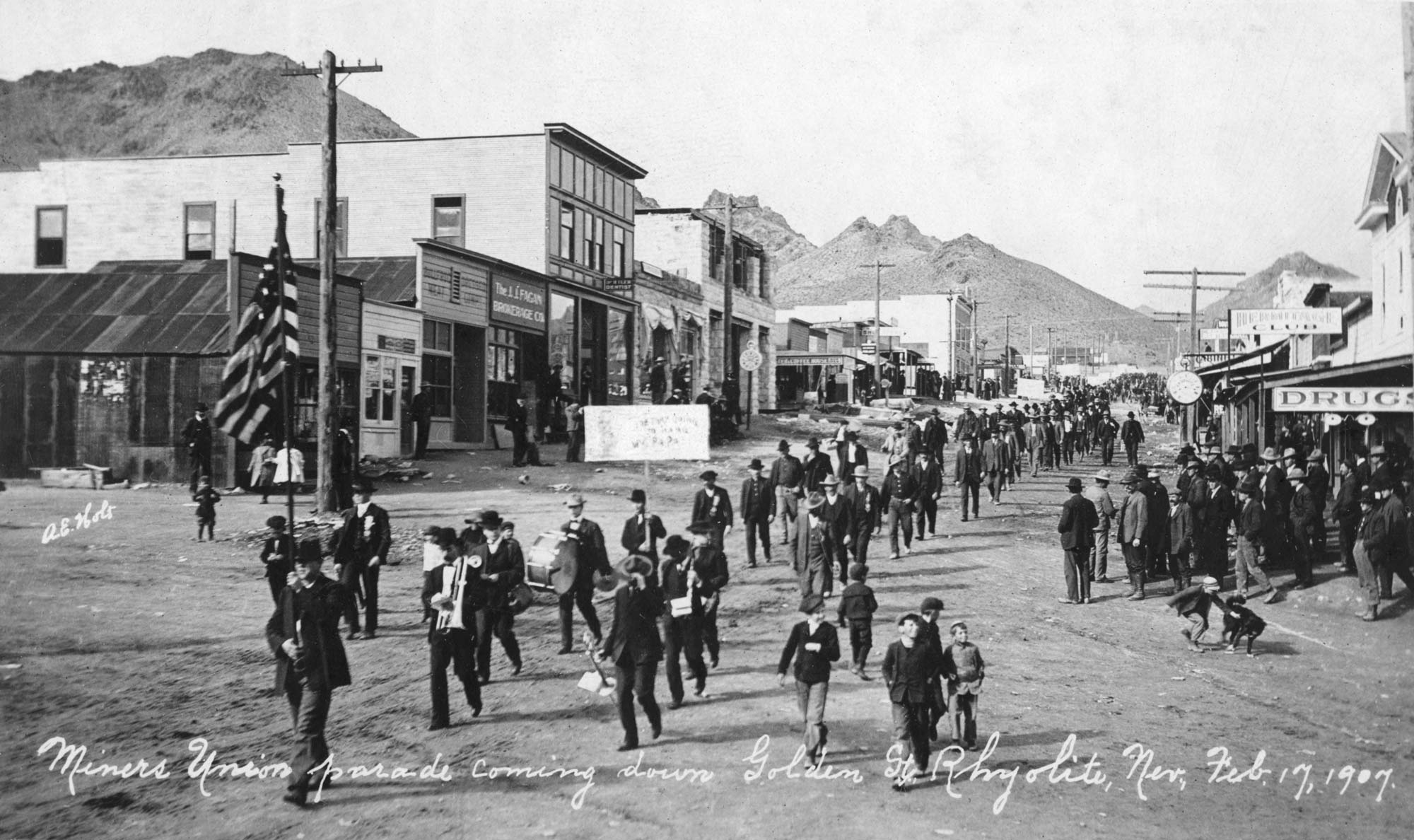
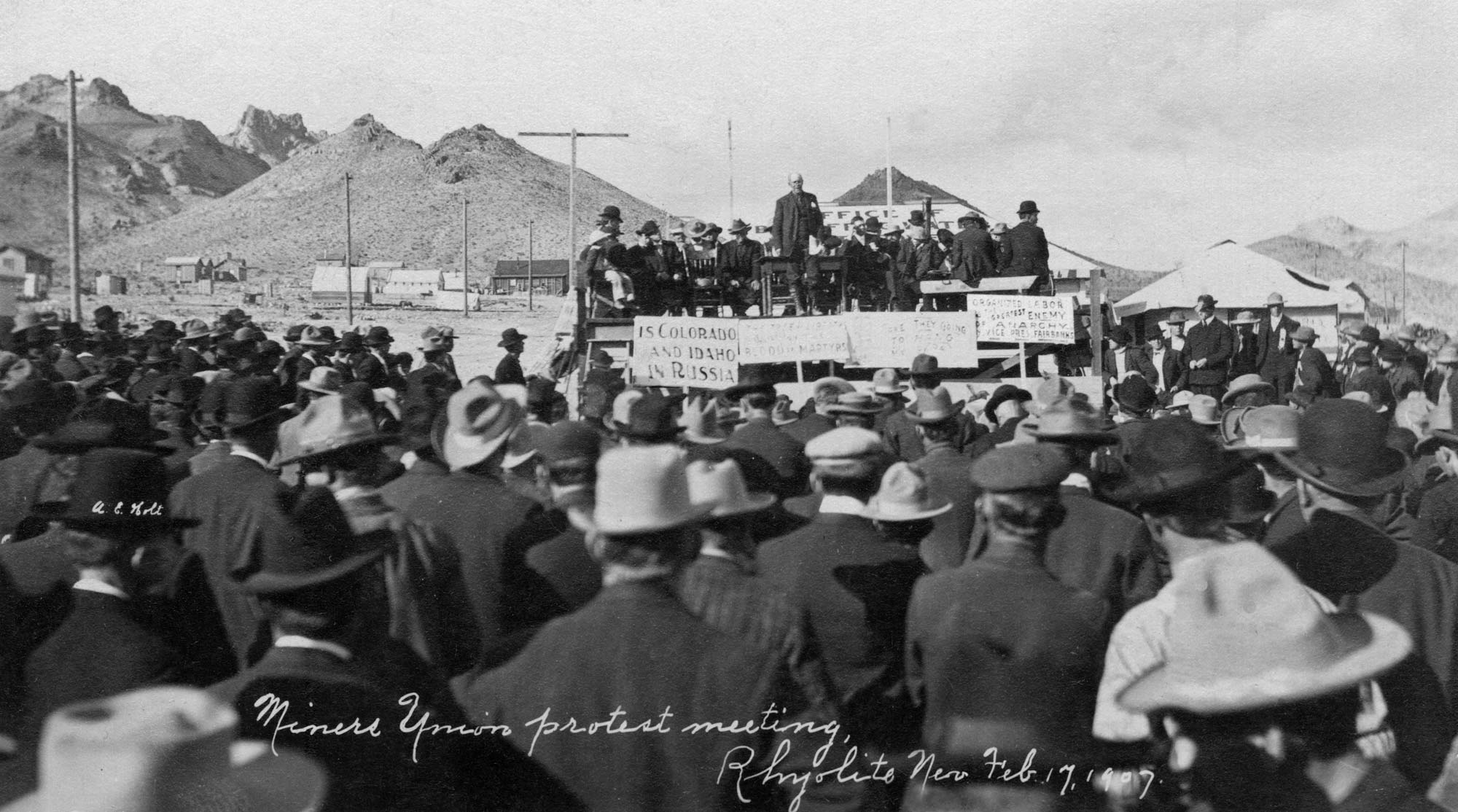
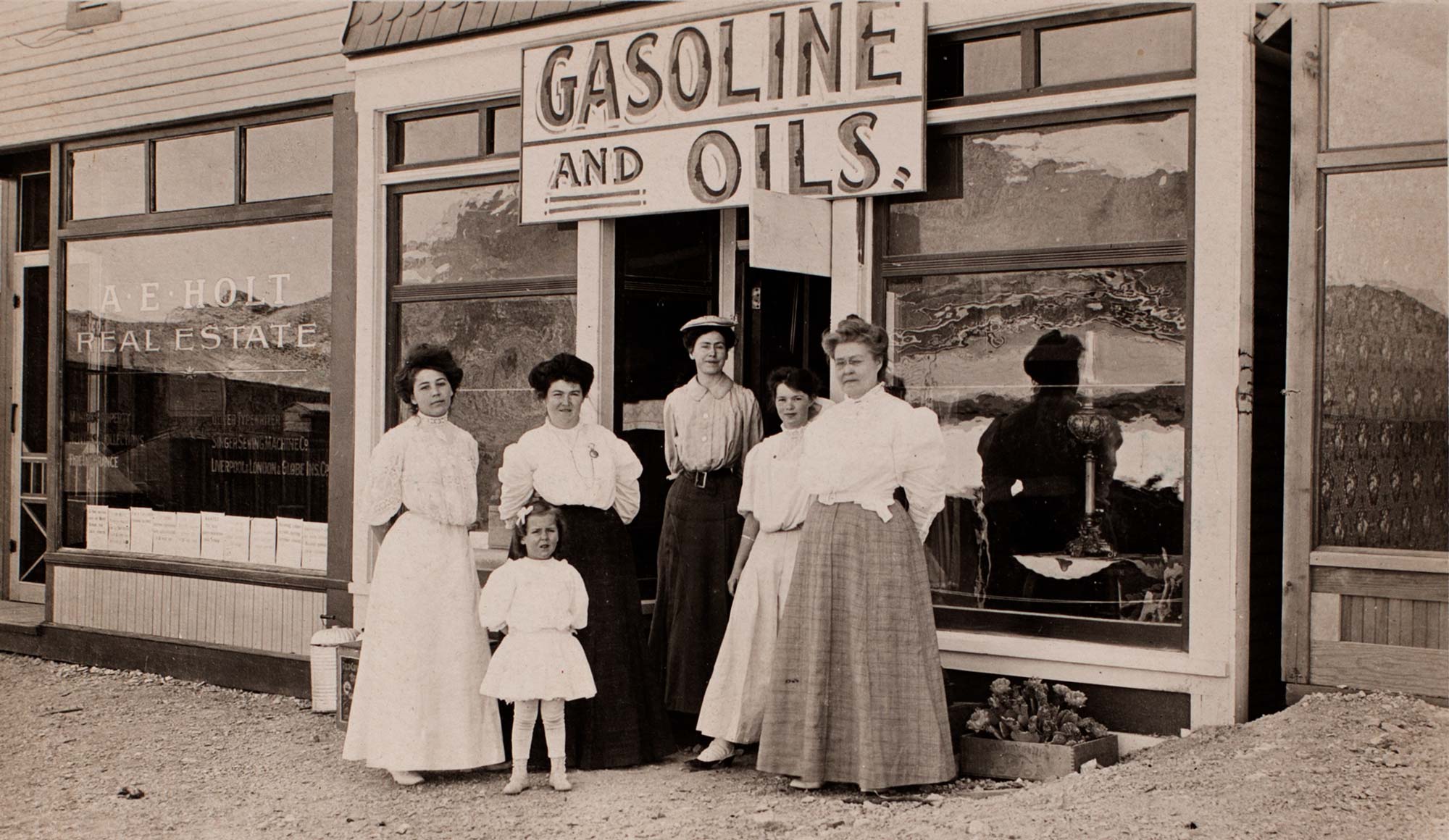
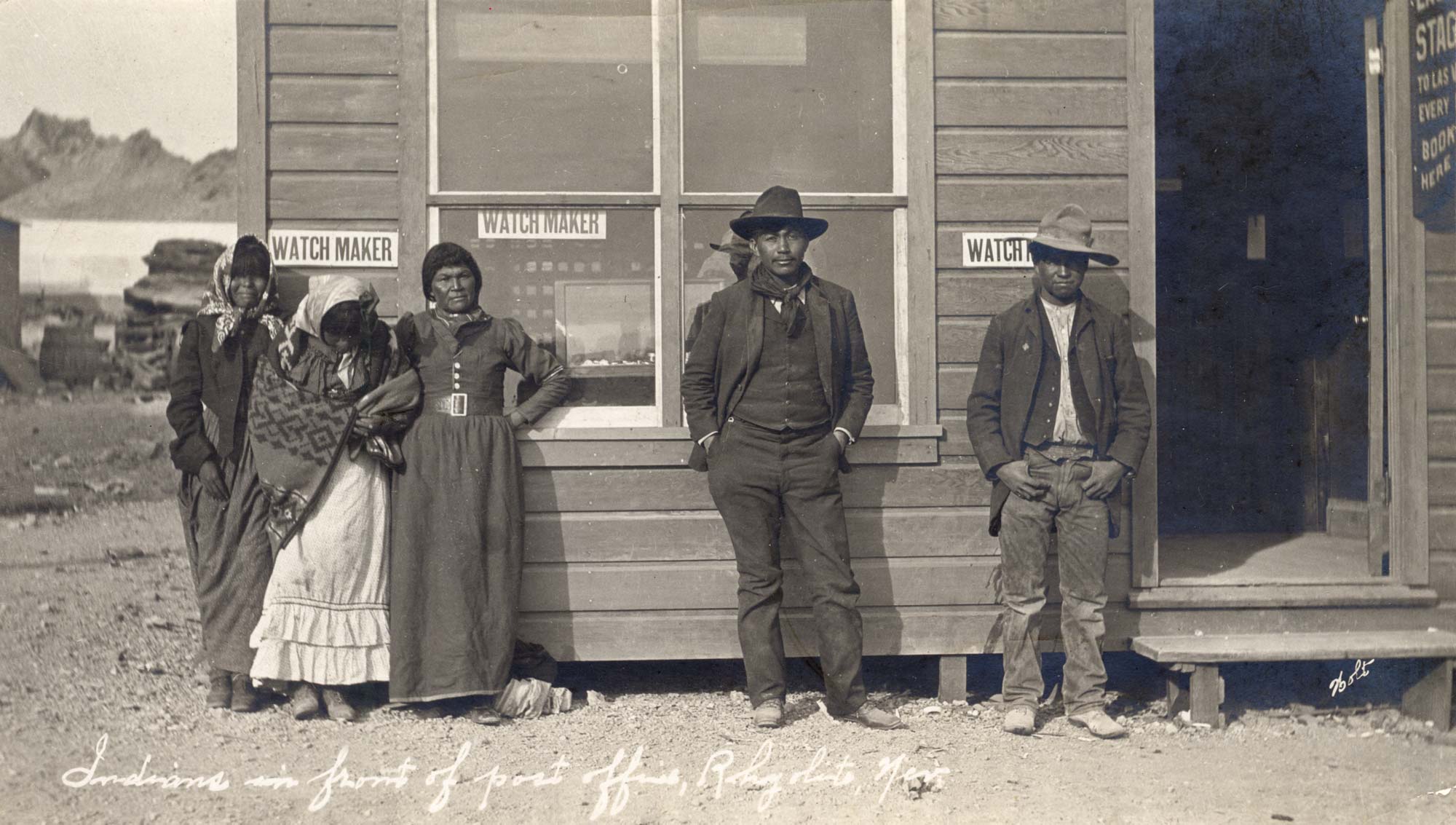
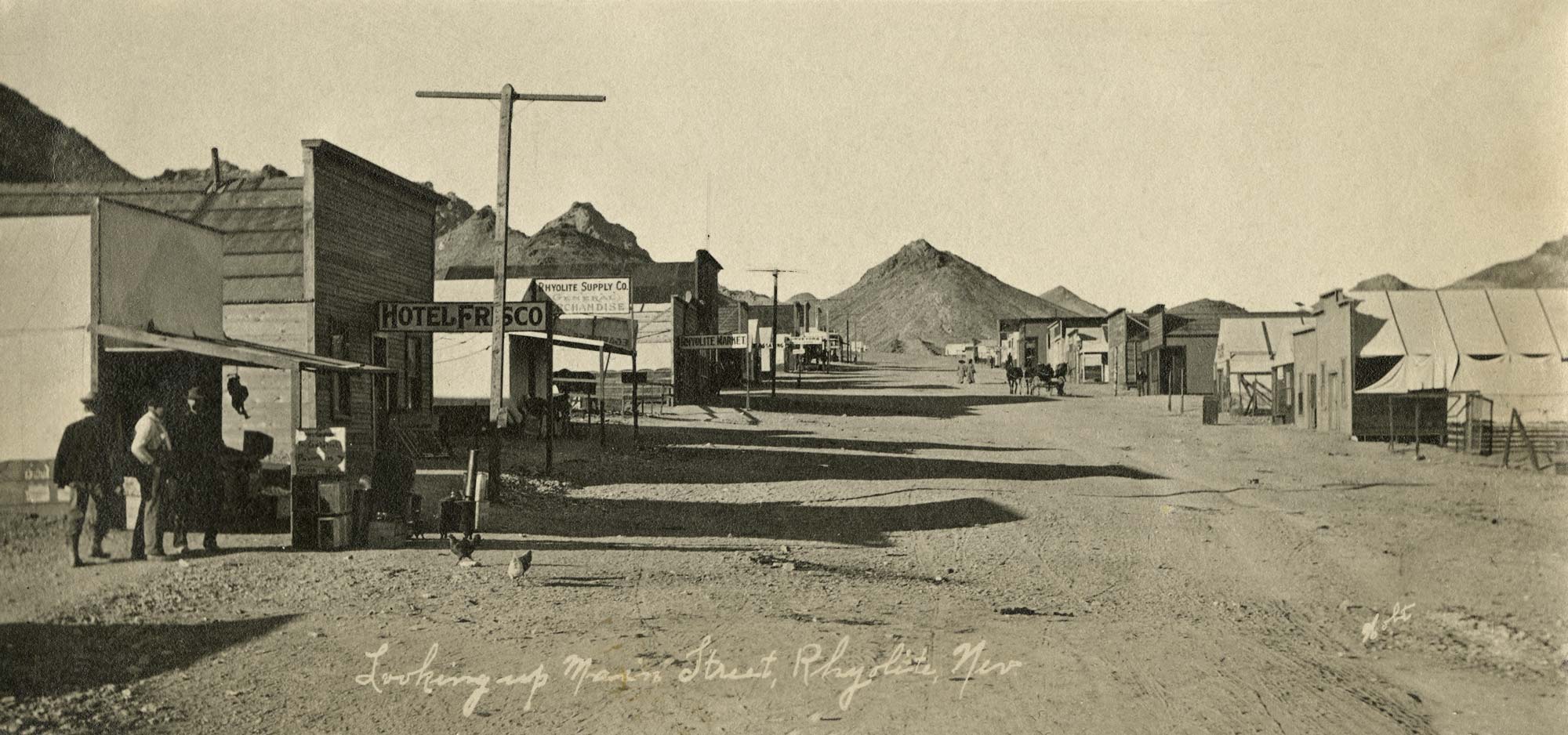
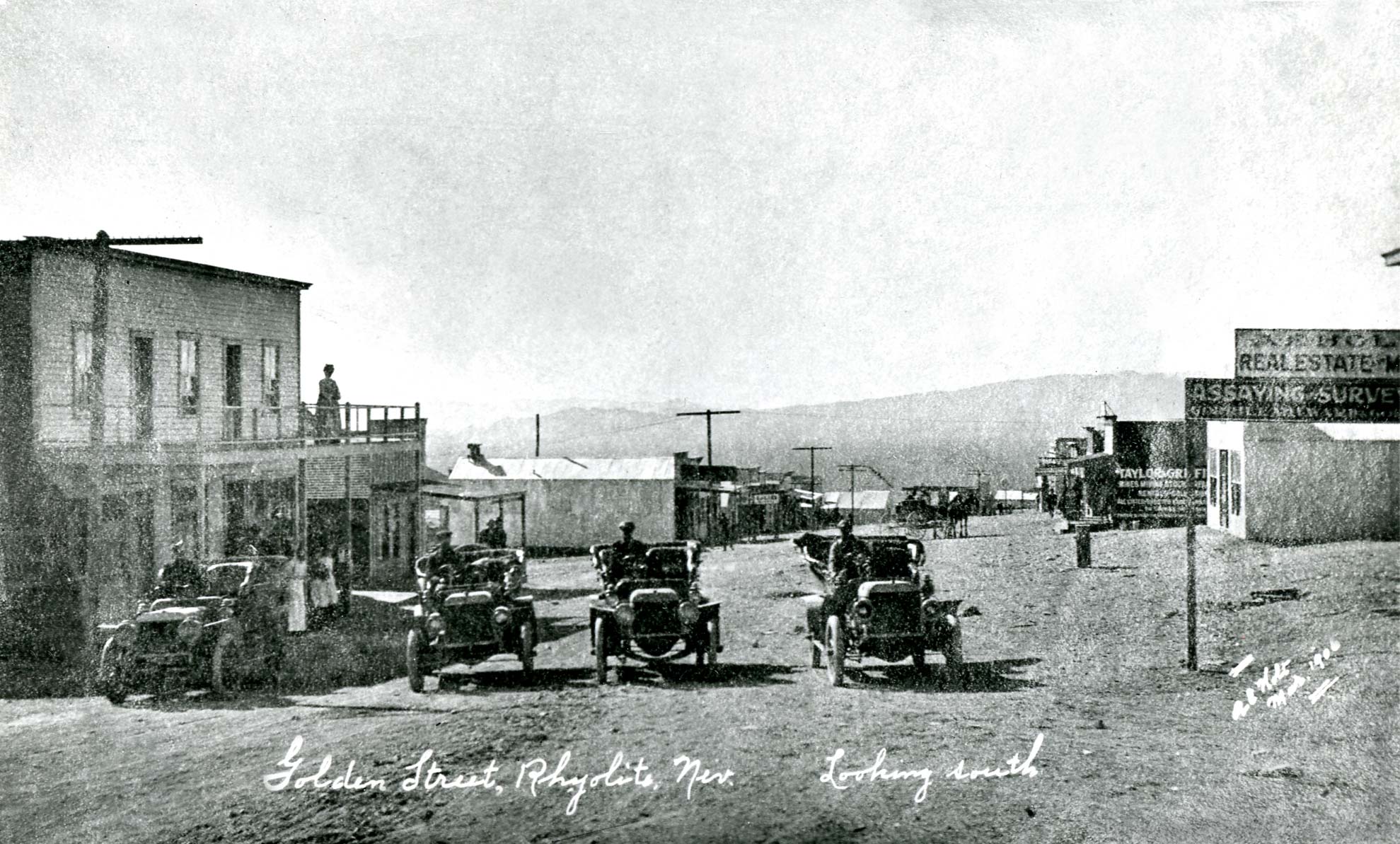
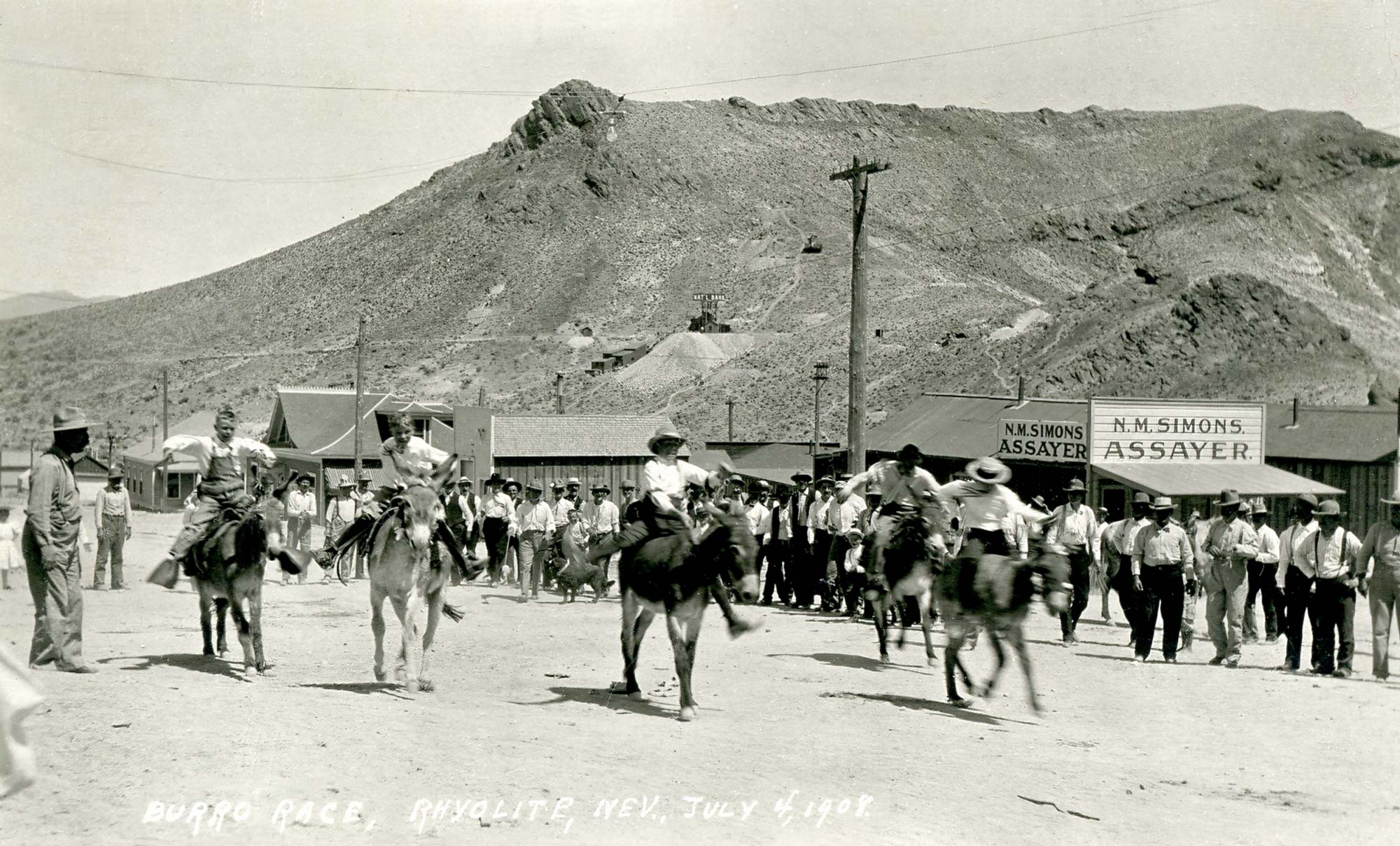
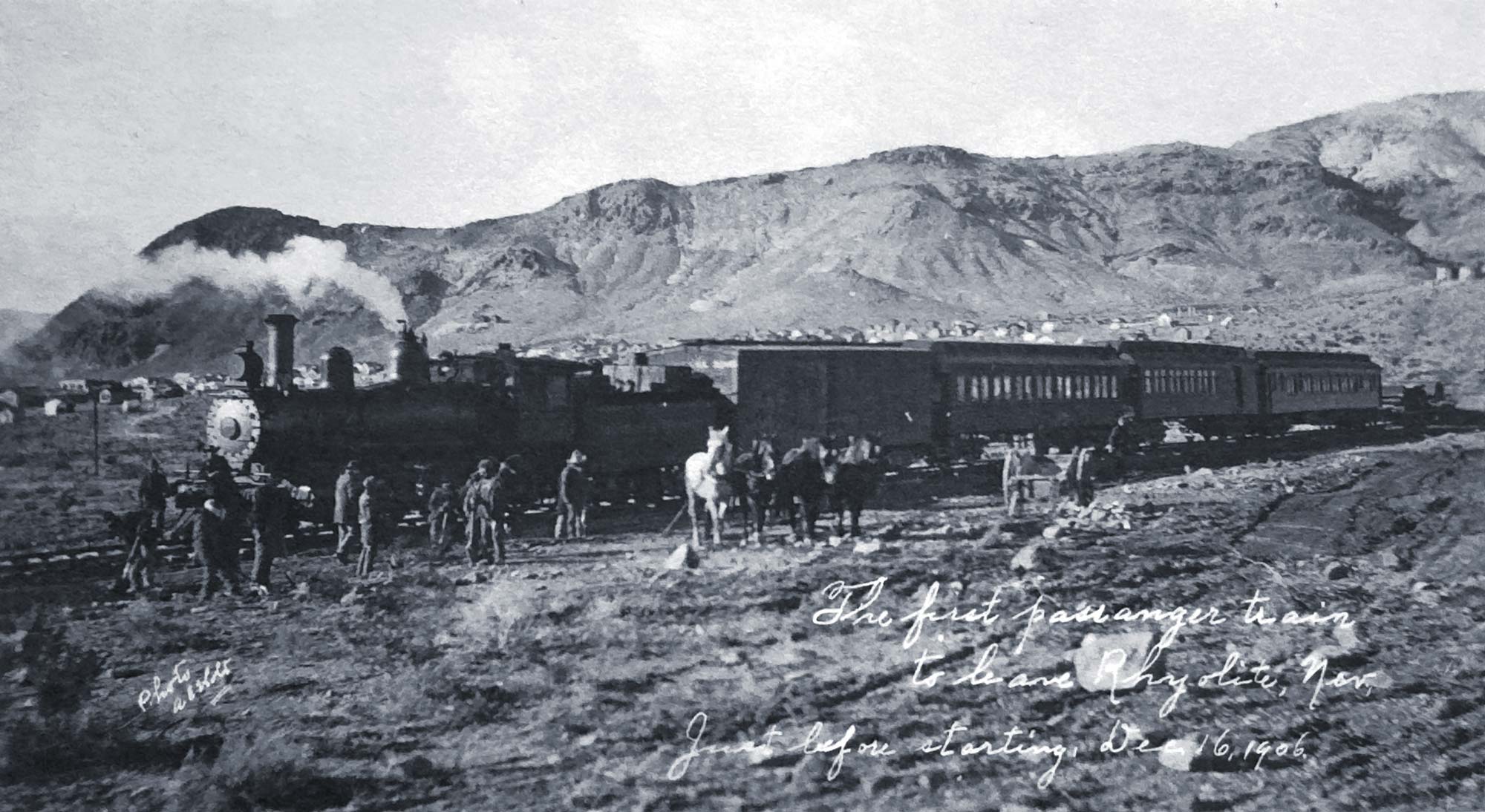
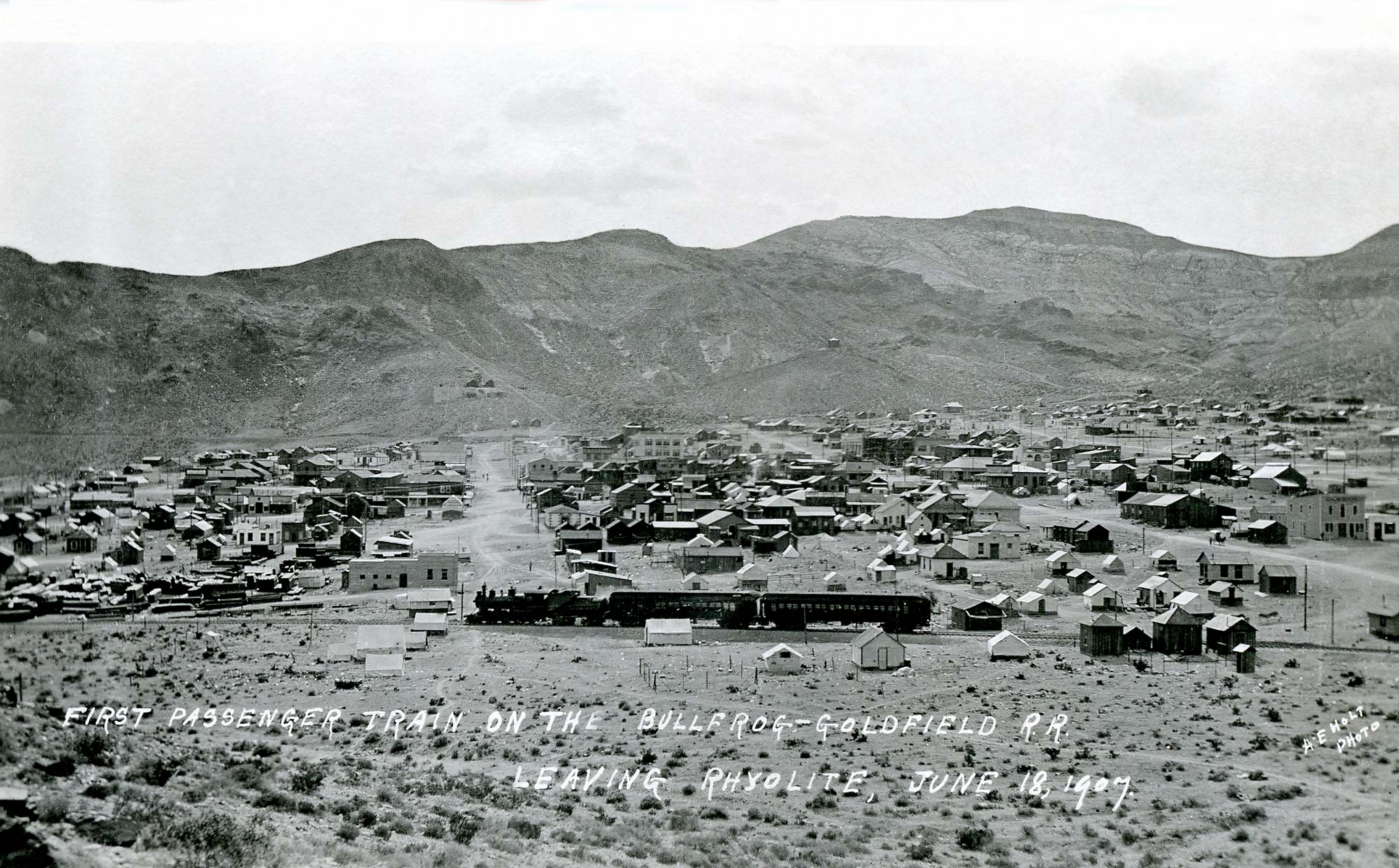
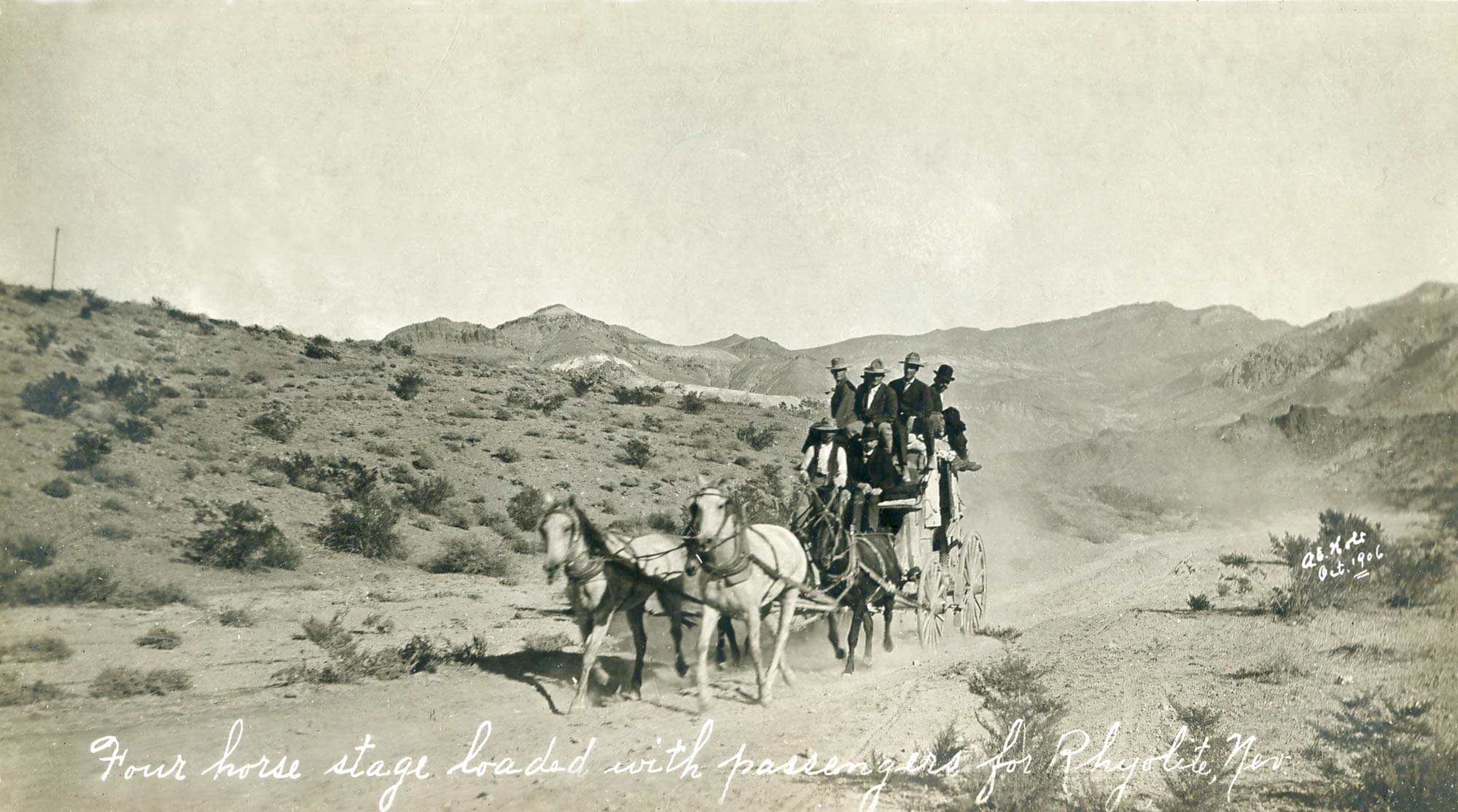
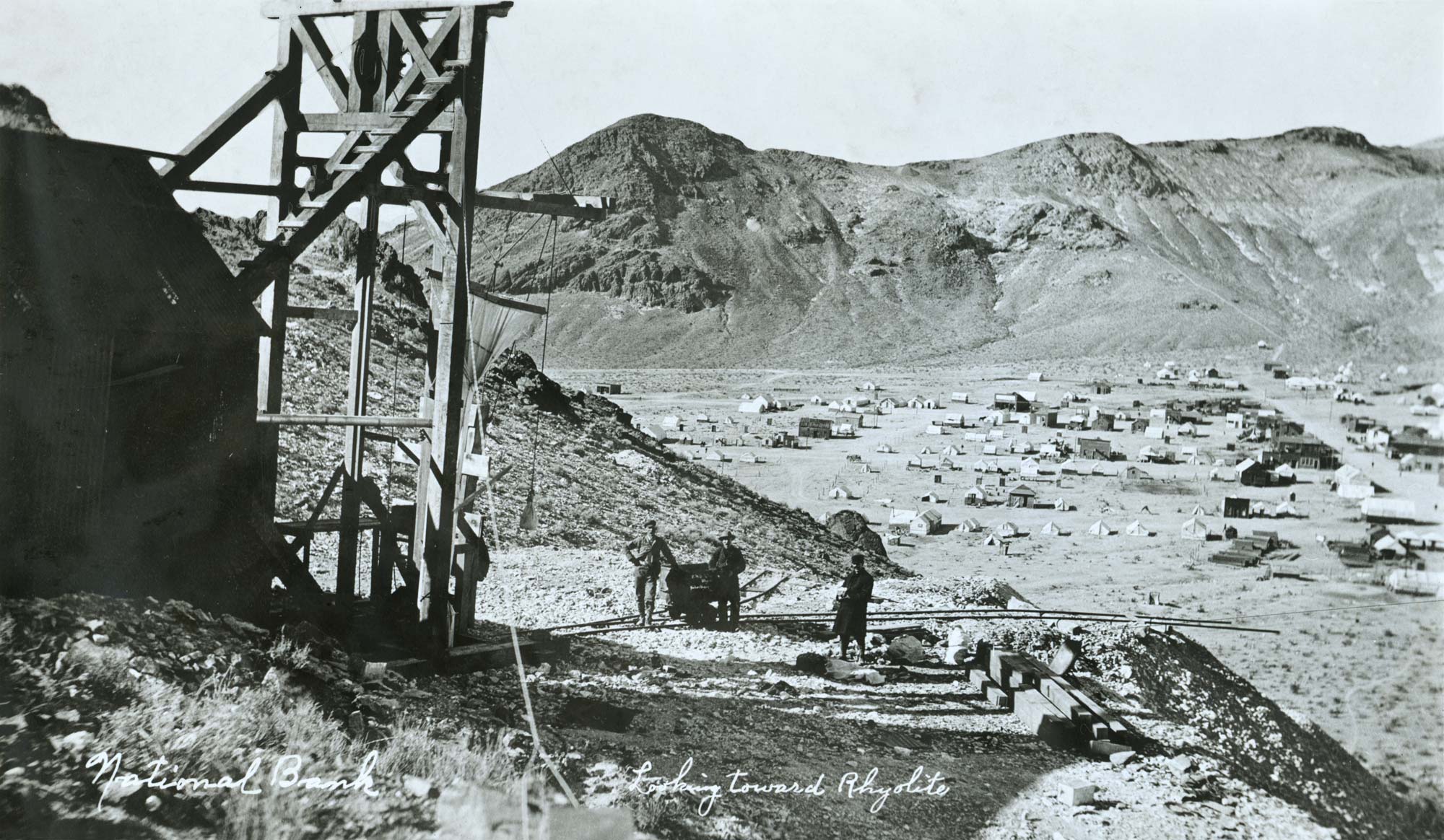
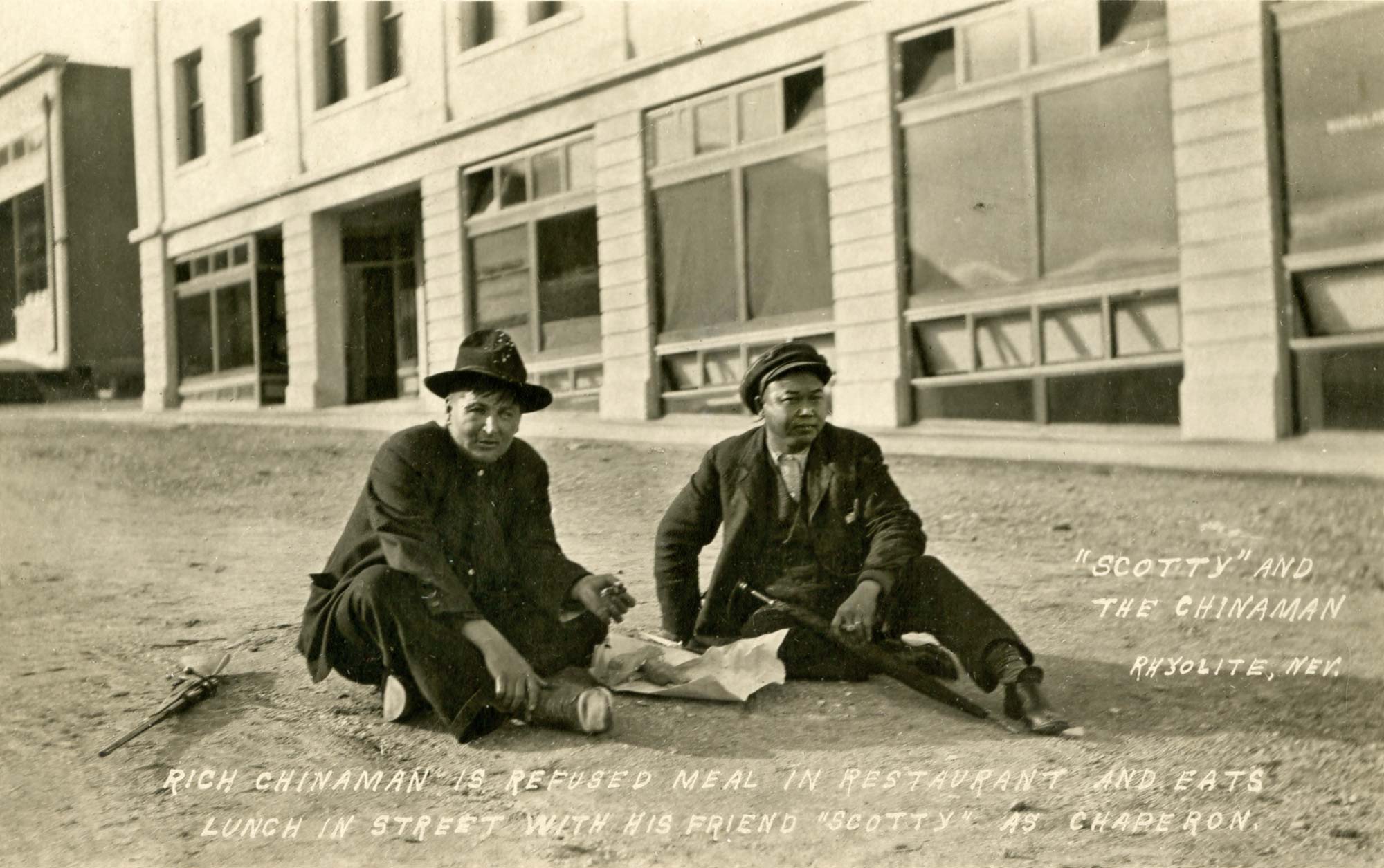
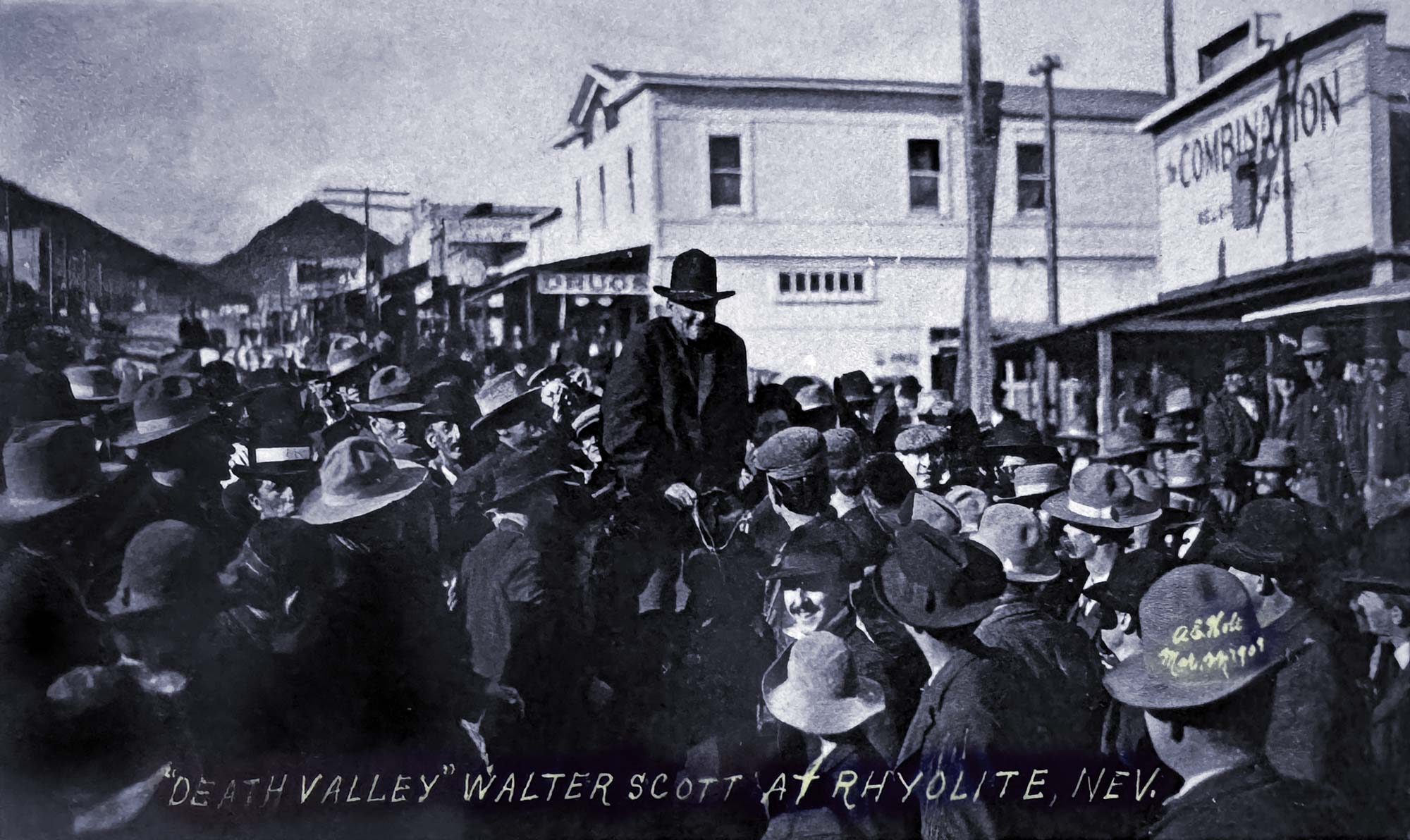
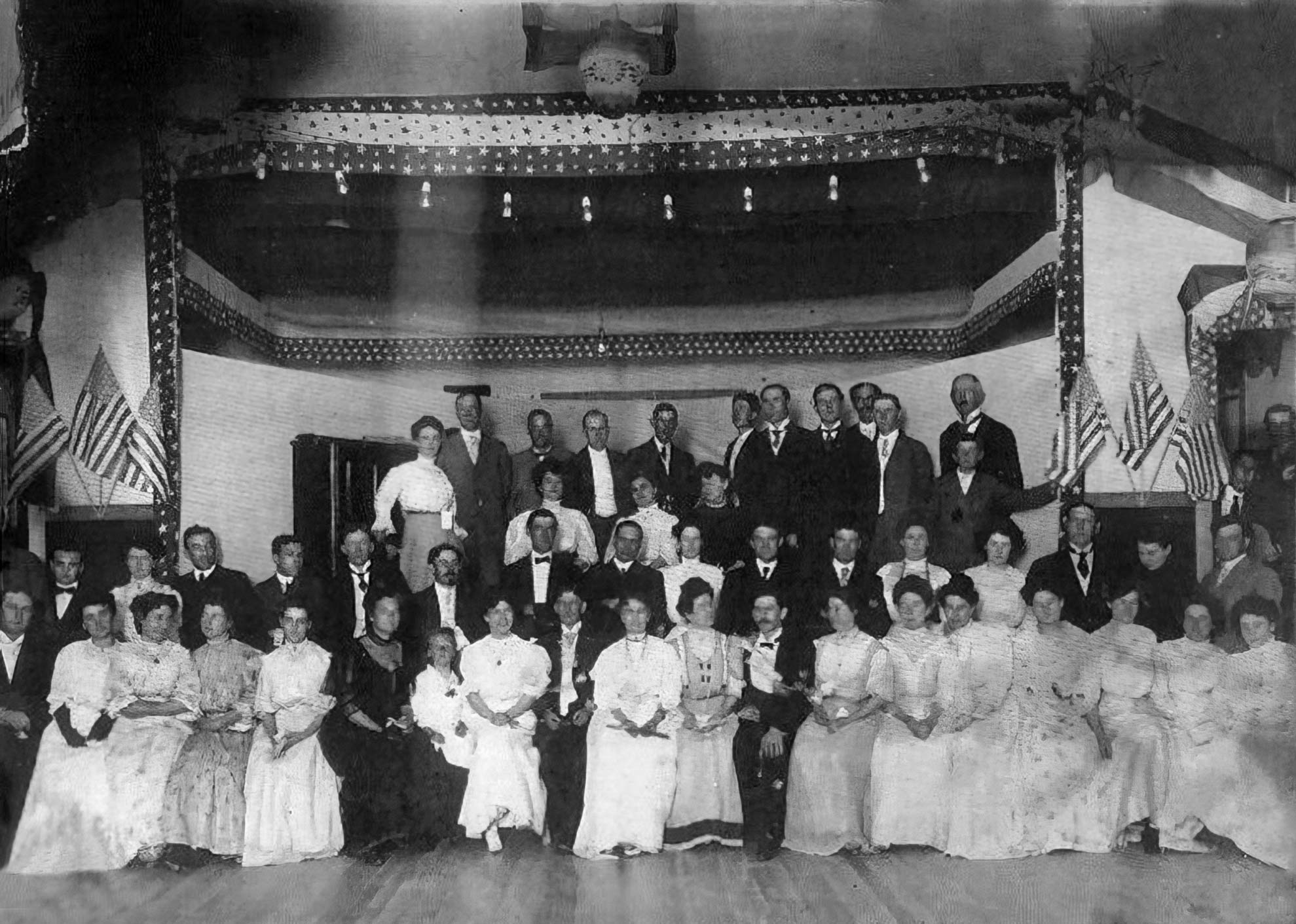
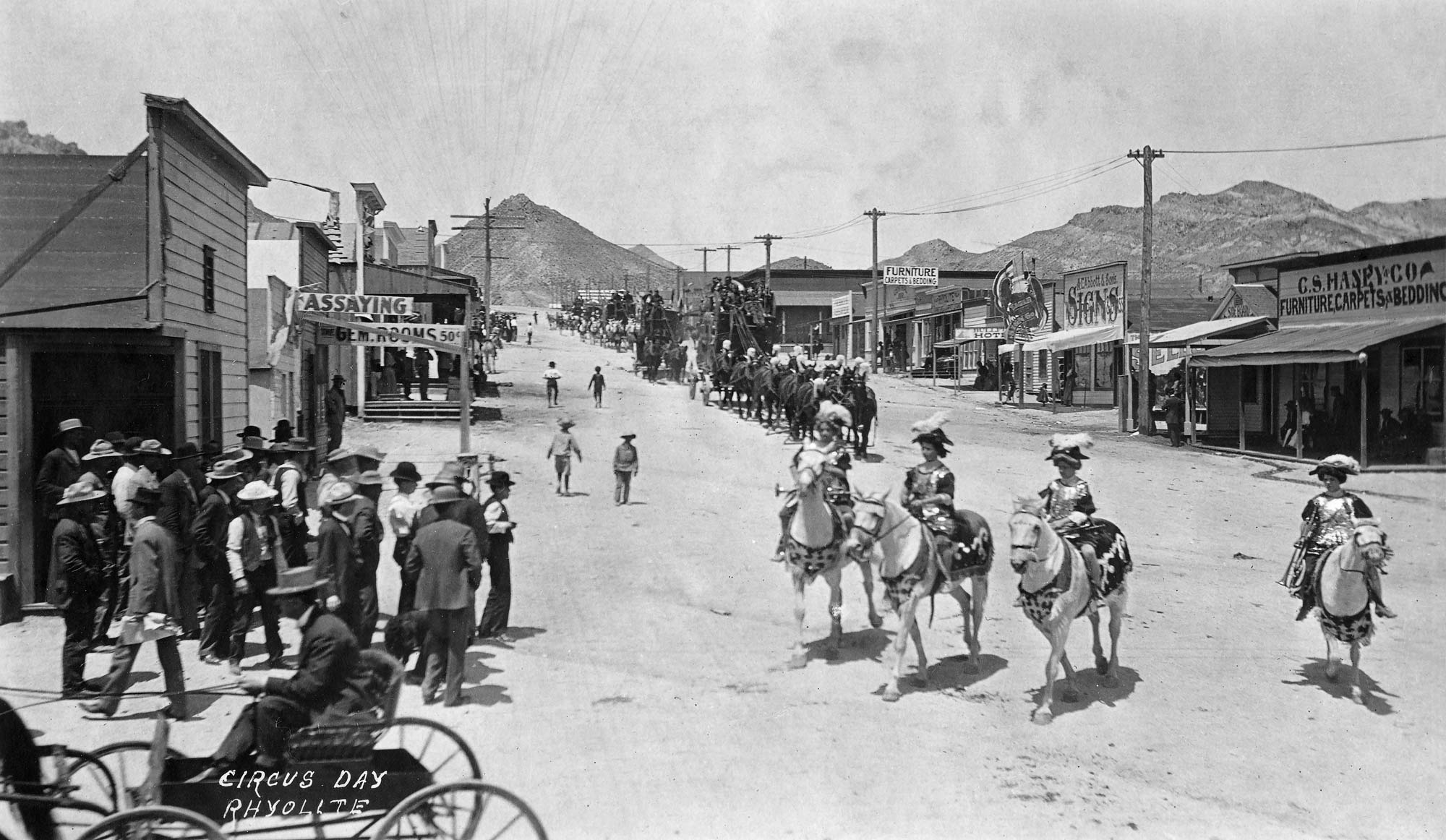
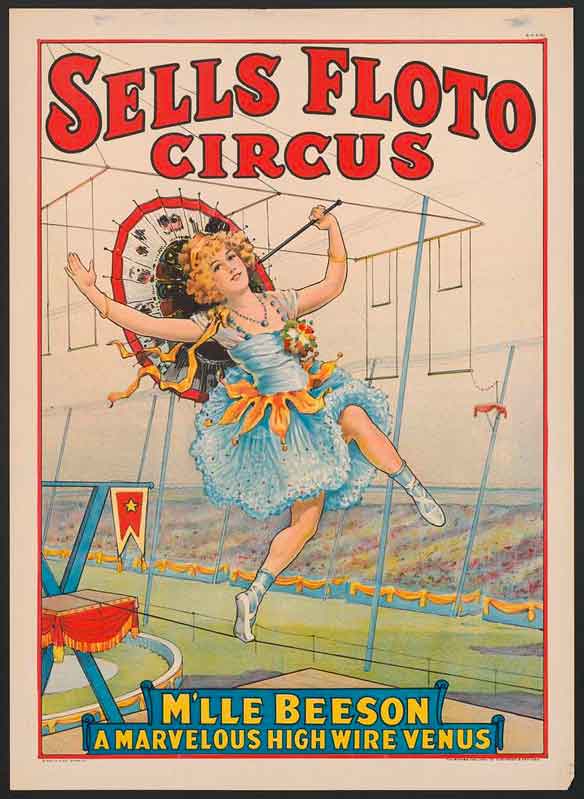
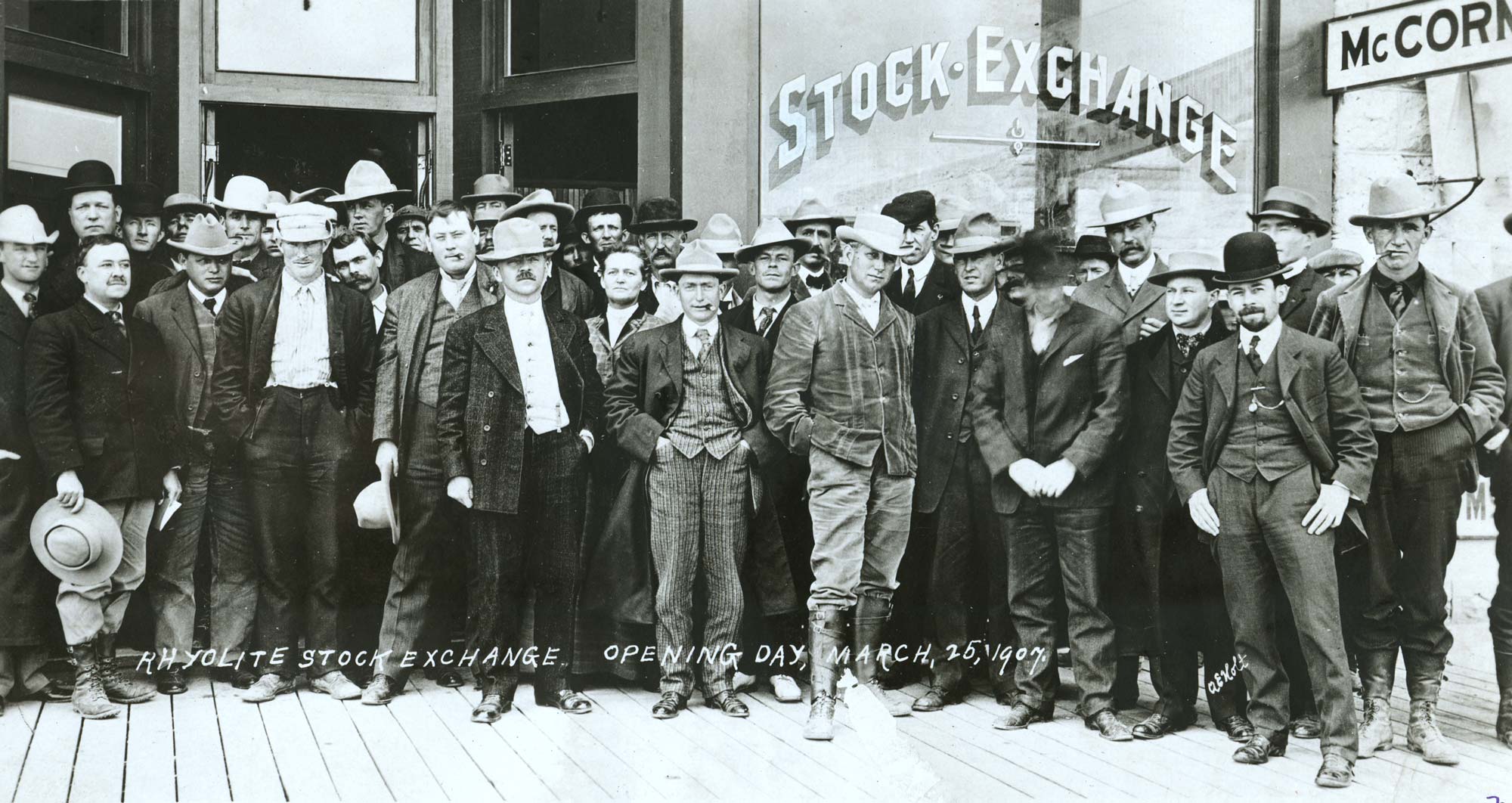
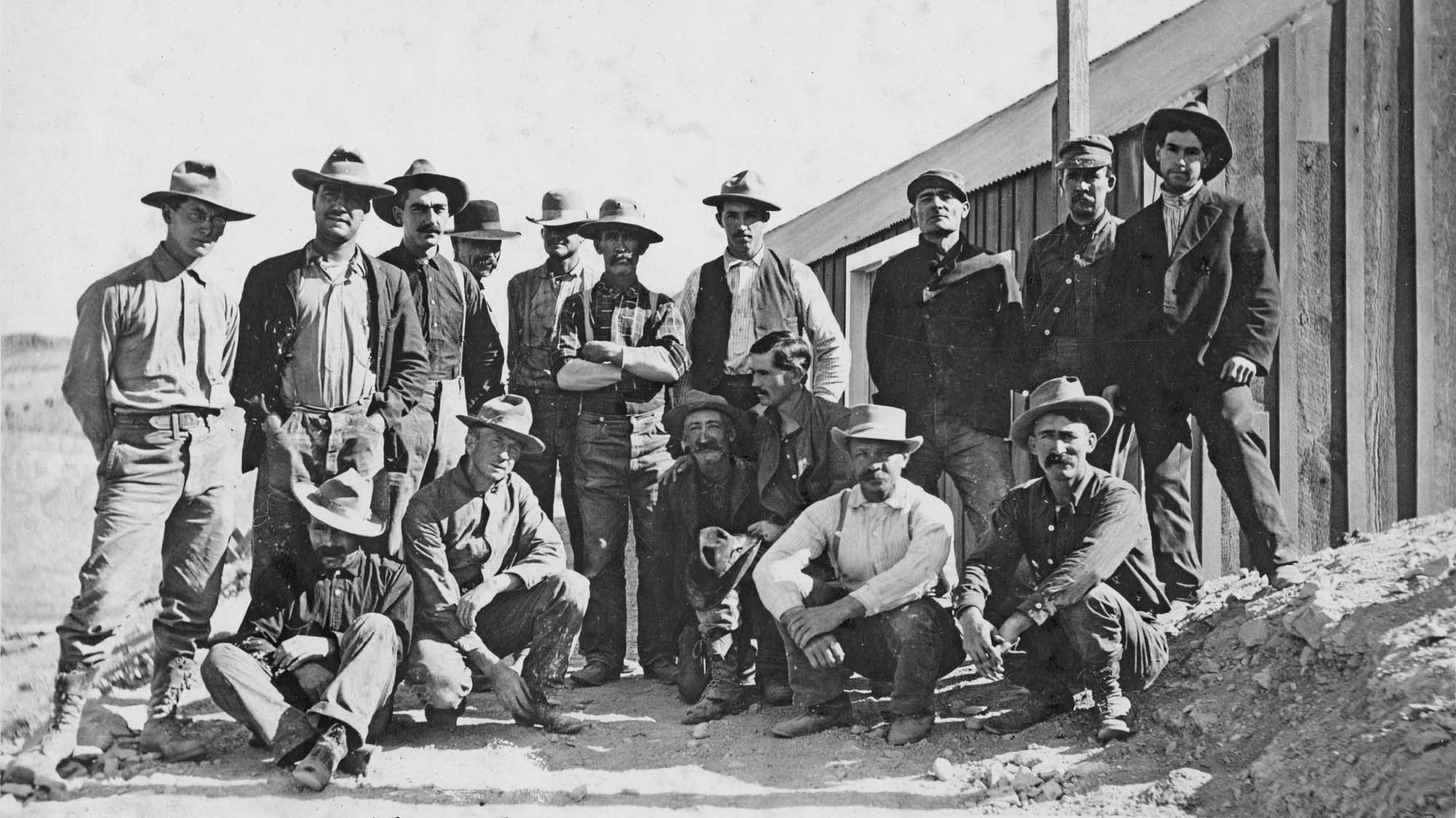
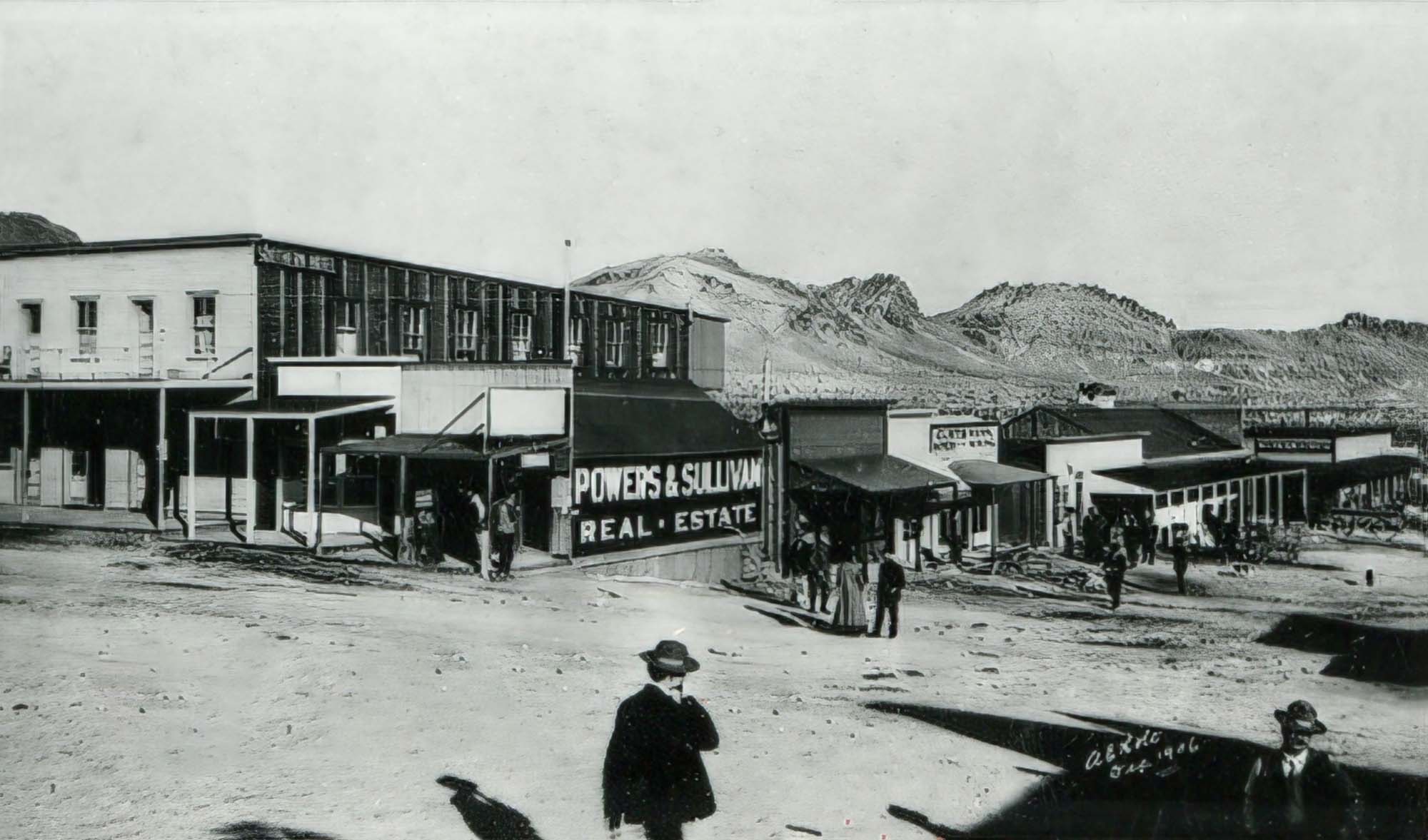
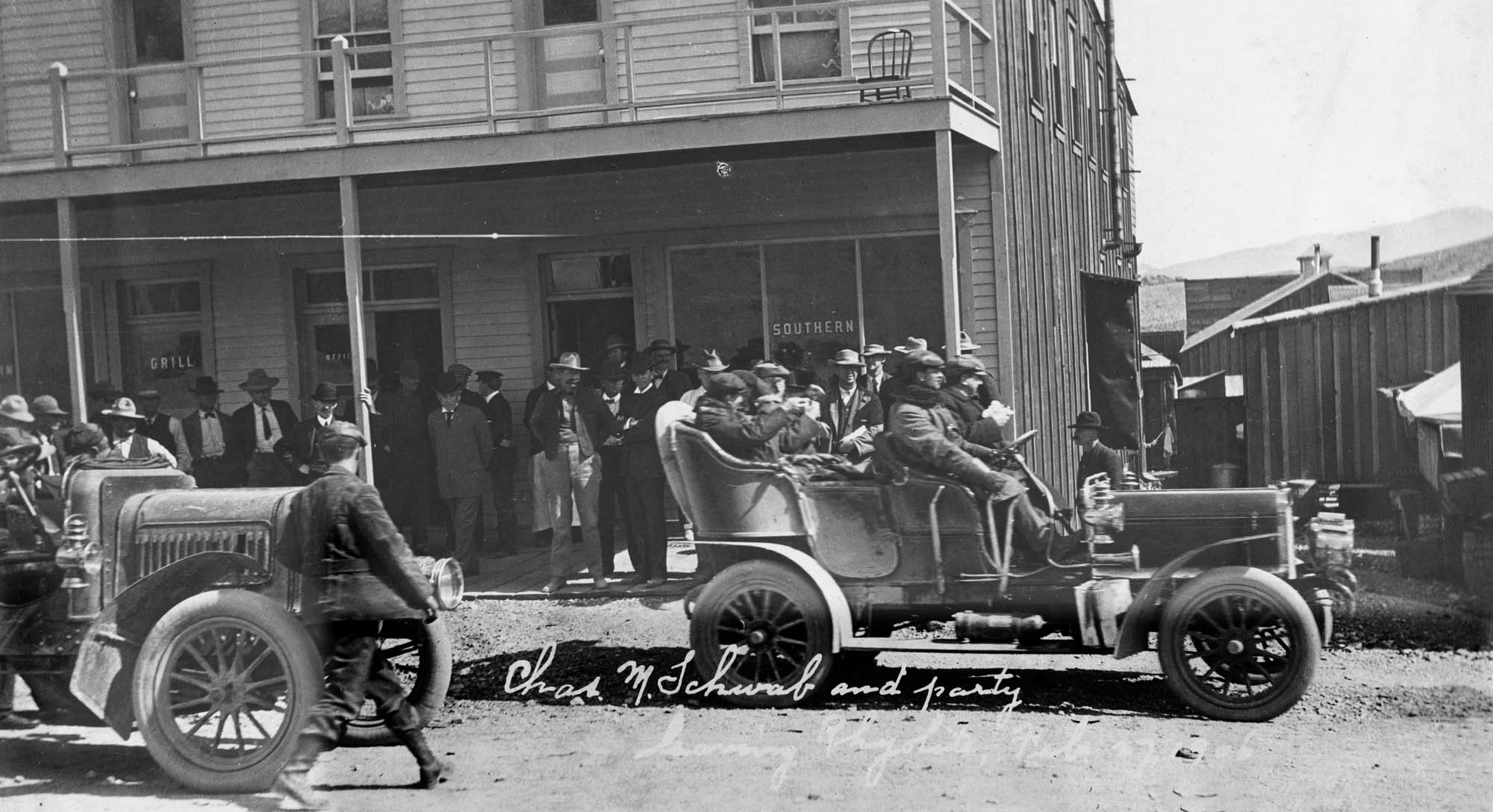
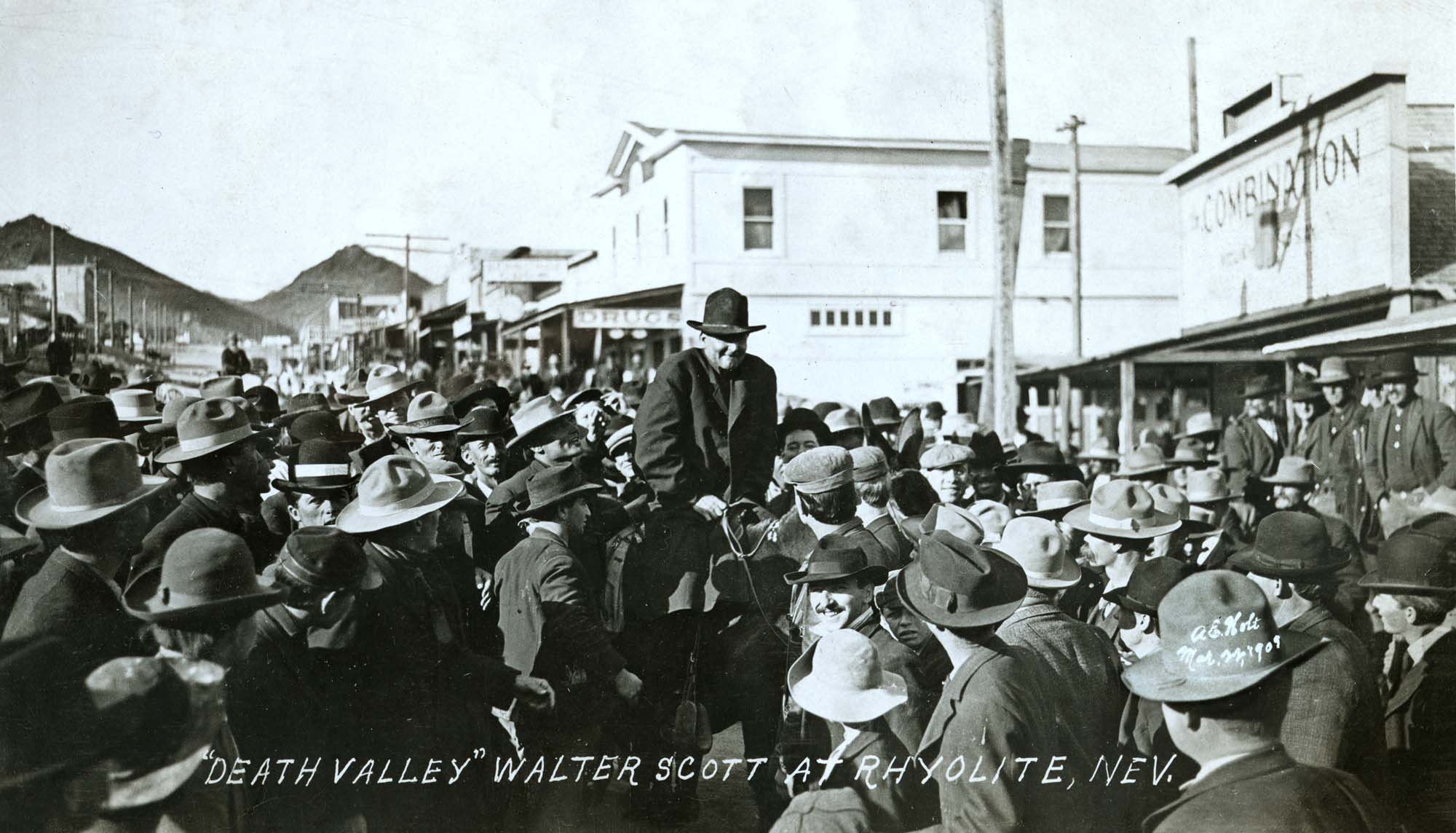
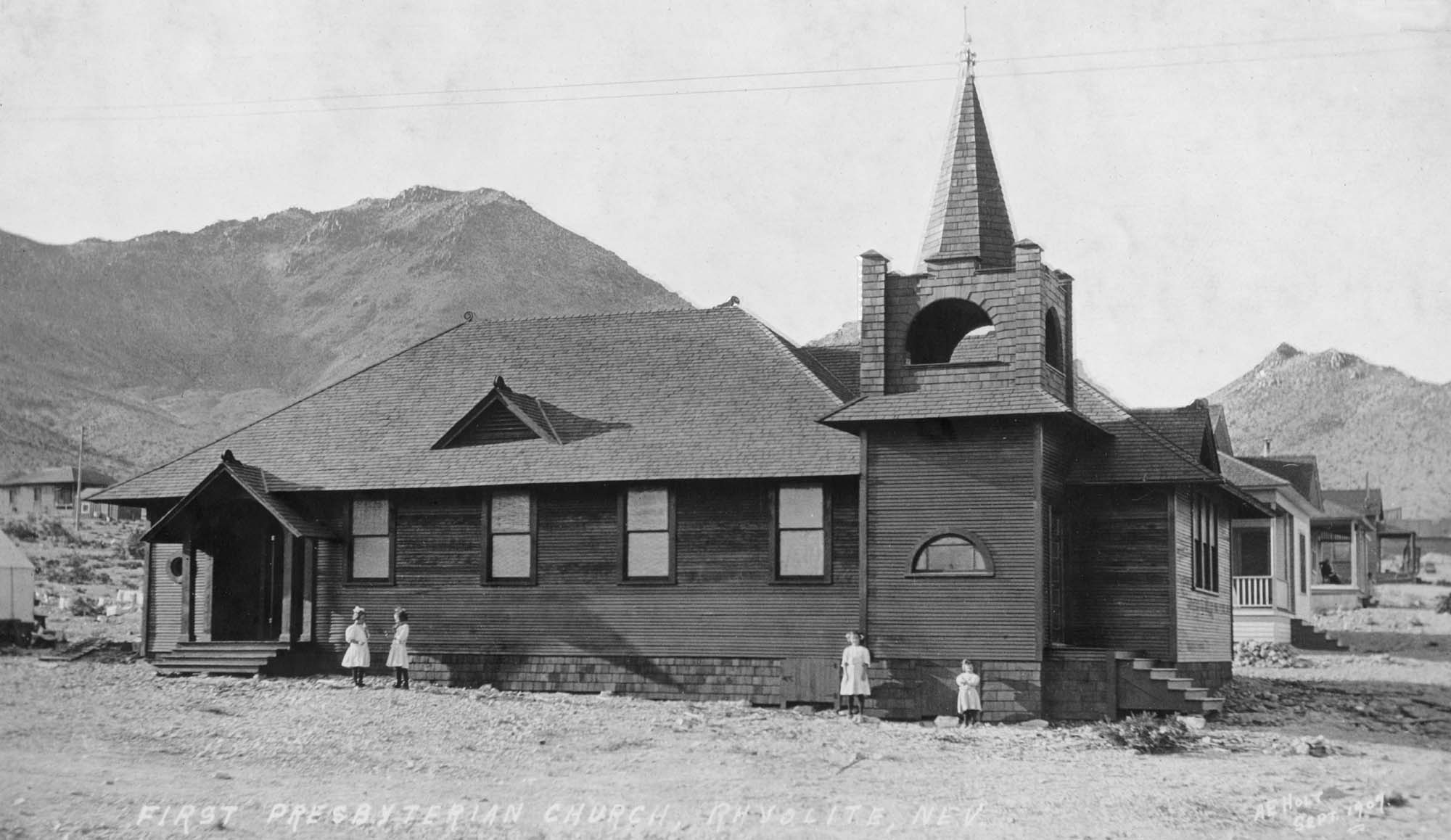
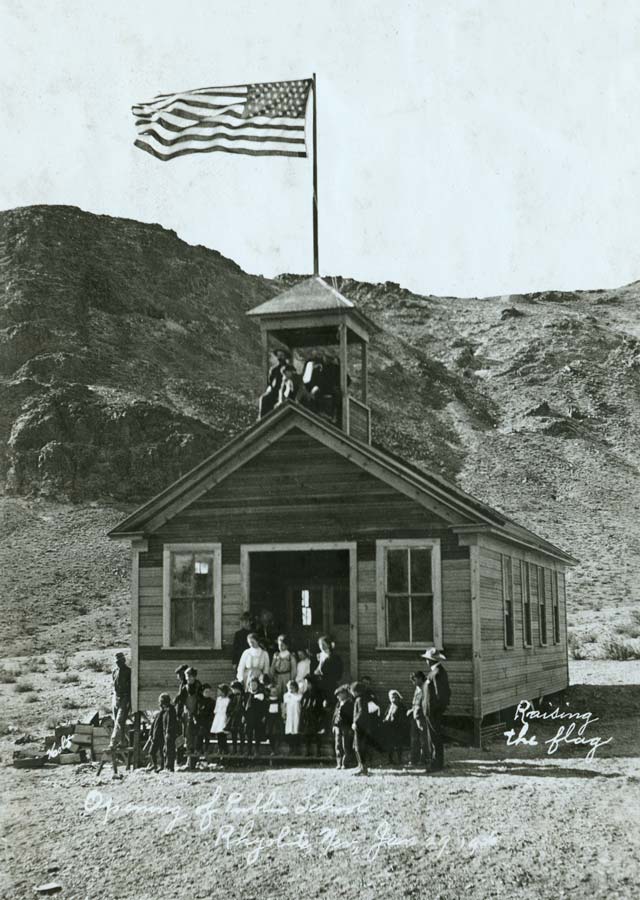
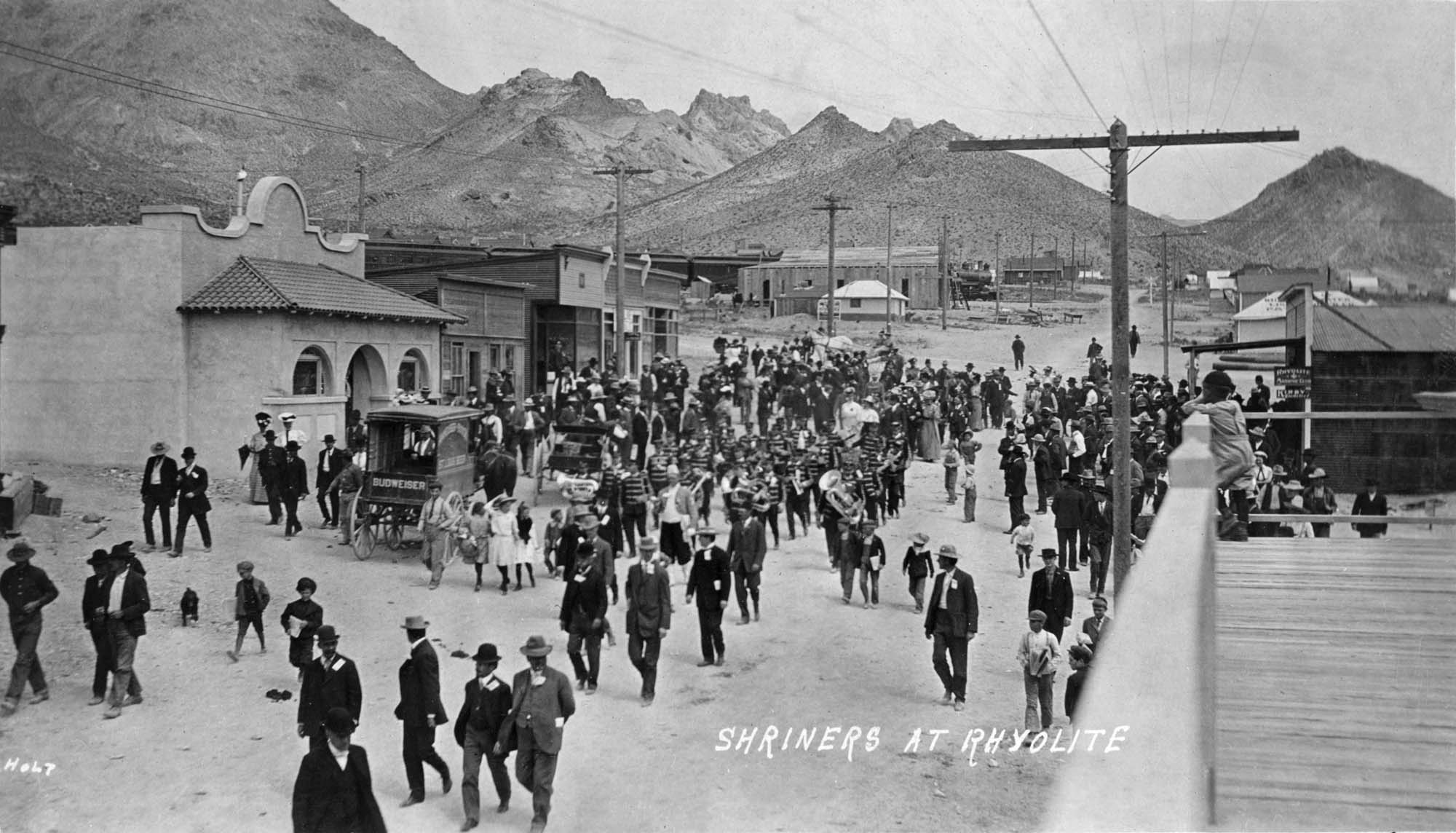
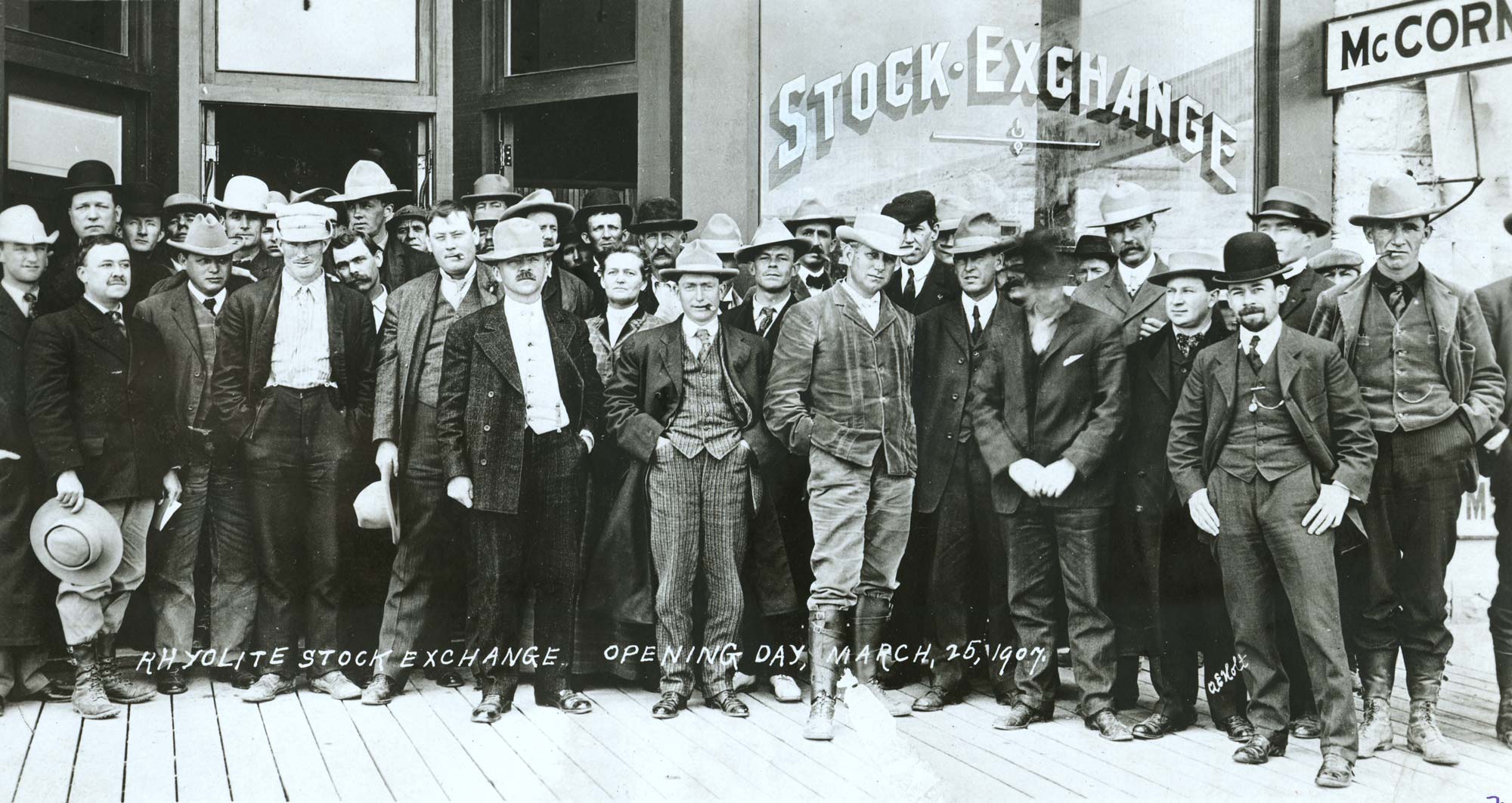
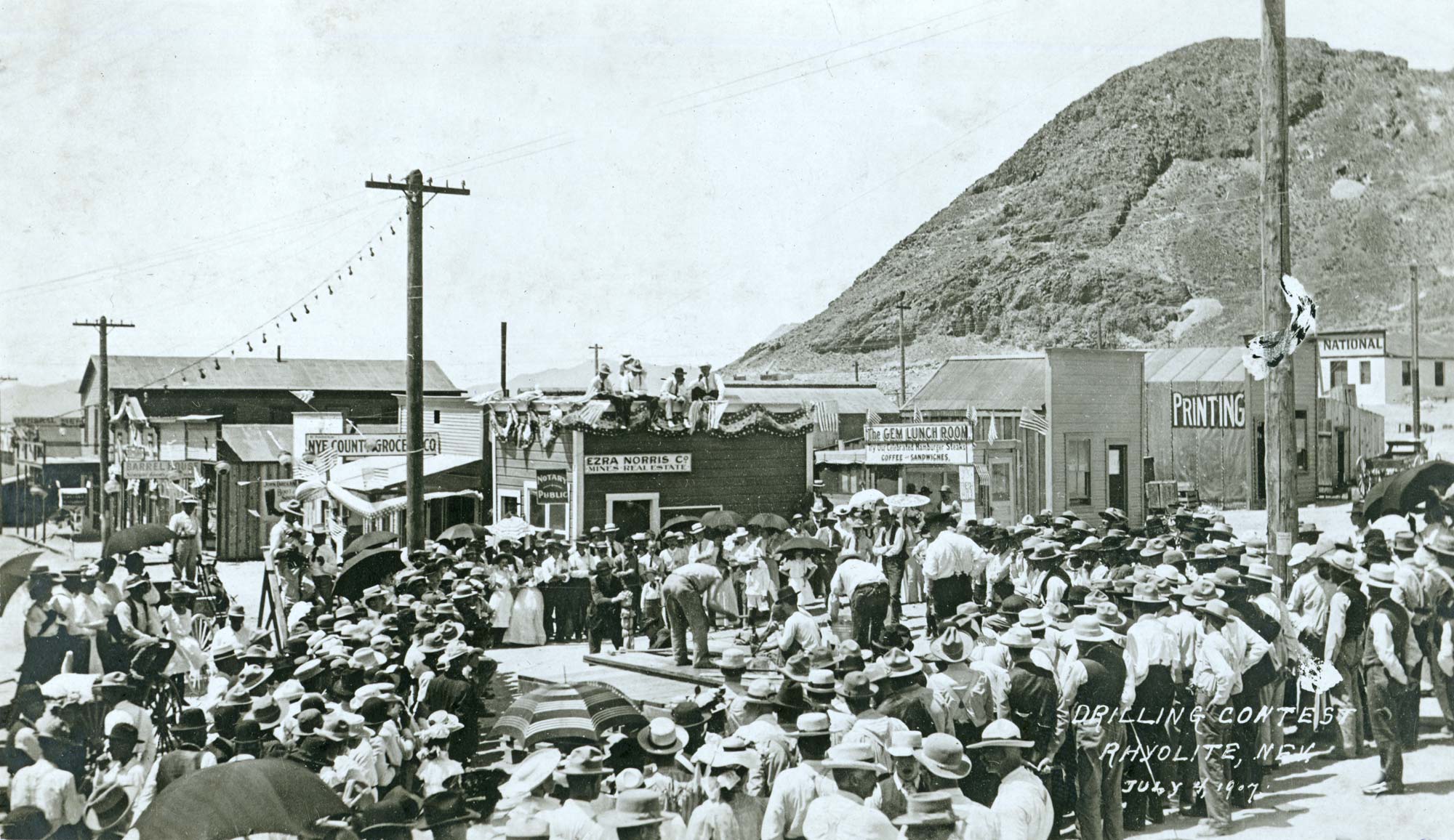
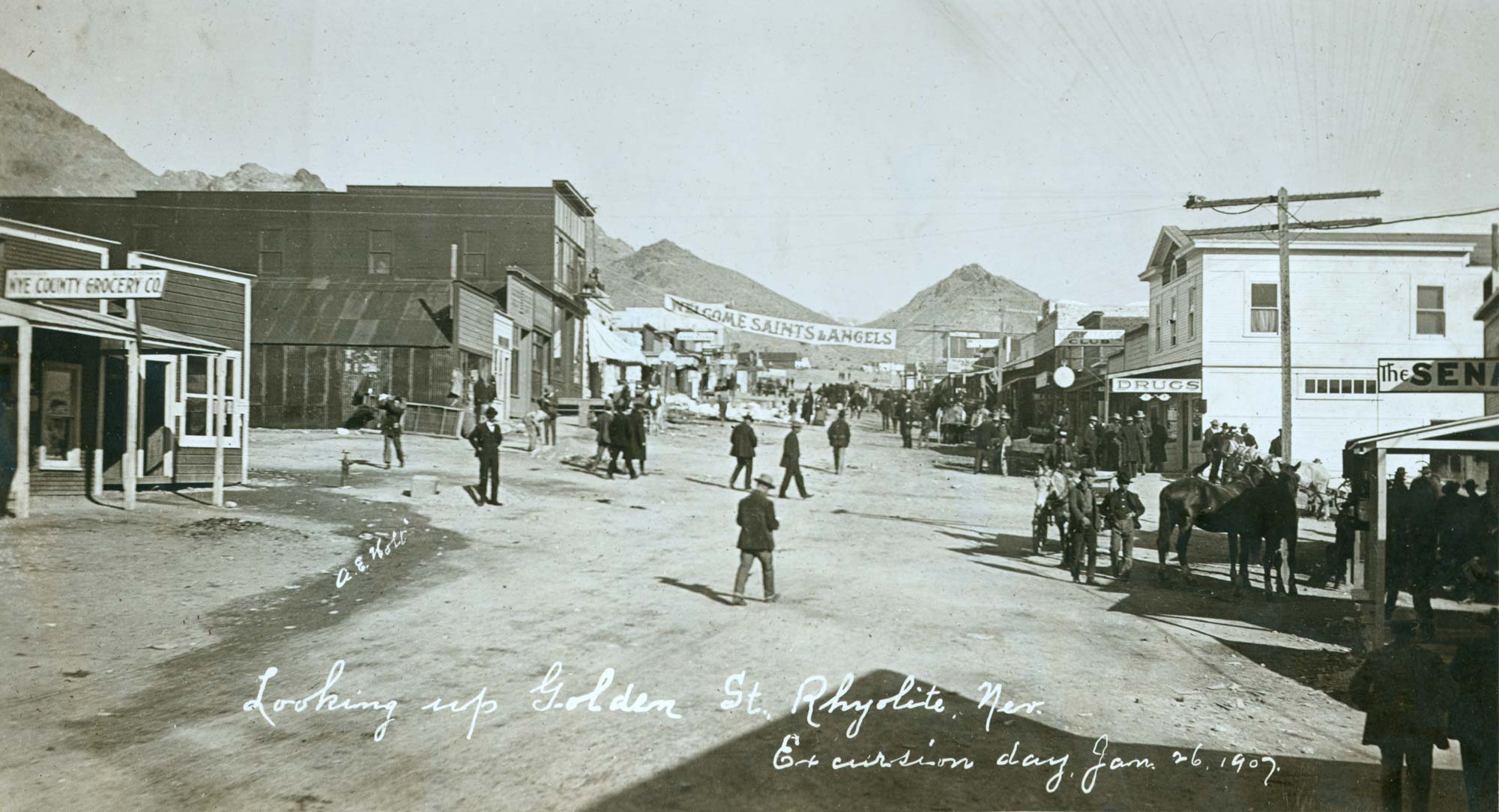
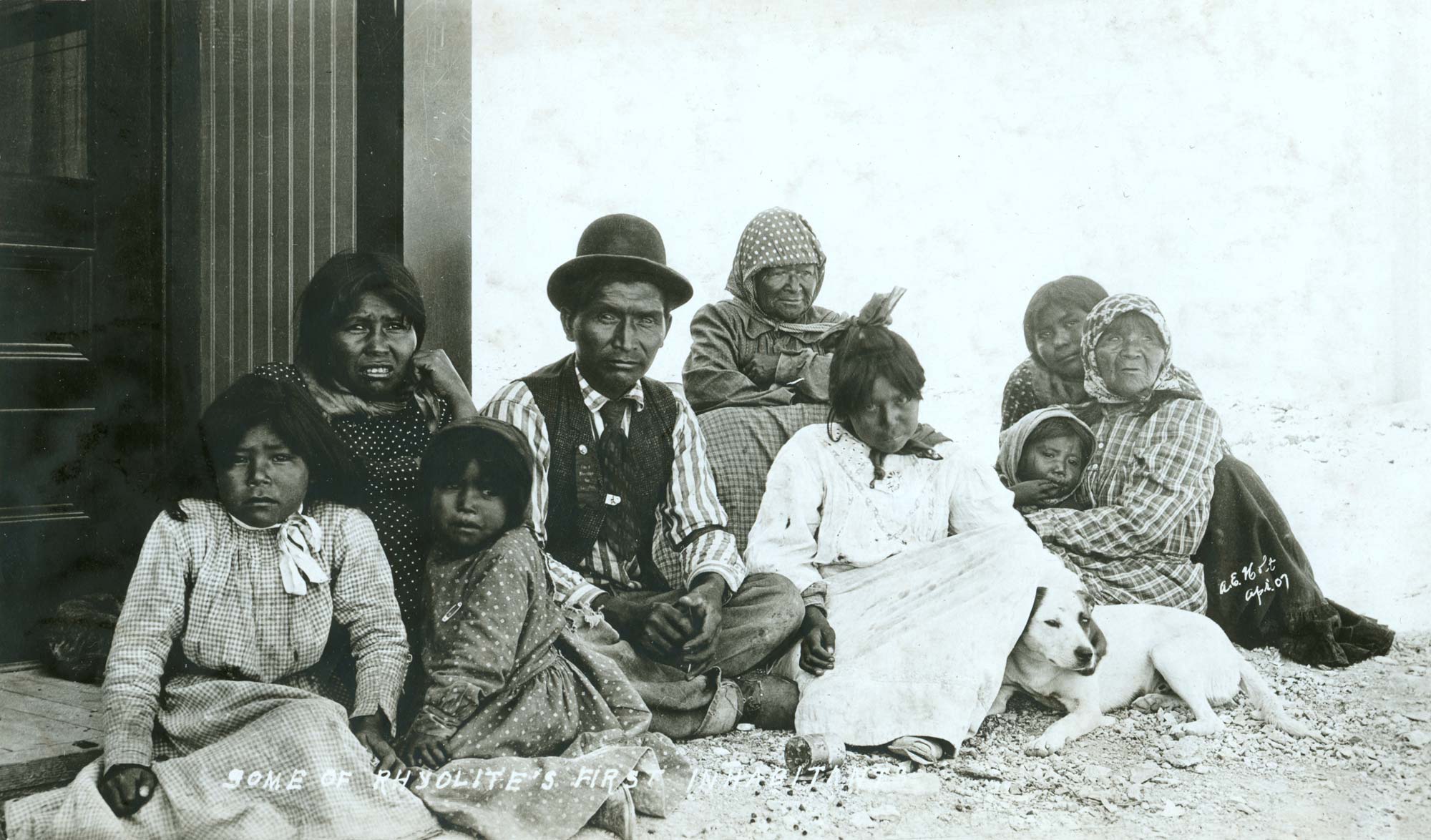
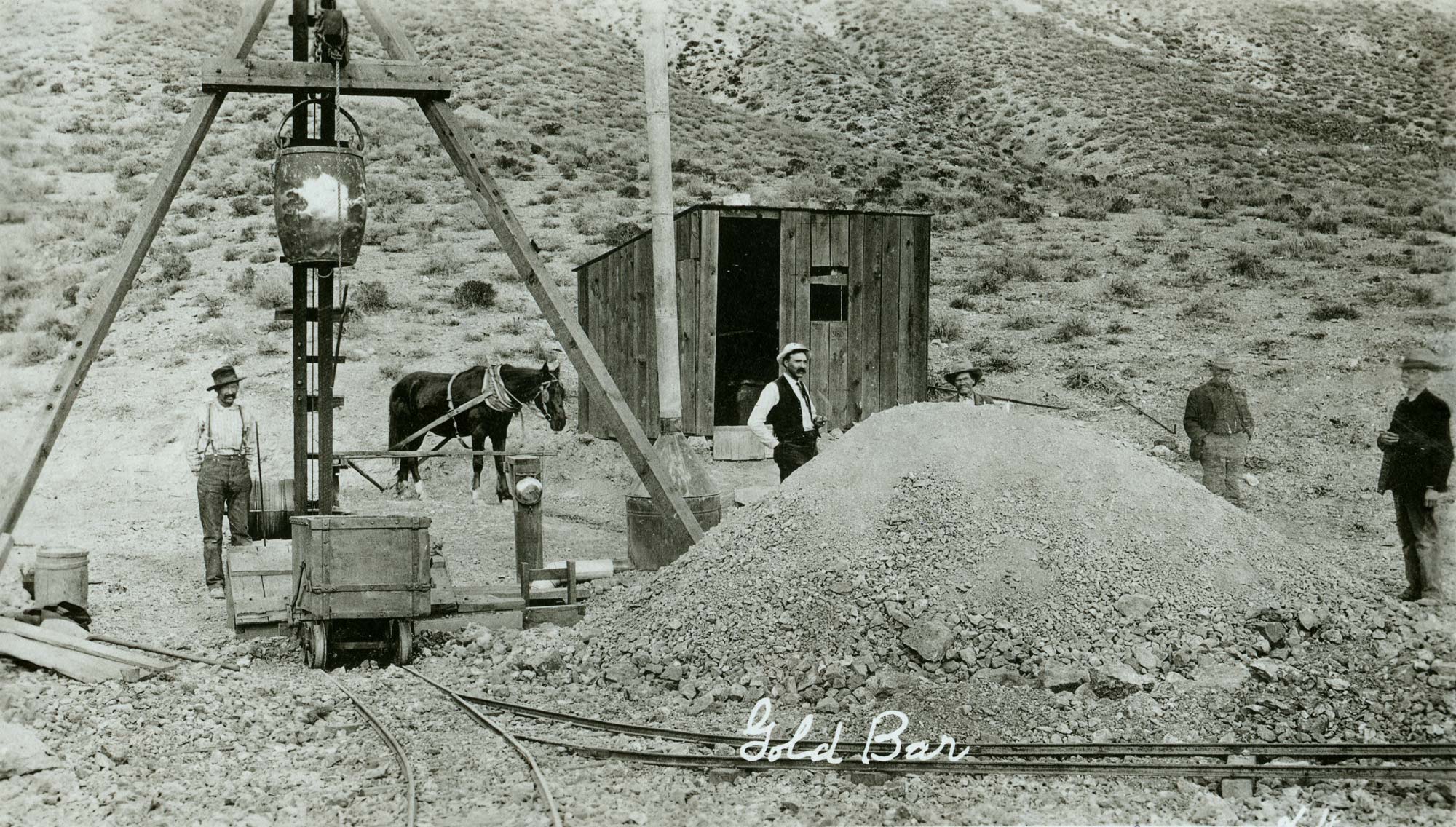
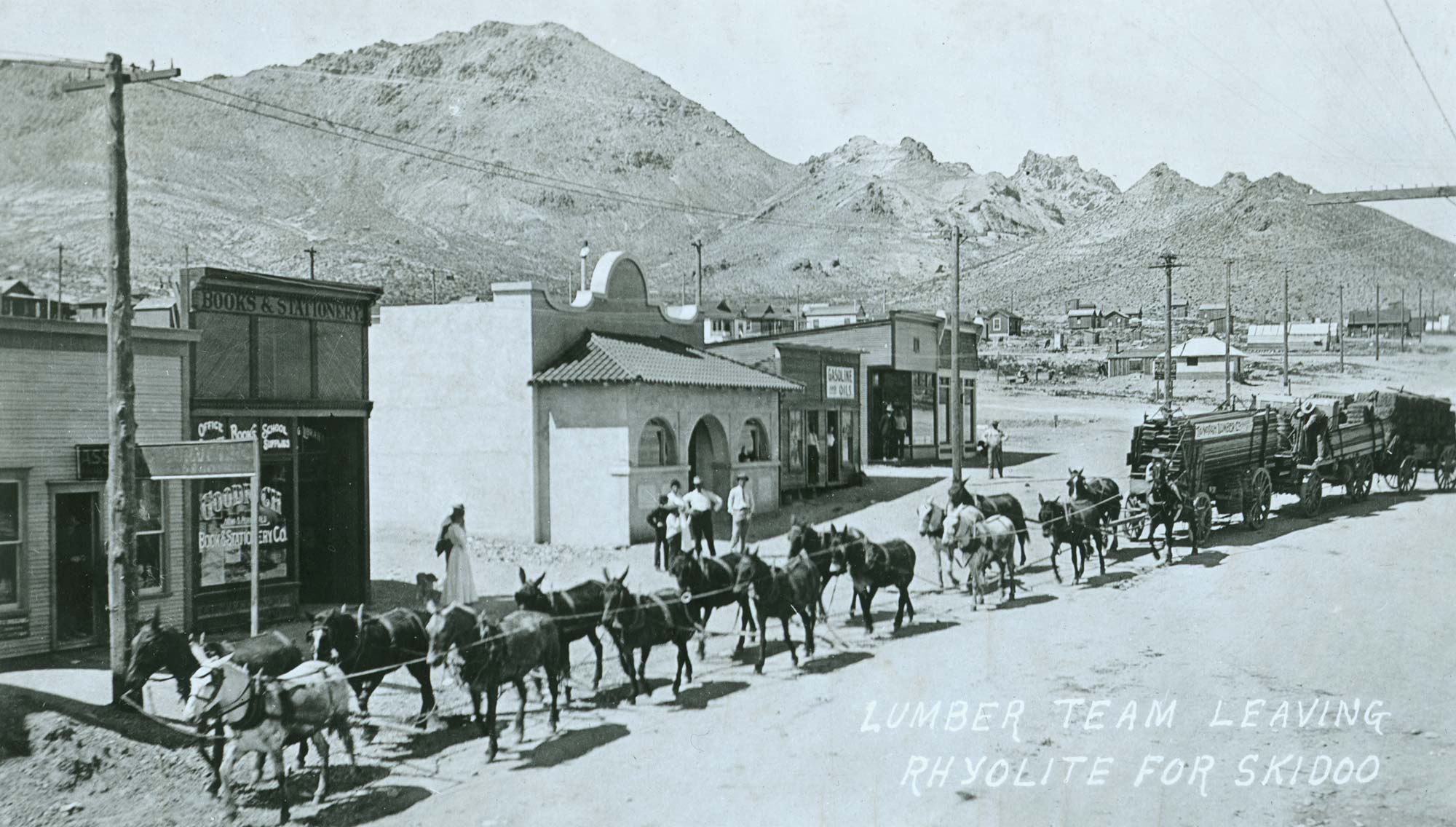
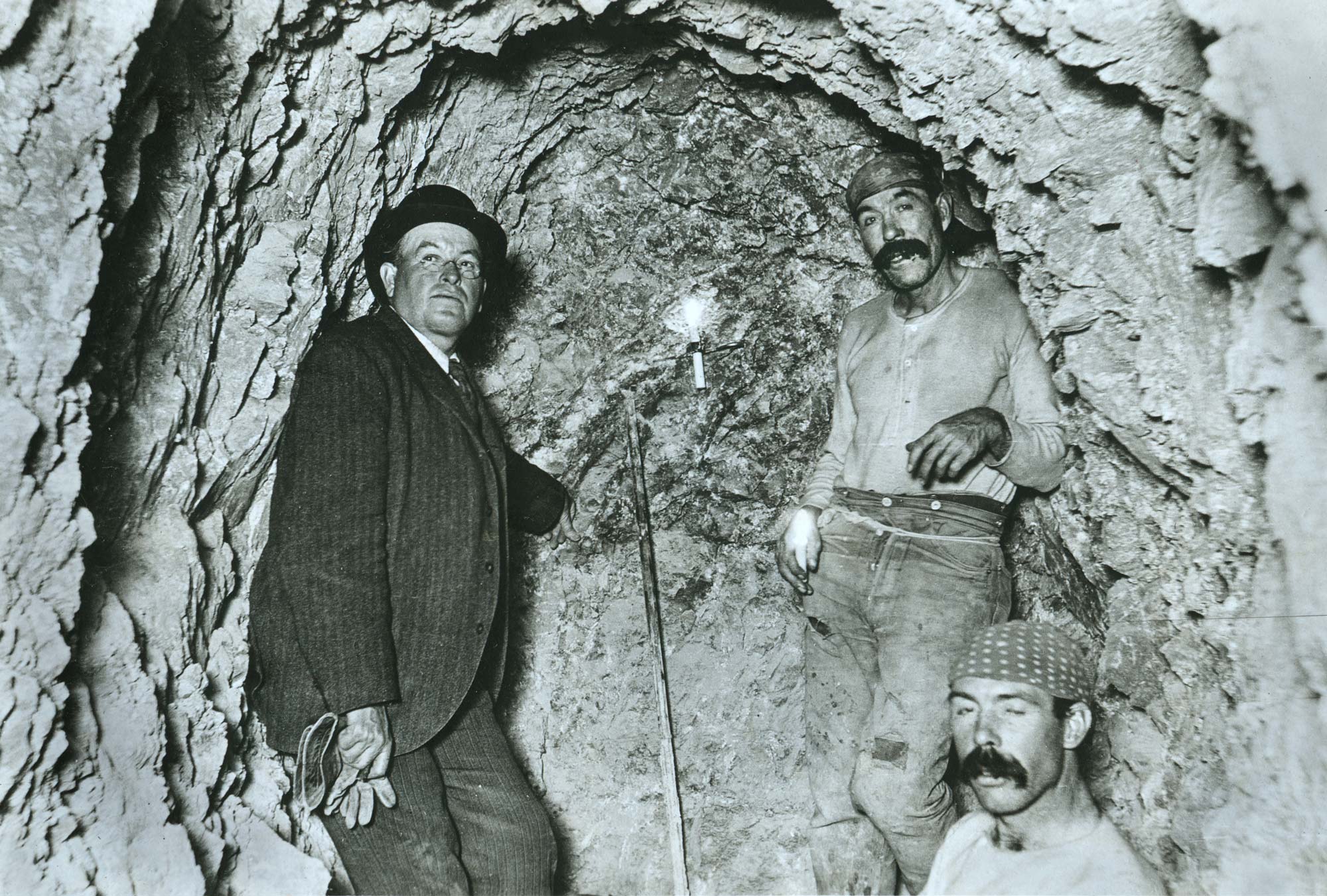
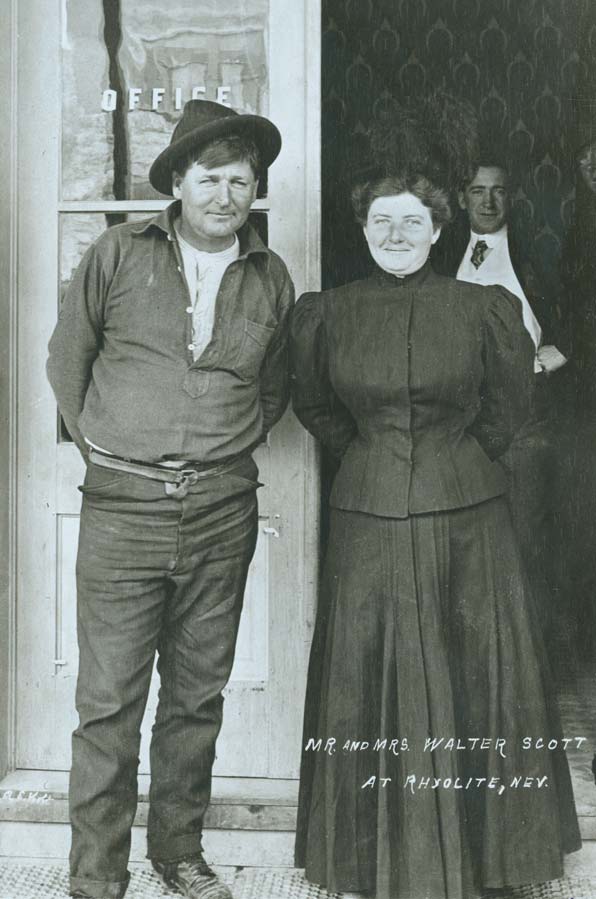
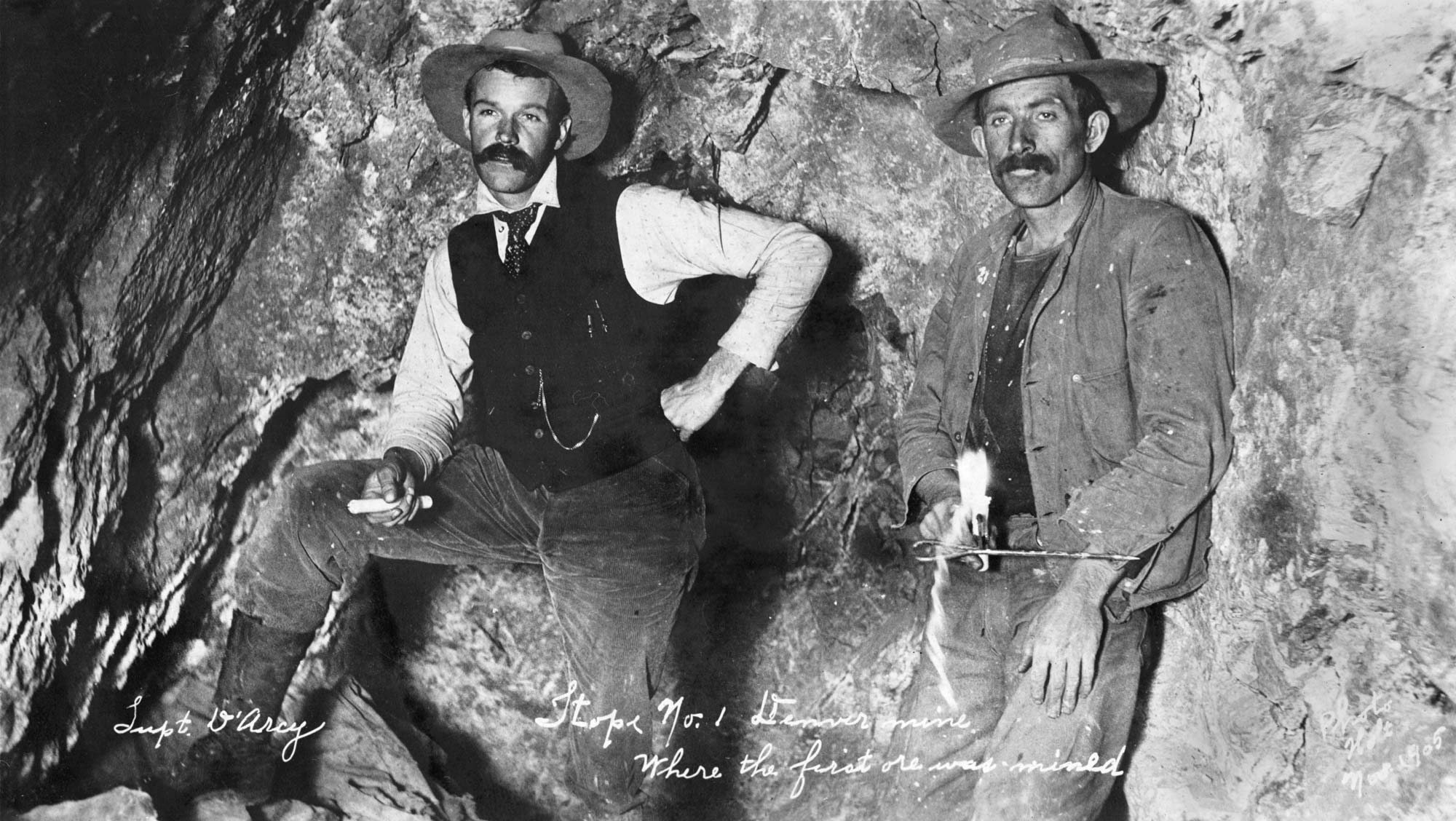
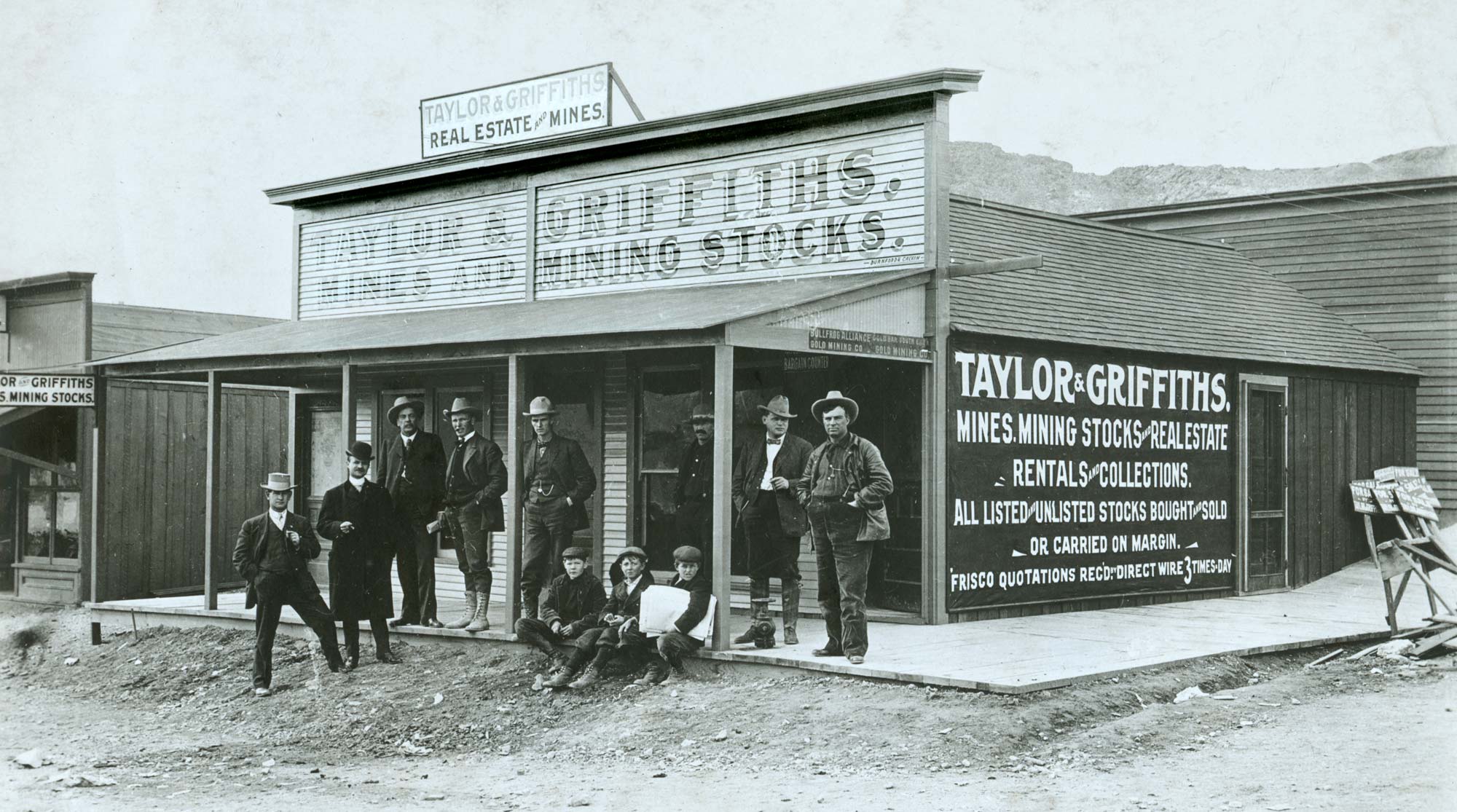
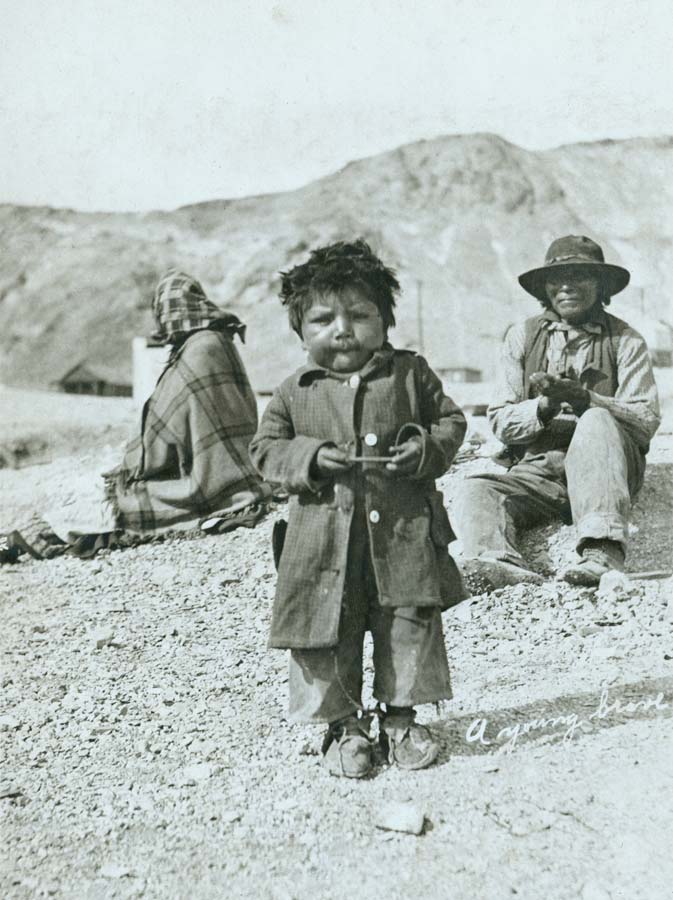
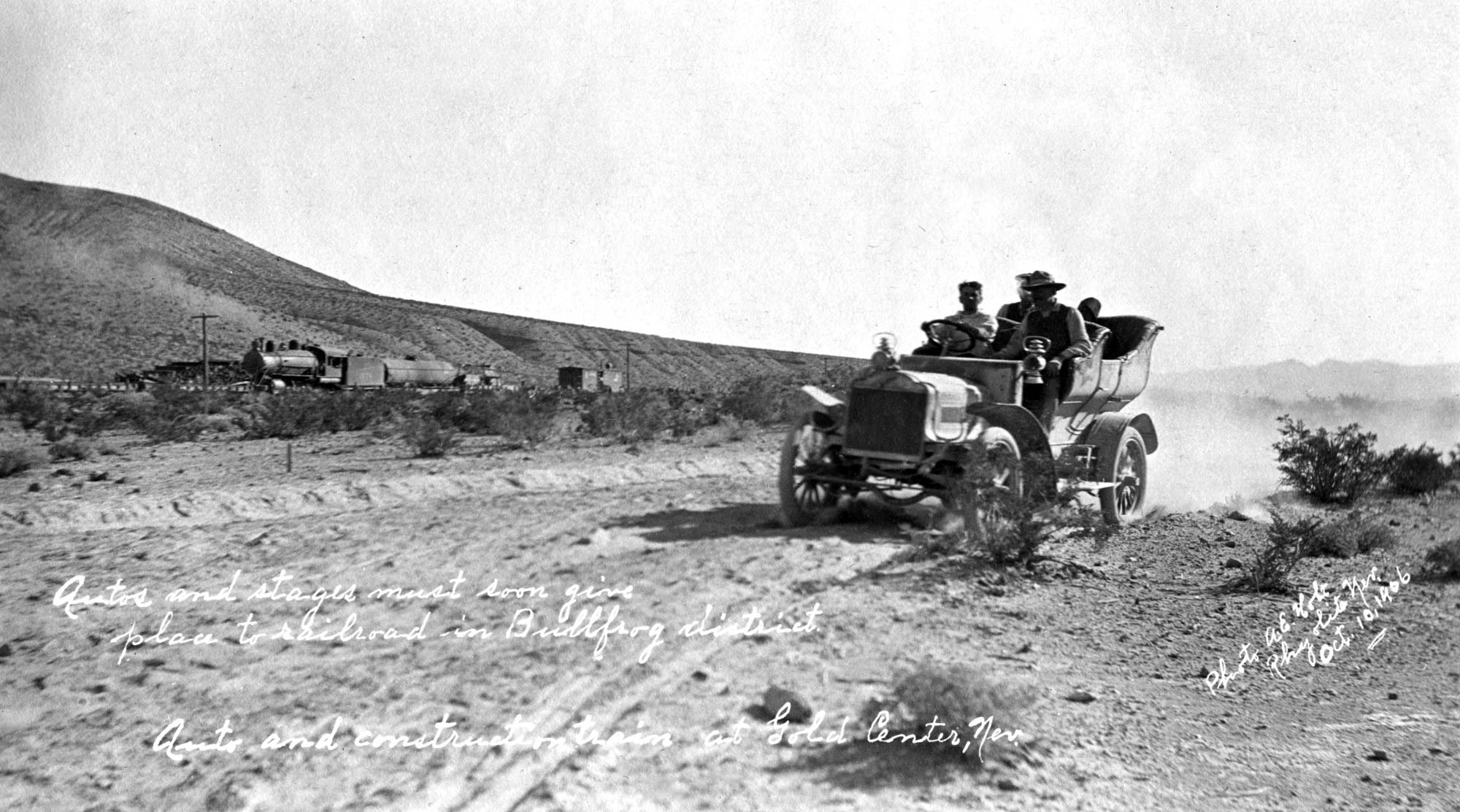
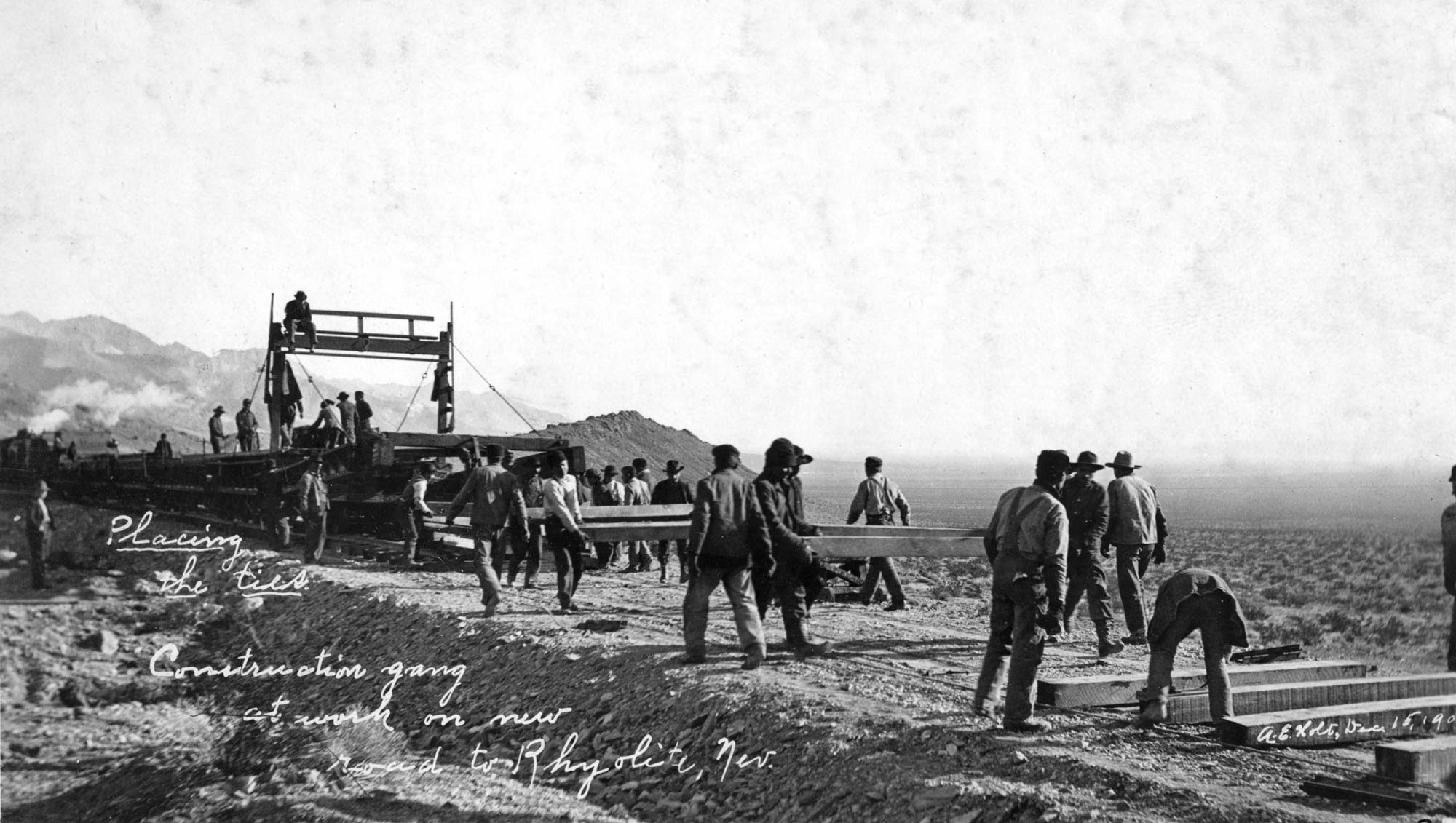
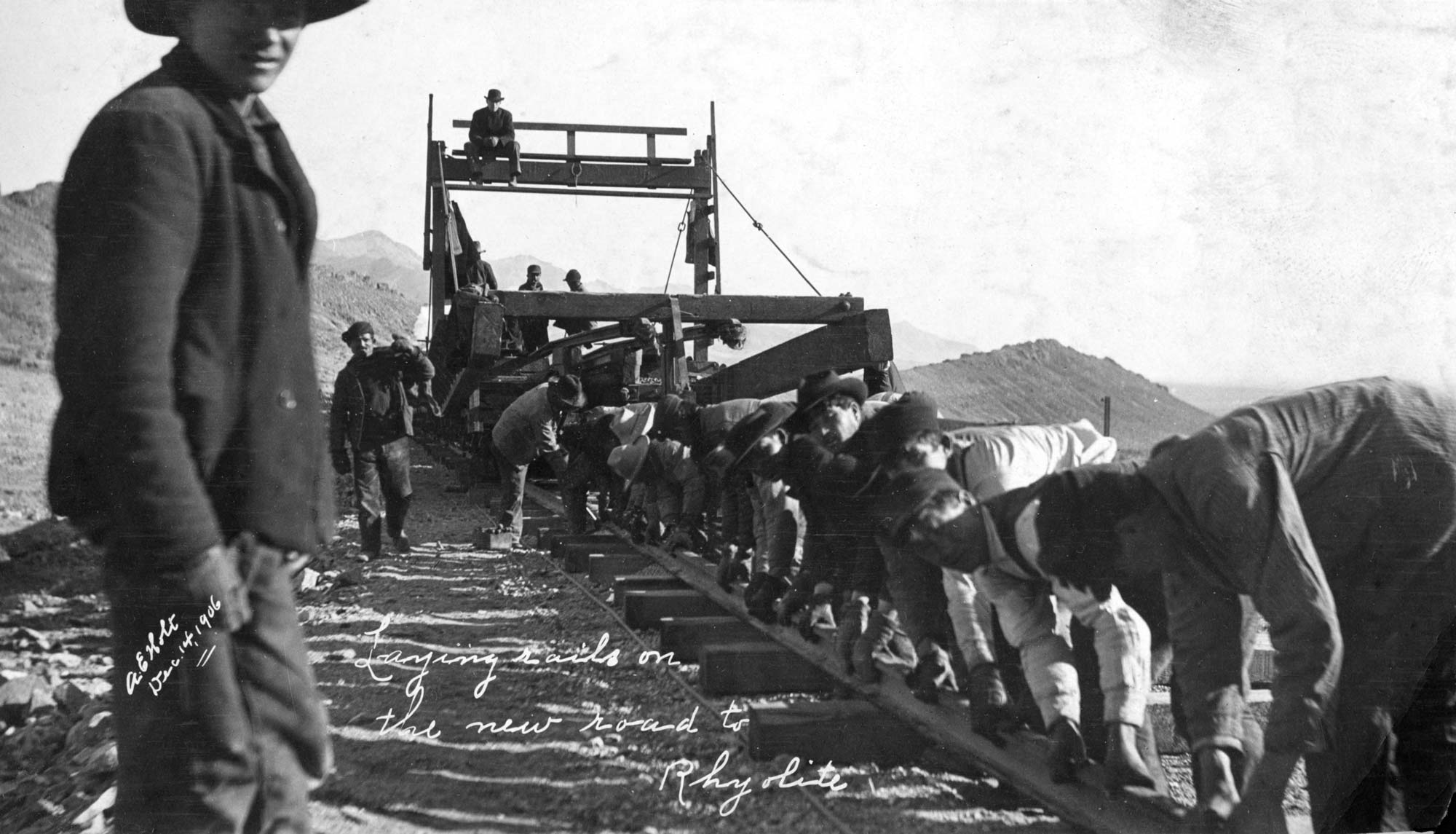
Violence was present but not dominant. Newspapers recorded bar fights, stabbing and shooting incidents, and a few notorious cases like the 1908 murder of prostitute “Mona Bell” (Isabella Haskett) by her lover. This tragic event later gave rise to a persistent but historically inaccurate legend regarding the woman’s supposed grave at the townsite. Overall, the pattern resembles other early‑20th‑century mining towns: rough edges, but also a strong emphasis on order, investment, and family life
Collapse: 1907–1916; Financial shocks and waning confidence
Even at its height, Rhyolite’s prosperity was fragile. Several external shocks undermined investor confidence and access to capital:
• The 1906 San Francisco earthquake redirected money and attention to rebuilding California, drying up some of the speculative funds that had been flowing into Nevada mining ventures.
• The national Panic of 1907 caused a severe contraction in credit, making it harder for mines and town developers to raise capital or refinance.
As a result, financing for exploration and mine development tightened just as the district’s easily accessible high‑grade ore was being exhausted. With limited technology for deep, low‑grade bulk mining and milling, many properties could not make the transition from rich showings to sustained profitable production.
Demographic decline and infrastructure failure
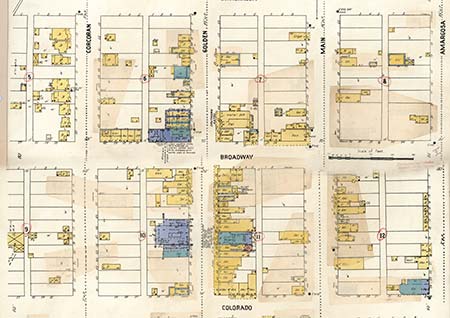
By mid‑1908, signs of contraction were visible. Sanborn fire insurance maps from July 1909 showed Rhyolite’s population reduced to about 800, a steep drop from earlier estimates. Businesses consolidated or closed, and by 1910 street lights were turned off to save money, while major stores such as Porter Brothers shut their doors.
Technological and infrastructural fragility sped the decline. A hard freeze in 1910 damaged the water system; with fewer ratepayers and cash, the town could not afford extensive repairs, forcing residents to haul water and undercutting the viability of remaining businesses. Railroad freight and passenger traffic dwindled as mines cut back, leaving railroads with underused investments and little incentive to maintain full service.
The decisive blow came when the Montgomery Shoshone Mine closed in March 1911 after producing nearly two million dollars in gross output. Without its largest employer and symbol of prosperity, Rhyolite rapidly emptied out. The Rhyolite Herald ceased public
ation on 8 April 1911, and the post office closed in 1919; the 1920 census recorded only 14 residents.
Why Rhyolite failed
Historians and local researchers highlight several intertwined reasons for Rhyolite’s collapse:
• Over‑optimistic speculation and “Goldfield fever,” which encouraged town‑building on the assumption of another world‑class ore body that never materialized.
• Dependence on a single major mine and a cluster of marginal properties, with little diversified economic base beyond extractive industry and railroad‑linked services.
• Technological limits of the day; deeper, lower‑grade ores that might be economic with later bulk‑mining methods were not workable for early 20th‑century operators.
• Environmental constraints—no local water, harsh climate—which made the town expensive to maintain once the speculative capital retreated.
Patricia Nelson Limerick and Mark Klett’s essay “Haunted by Rhyolite” argues that Rhyolite exemplifies a neglected side of western history: the frequency of failure, contraction, and abandonment, as opposed to the usual celebratory narrative of frontier progress. In their view, Rhyolite’s concrete shells and industrial forms make it impossible to romanticize the town as a quaint frontier relic; instead, they expose the consequences of overconfident investment in an arid, boom‑prone region.
Rhyolite as a Ghost Town.
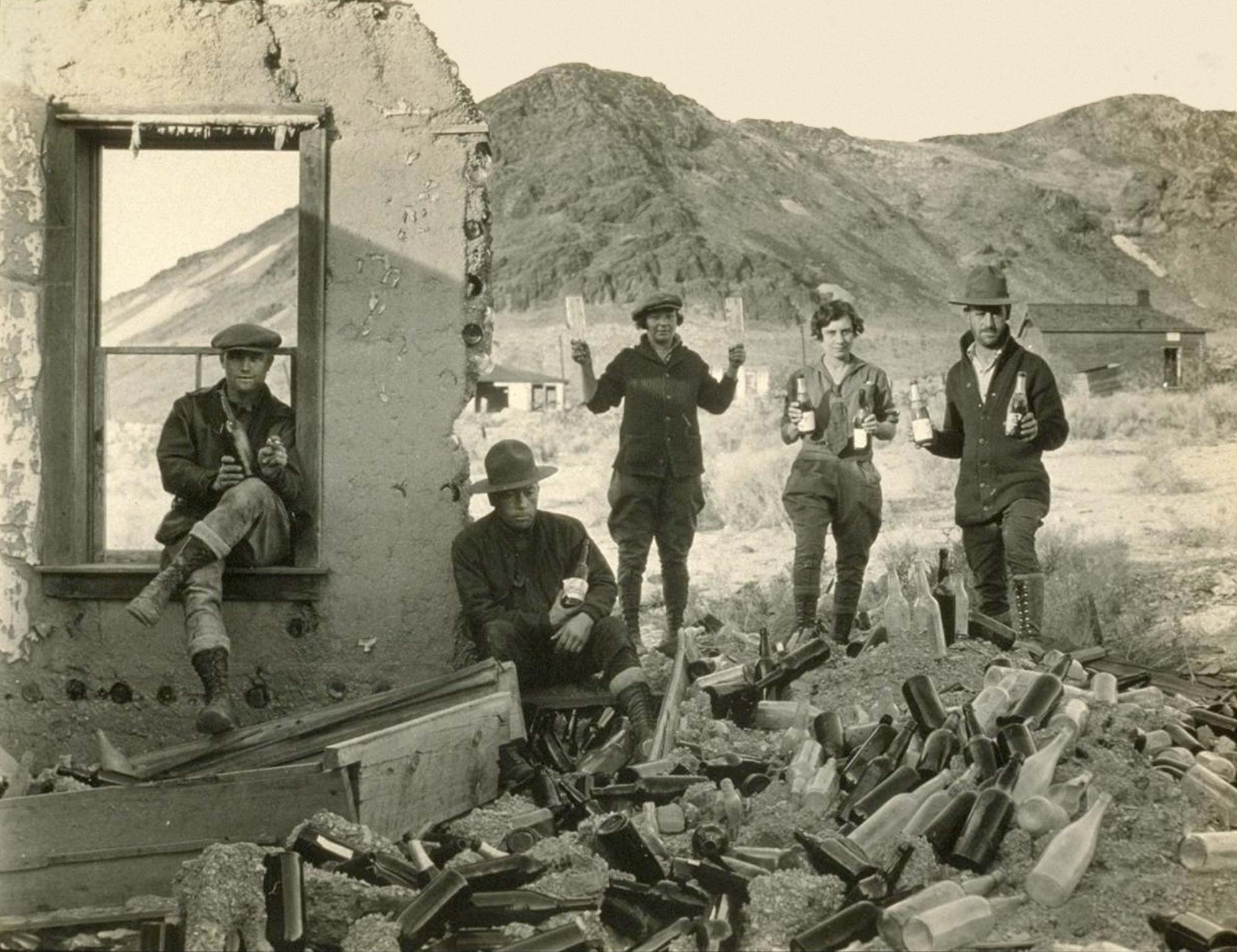
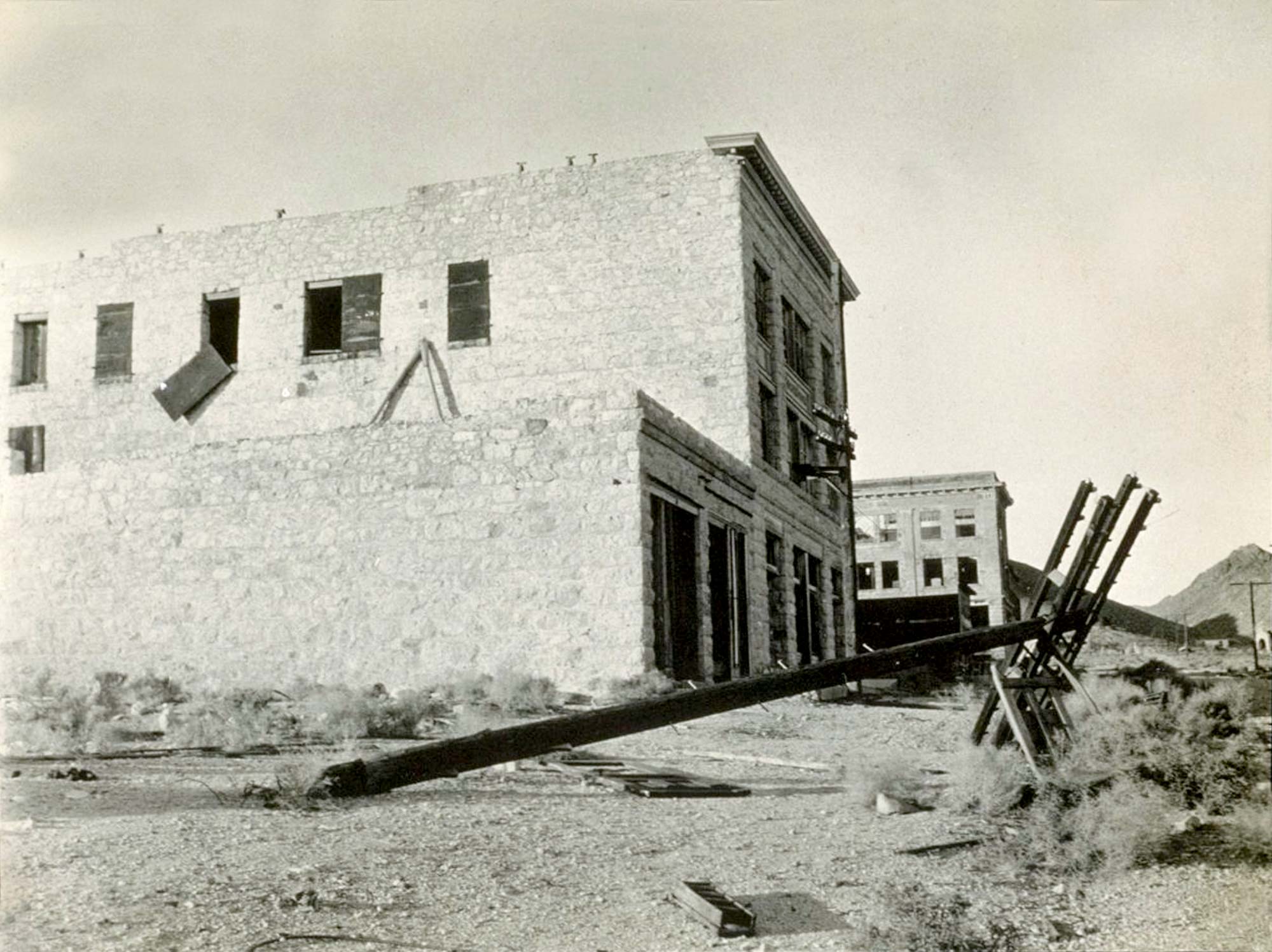
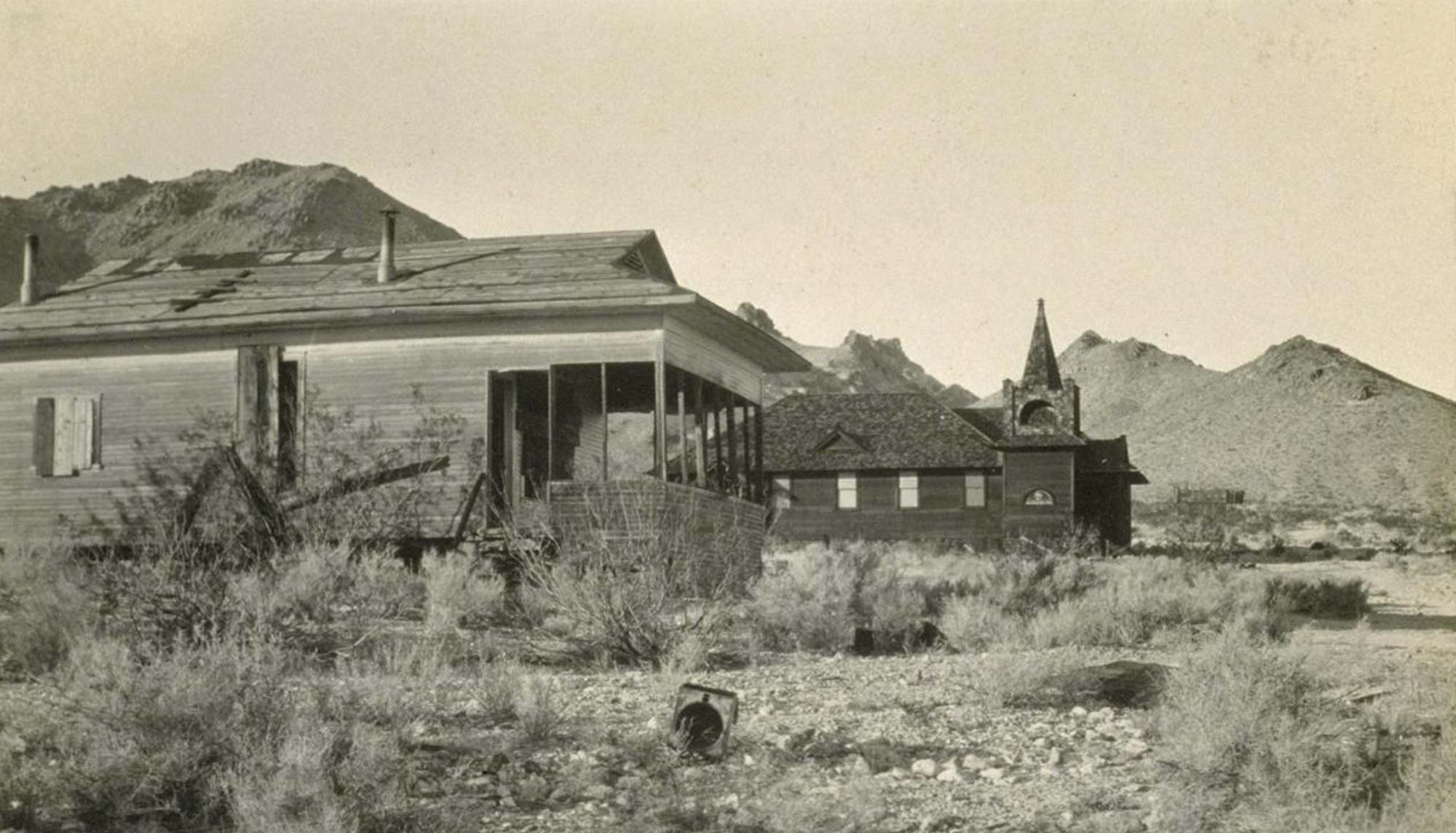
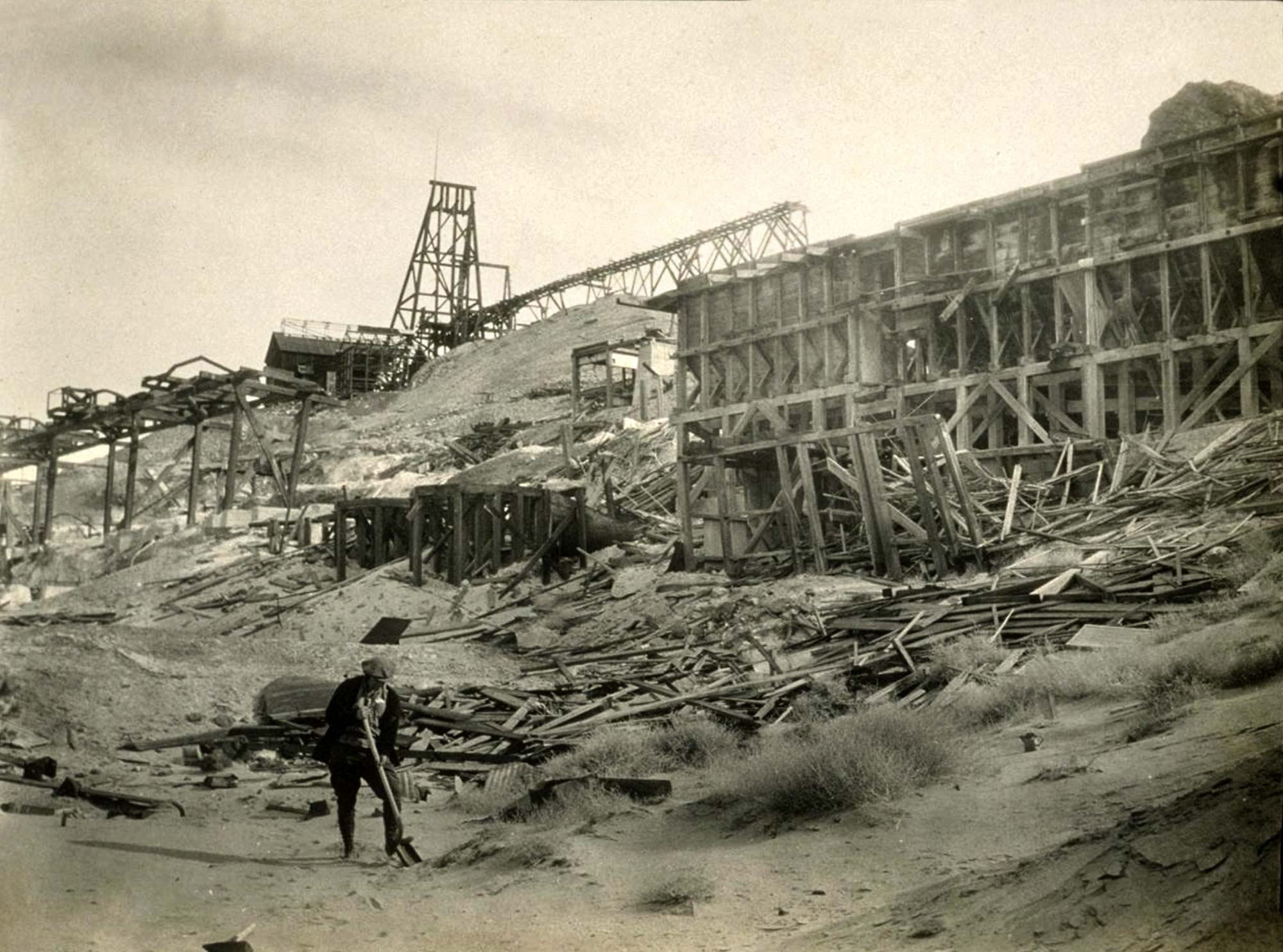
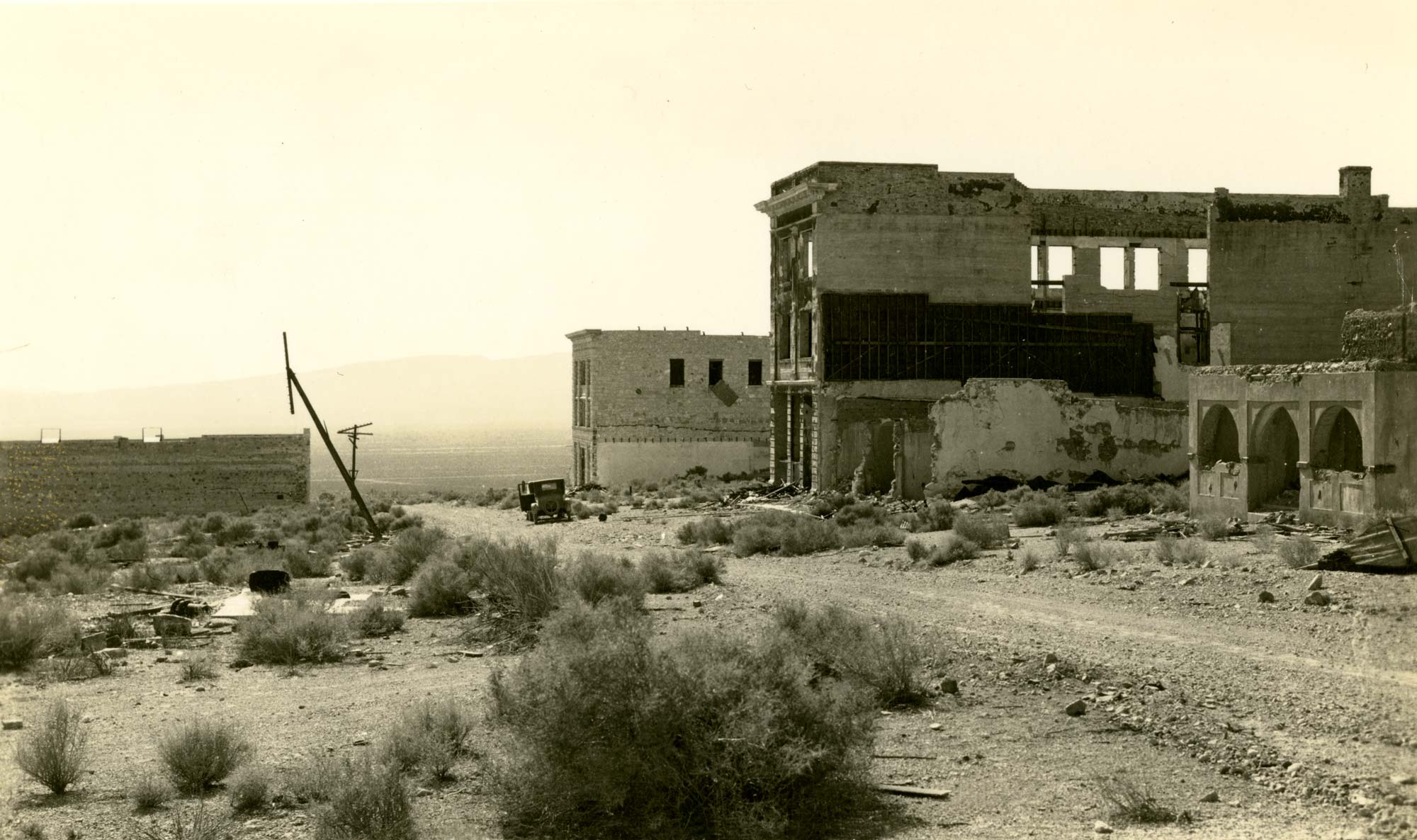
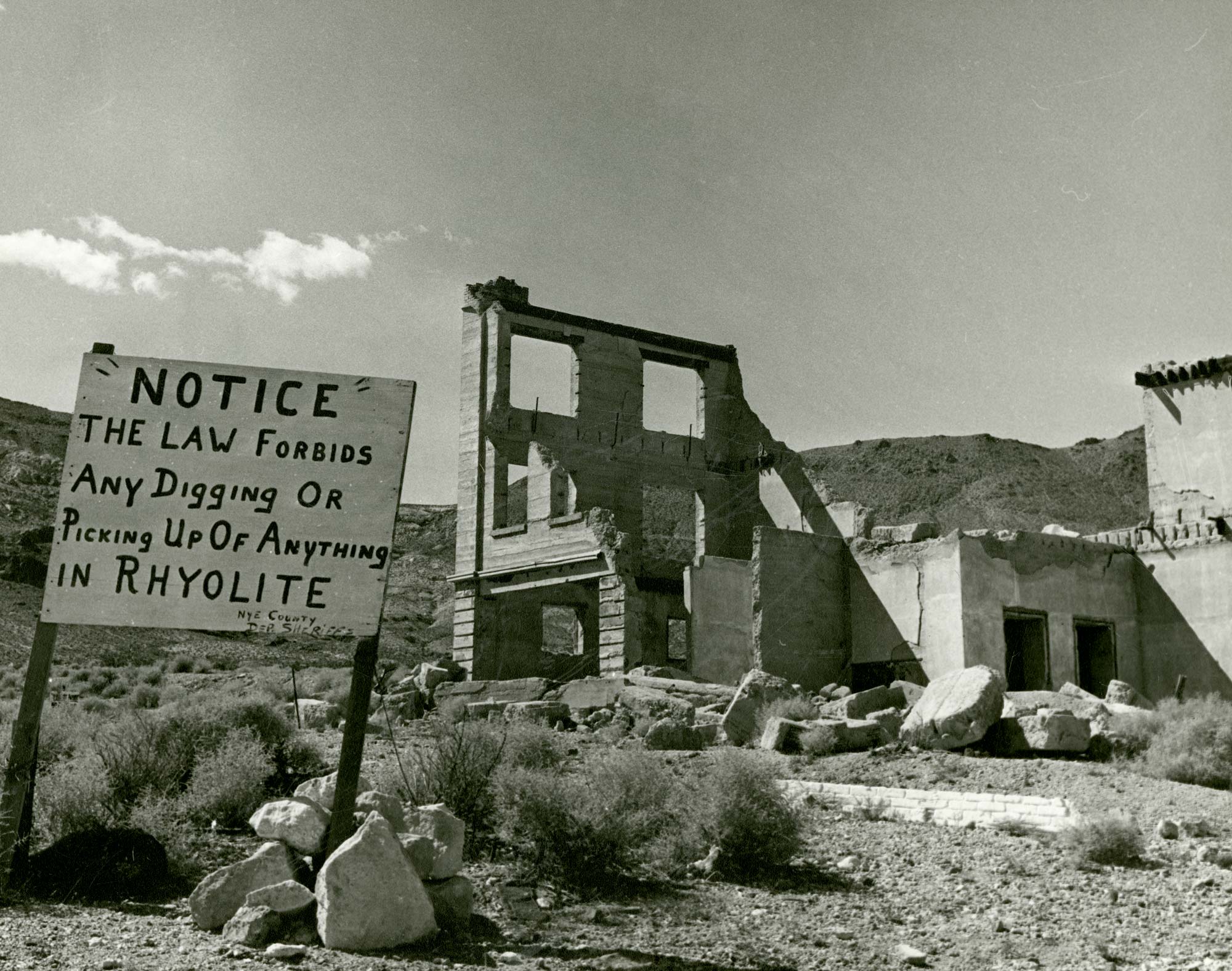
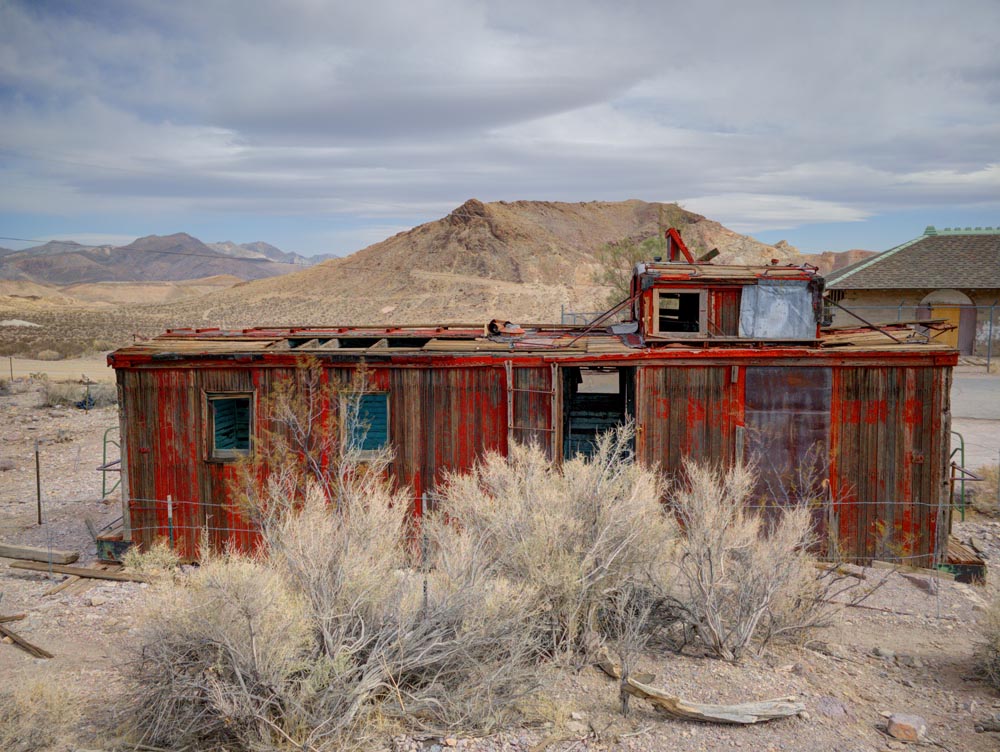
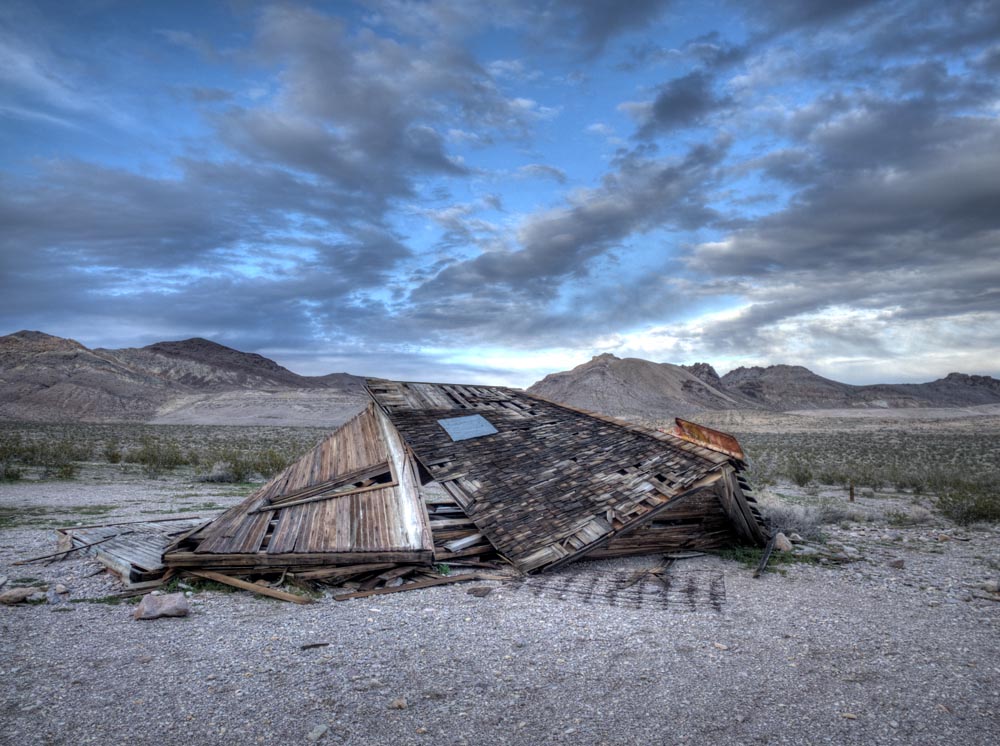
After abandonment, Rhyolite’s wooden structures were heavily scavenged for lumber, leaving the stark concrete and stone ruins—bank façades, the school, depot, and foundations—that define the site today. The scarcity of timber in the surrounding desert accelerated this process, emphasizing the raw industrial character of what remained.
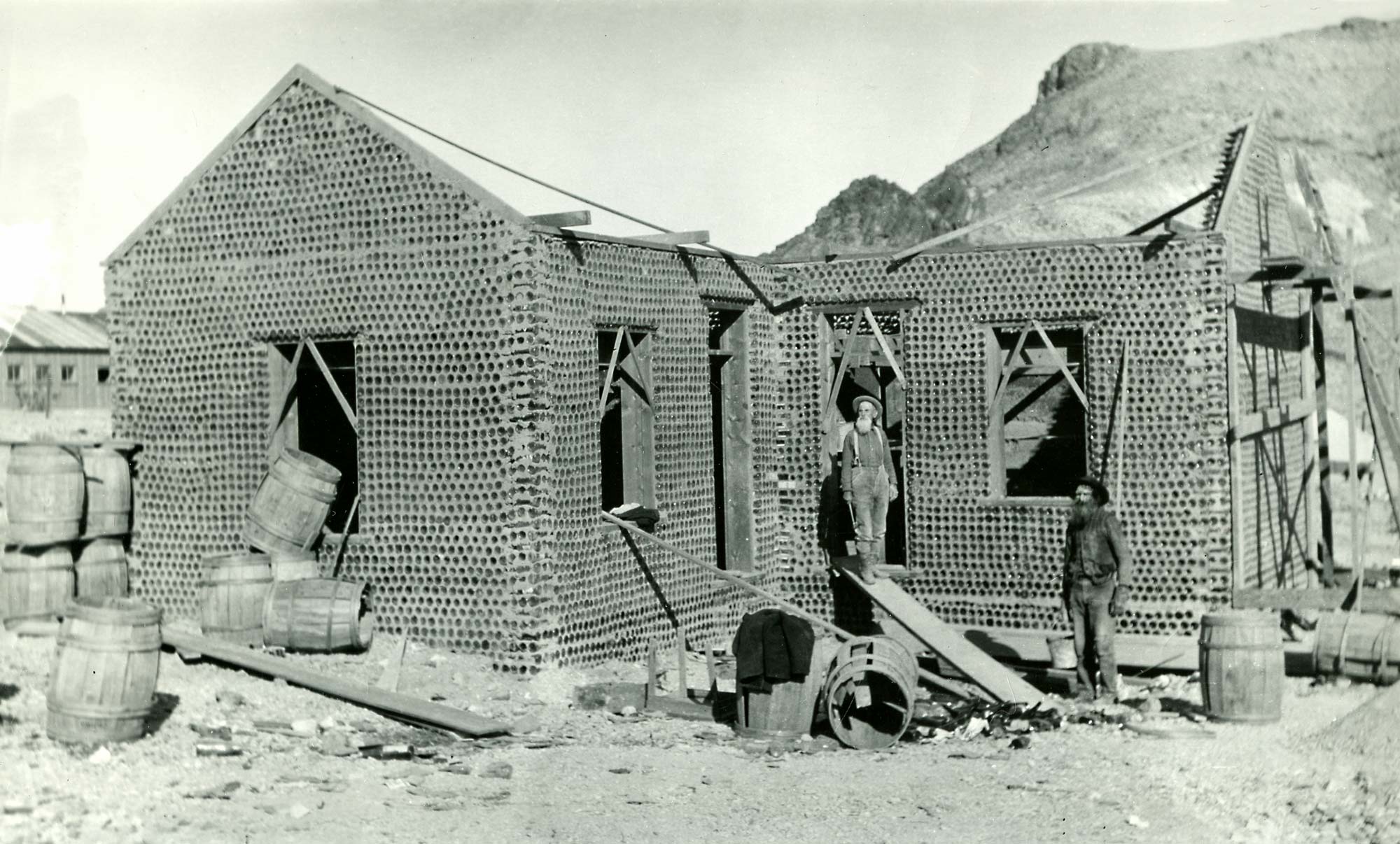
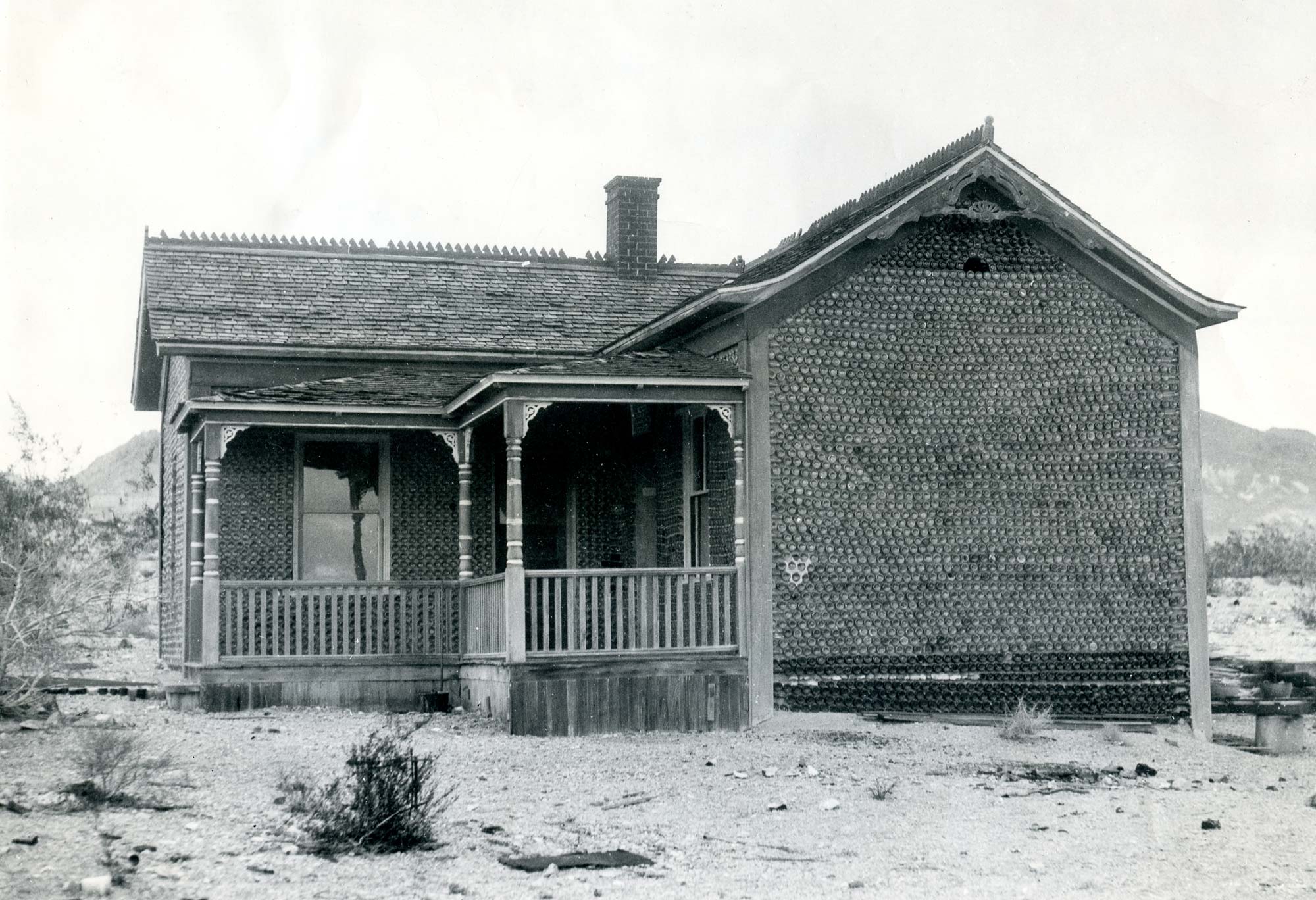
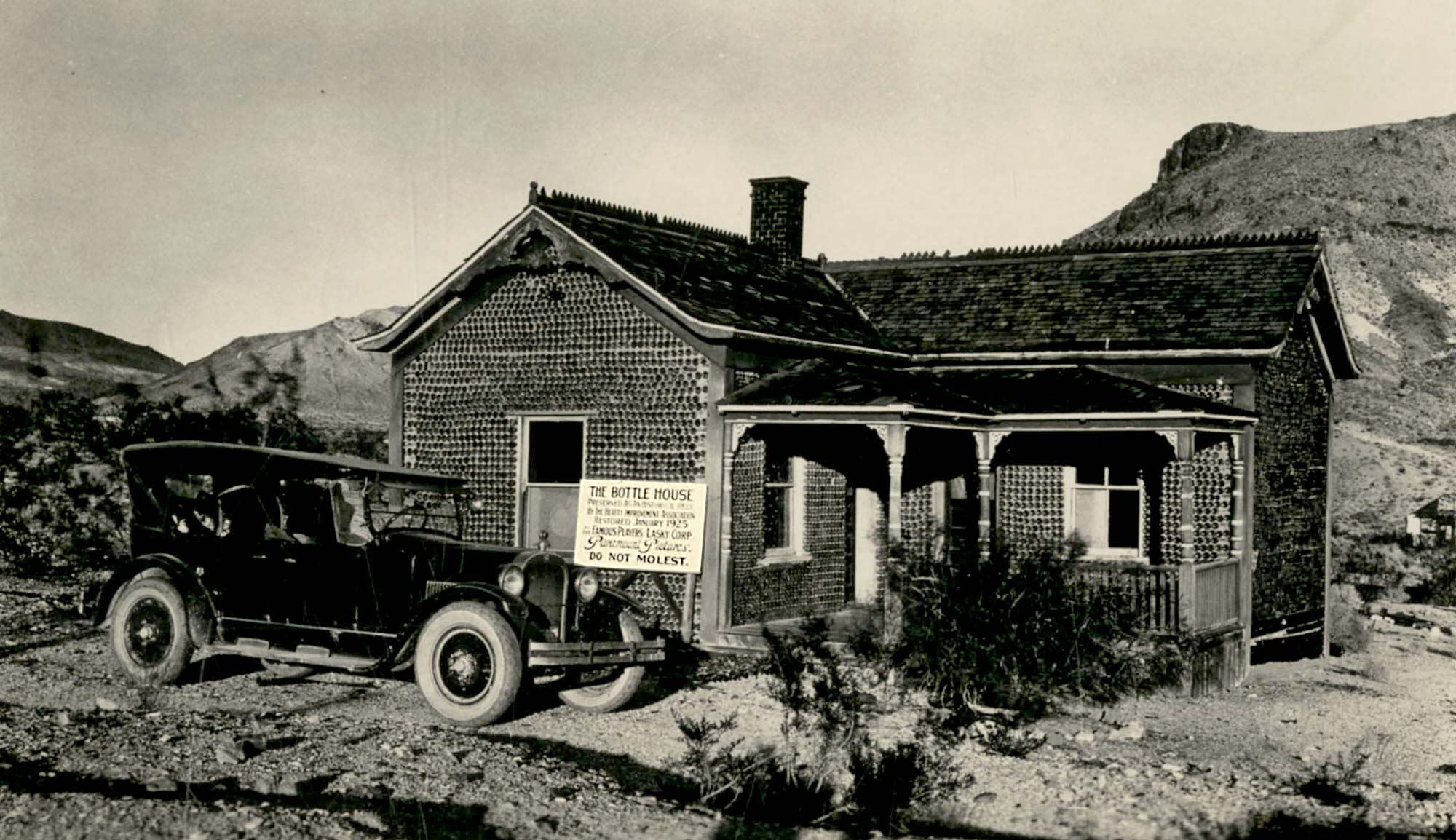
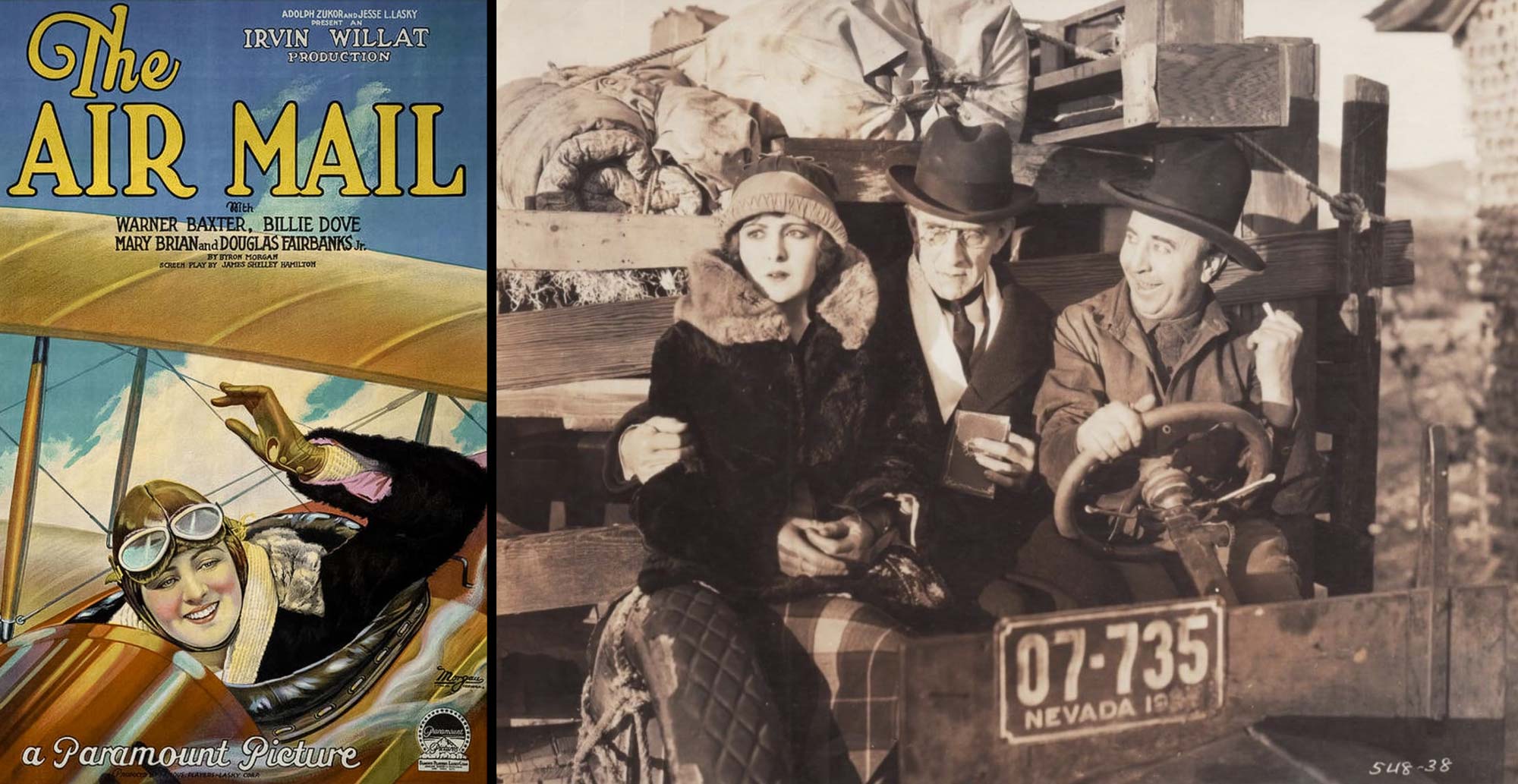
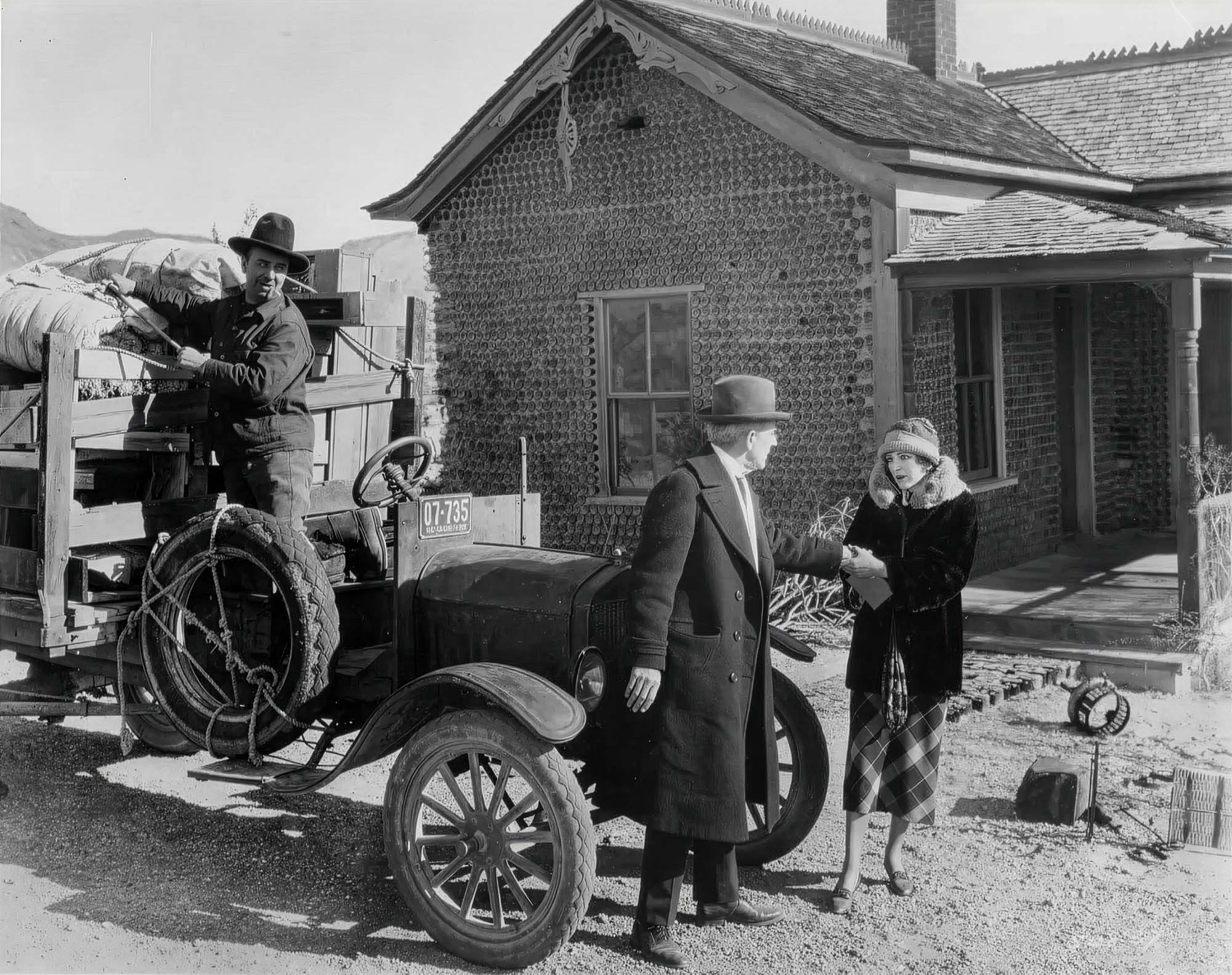
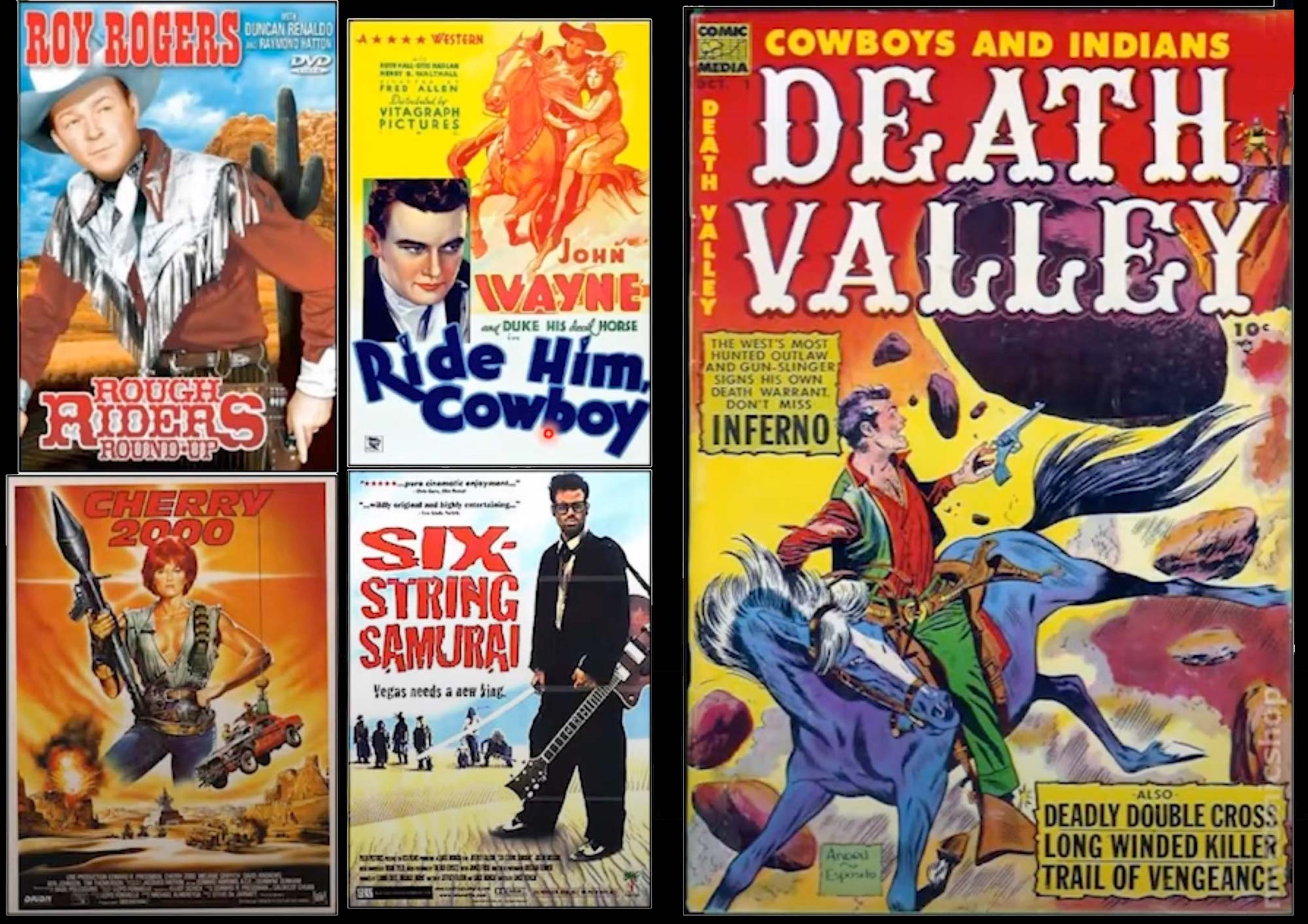
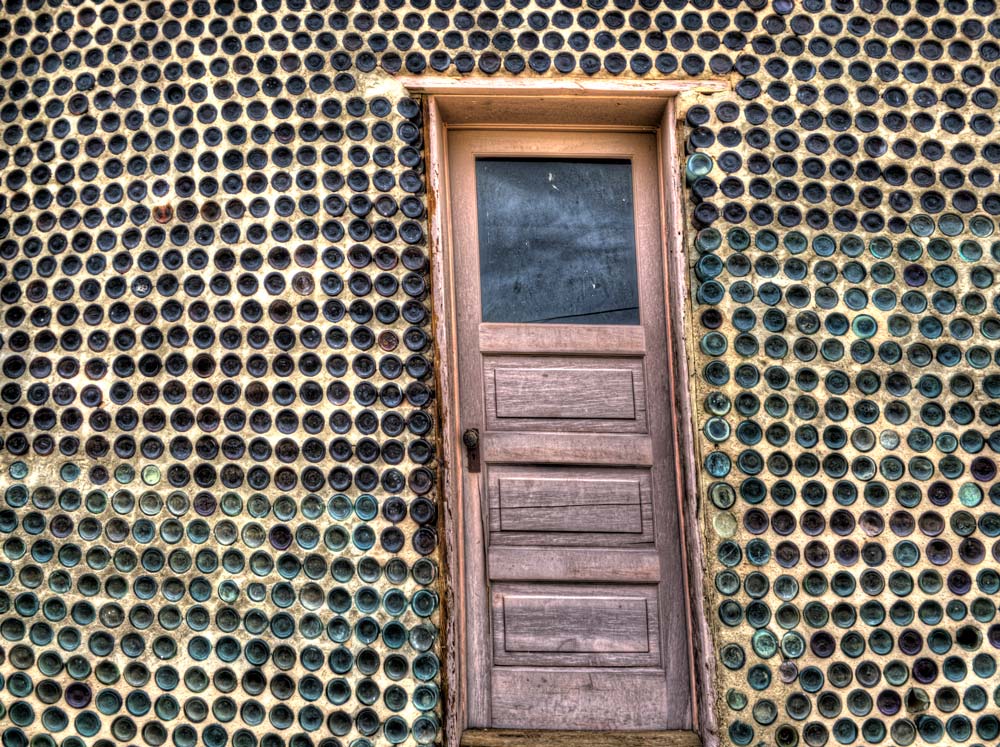
From the 1920s onward, Rhyolite became a backdrop for films and travelogues. Paramount’s Famous Players‑Lasky company restored Tom Kelly’s Bottle House in 1924–25 for the silent film The Air Mail and then turned it over to local custodians. Later Westerns and genre films, including early John Wayne and Roy Rogers pictures and, much later, productions like Cherry 2000, used the depot, bank, and ruins as atmospheric sets.
By mid‑century, guidebooks and magazines regularly featured Rhyolite as one of Nevada’s premier ghost towns, and visiting its ruins became an established side trip for travelers in Death Valley country. The Bureau of Land Management eventually assumed responsibility for much of the site, installing interpretive signs and recognizing structures like the Cook Bank and Bottle House as among the most photographed ghost‑town remains in the West.
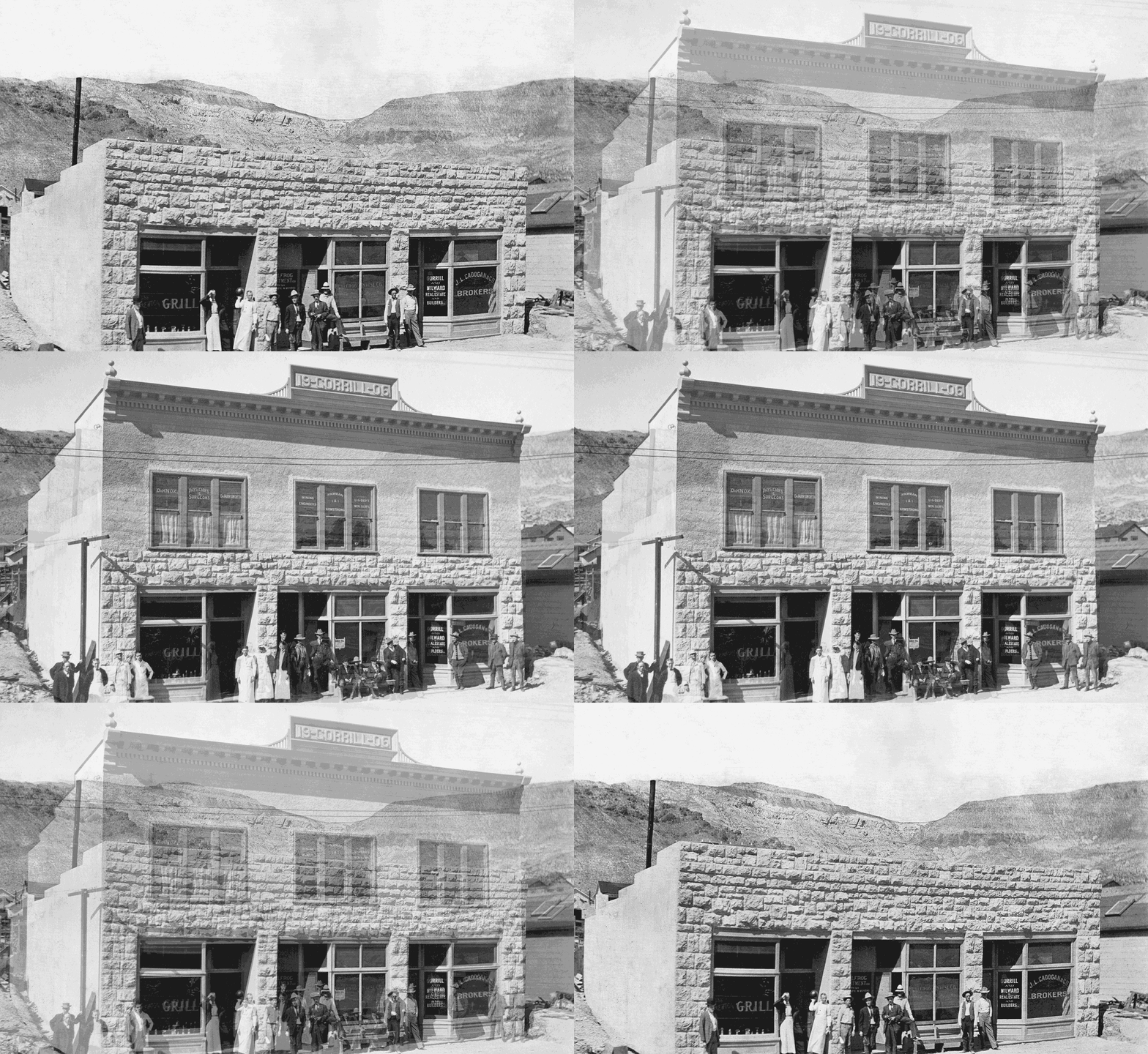
The John S. Cook and Co. Bank: 1909 and c. 1920
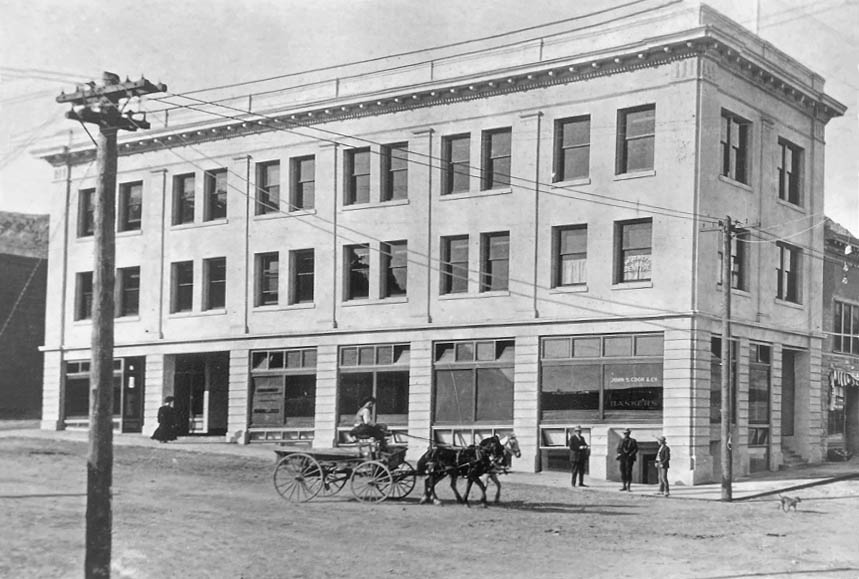
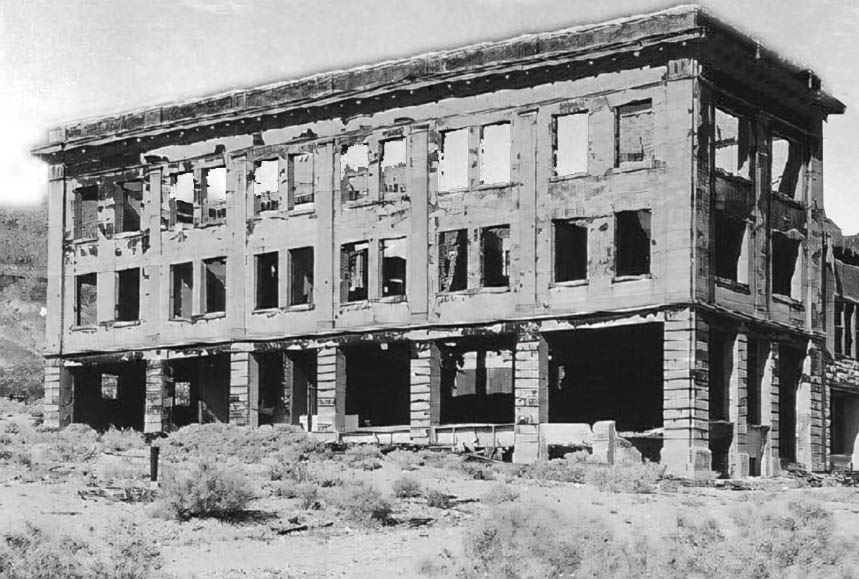
Drag the slider left or right to view the two different photographs of the bank. (1909 NHS; c. 1920 UNR)
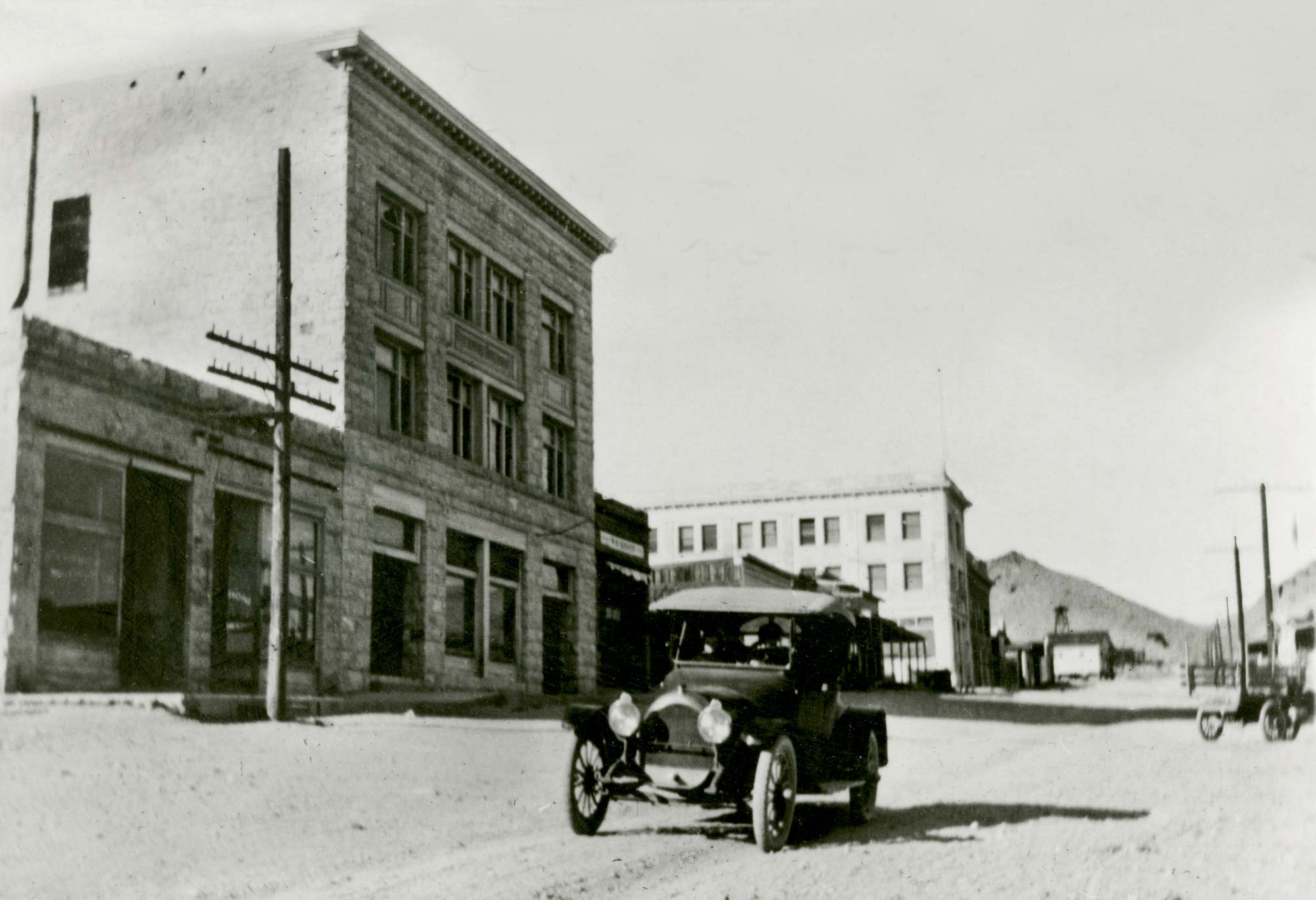
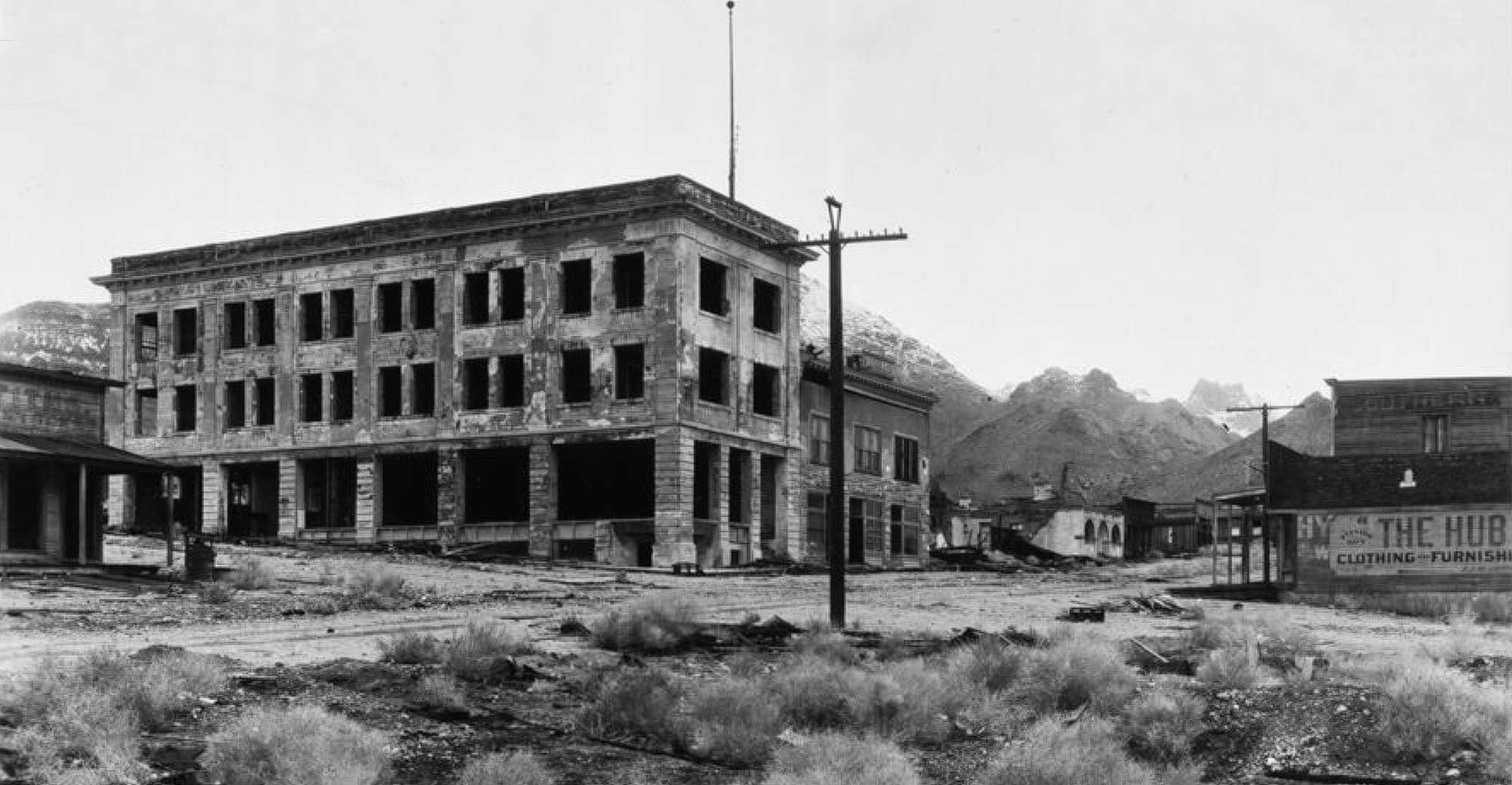
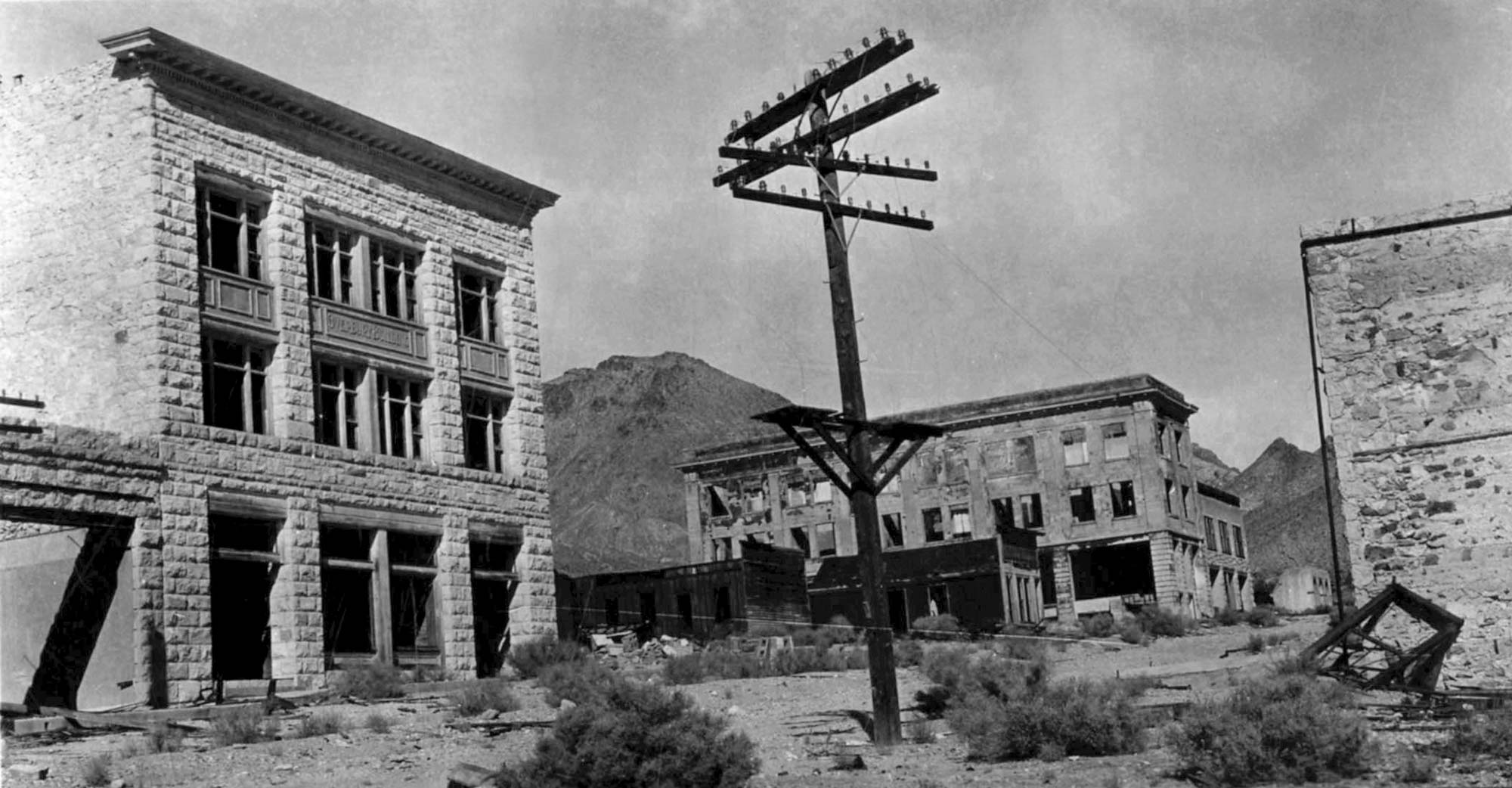
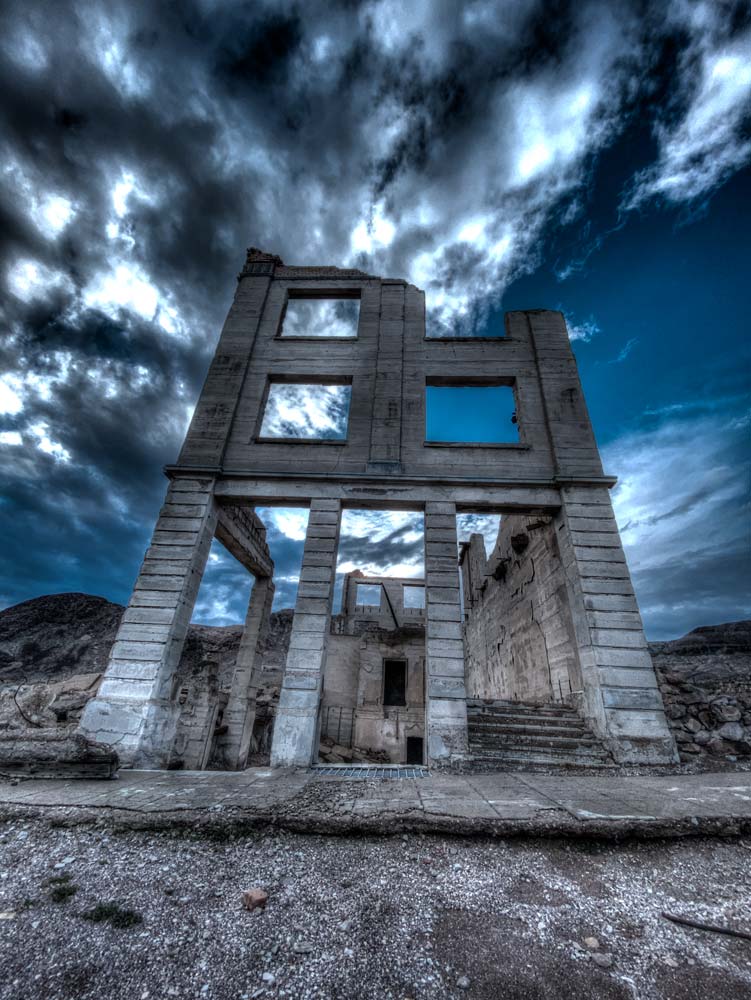
The John S. Cook bank building, also known as the First National Bank of Rhyolite, was completed in January of 1908 at a cost of $60,000 ($2,000,500 in 2024). Located at the corner of Golden and Broadway, no expense was spared in its décor. The doors of its vault each weighted four tons, and the safe inside weight 6600 pounds. It was large enough to hold $1 million in coin. In 1910, after the closure of the bank, anything of value that could be removed—everything from carpets to safety deposit boxes and furniture—was sold at auction for $2,000.
Scholars and local historians have used Rhyolite as a case study in western boosterism, mining finance, and the cultural meaning of ghost towns. Harold and Lucile Weight’s mid‑century narrative Rhyolite: Death Valley’s Ghost City of Golden Dreams emphasized the dramatic arc from frenetic boom to near‑instantaneous bust and highlighted colorful figures such as Shorty Harris, Ed Cross, and Senator William M. Stewart.
William Morris Stewart (1827–1909) was one of Nevada’s first U.S. senators, serving two long stretches in the Senate: 1864/65–1875 and 1887–1905. Born in New York, Stewart moved west during the Gold Rush, made a large fortune as a mining lawyer on the Comstock Lode in Virginia City, and became deeply involved in Nevada politics and statehood. He played a key role in Nevada’s 1863 constitutional convention and then entered the U.S. Senate as soon as Nevada achieved statehood, earning the nickname “the silver senator” for his advocacy of mining and silver interests.
In the Senate he drafted major federal mining legislation, including the Mining Law of 1866 which continues to impact the state today. He is widely credited with being a principal author of the Fifteenth Amendment to the U.S. Constitution, which prohibits denying the right to vote on the basis of race, color, or previous condition of servitude.
Unfortunately, his reputation combined genuine legislative impact with accusations of conflicts of interest, jury tampering, and using political influence to advance private mining schemes.
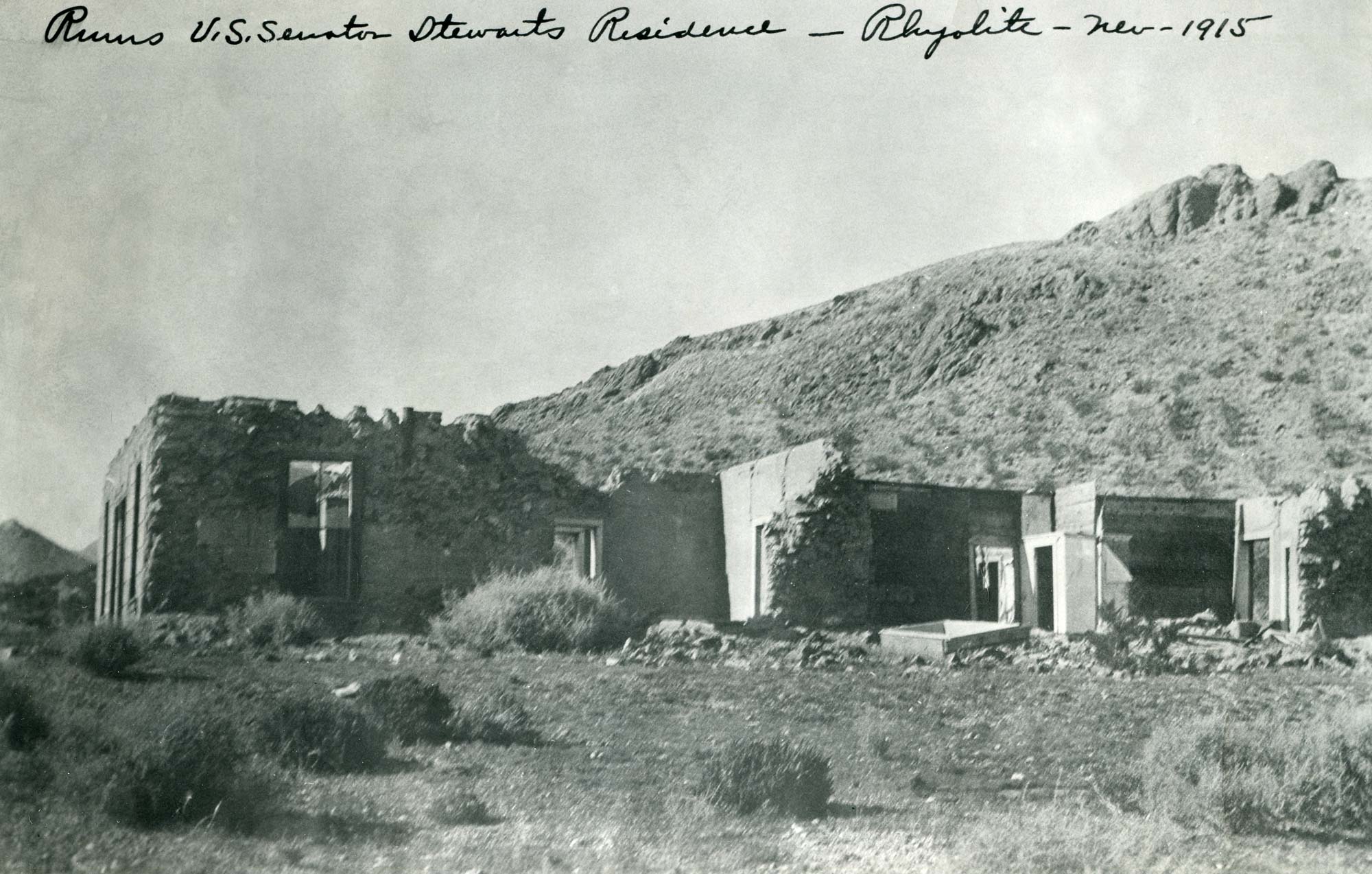
After leaving the Senate in the early 1900s, Stewart moved to the Bullfrog district and settled in Rhyolite around 1905, when he was about eighty years old, to participate in that new mining boom. He built an impressive ten‑room home and law office complex—described as among the finest buildings in town—signaling both his wealth and his ongoing role as a mining attorney and promoter in the district. The ruins of his home may be noted in the VR tour.
Later writers placed Rhyolite within broader debates about the American West. Patricia Limerick interprets the site as a “landscape of failure,” arguing that its ruins force recognition of the West as a region shaped by repeated cycles of overreach, environmental constraint, and decline, rather than unbroken progress.
At the same time, the town’s afterlife has generated its own folklore—such as the apocryphal grave of Mona Bell—illustrating how ghost towns invite imaginative re‑telling and selective memory. The story of Mona Bell may be noted here in the VR tour.
Present‑day Rhyolite
Today Rhyolite is an open‑air ruin visited by thousands each year, often as part of trips to Death Valley National Park; access is free, and the site is managed primarily by the Bureau of Land Management with support from local preservation groups. Visitors can see:
• The façade and walls of the Cook Bank building.
• The concrete schoolhouse shell on the hill.
• The stone LVT depot, used for various purposes after rail service ended.
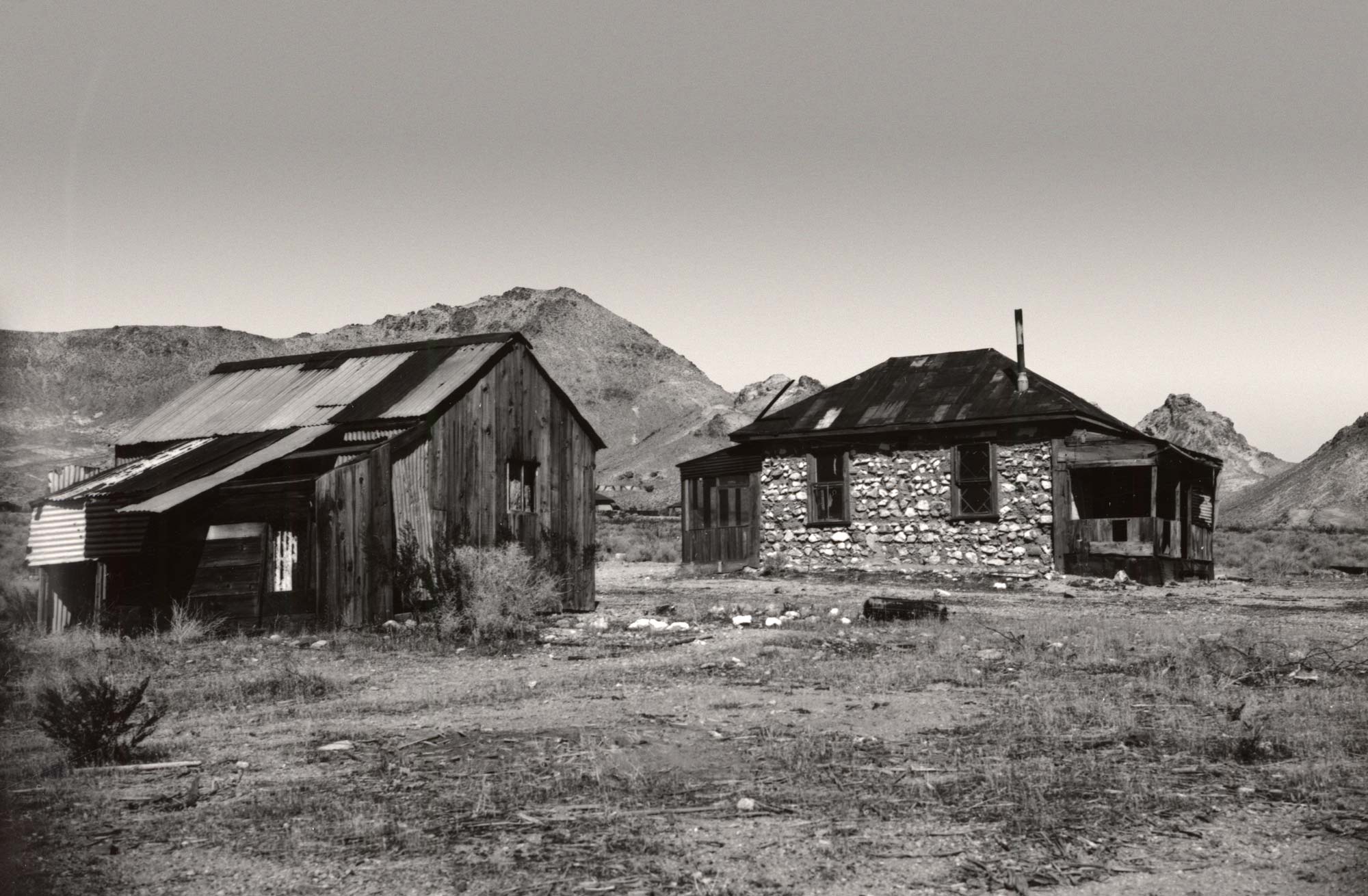
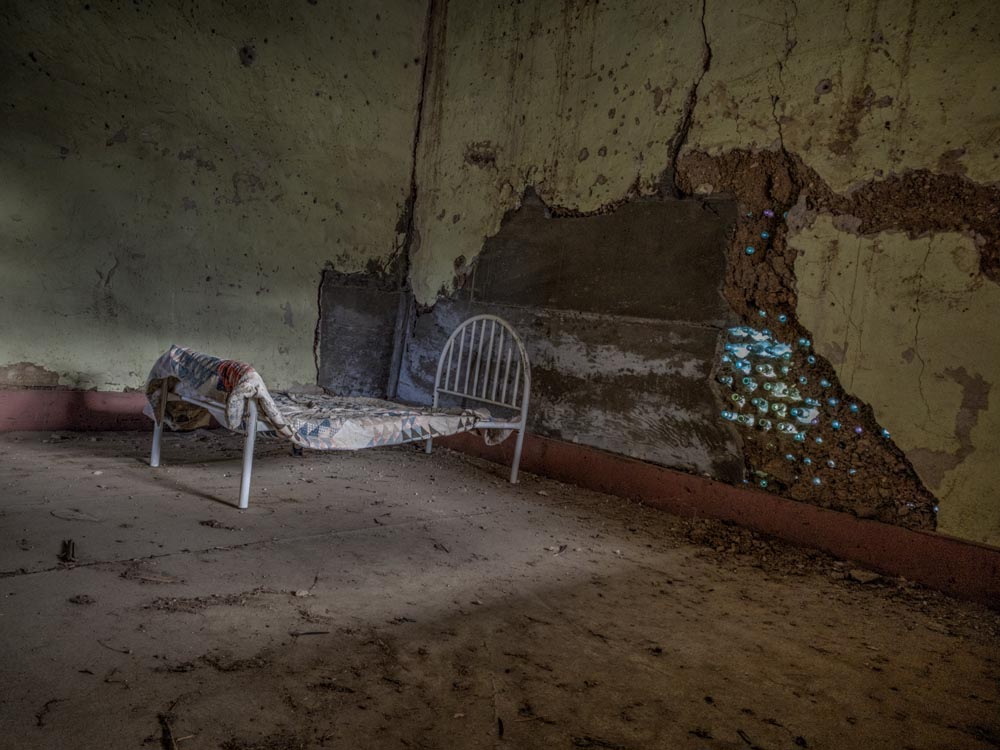
• Tom Kelly’s Bottle House, restored multiple times.
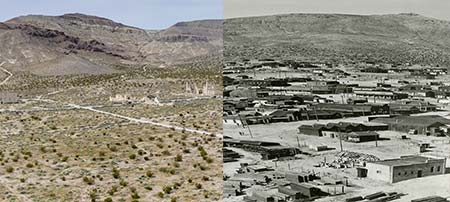
Nearby, contemporary mining operations have again exploited gold in the Bullfrog District using modern techniques, while leaving the historic townsite largely intact as a heritage and tourism resource. In this sense Rhyolite continues to sit at the intersection of extraction, memory, and tourism—its concrete ruins bearing witness to both the ambitions and limits of the early‑20th‑century mining frontier.
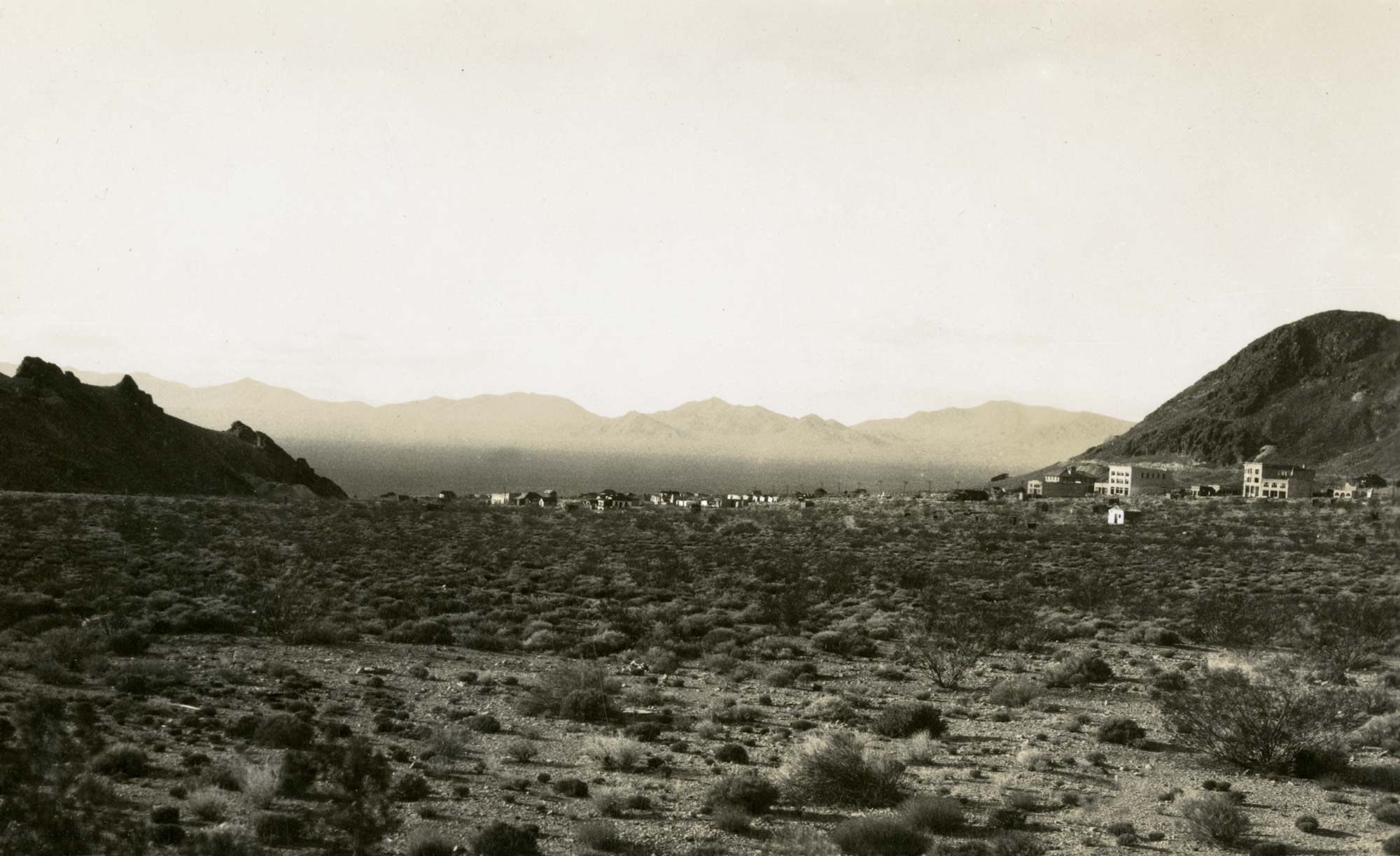
Gallery: The Early Days of Rhyolite Ghost Town
Double-click for full screen view.
Credits
California Historical Society (CHS)
Calisphere: https://calisphere.org/
Central Nevada Historical Society (CNHS)
Central Nevada Museum (CNM)
Eastern California Museum (ECM)
Library of Congress (LOC)
Nevada Historical Society (NHS)
Nye County Historical Society (NCHS)
Online Archive of California (OAC)
Special Collections, University of Nevada, Reno. (UNR)
UC Berkeley, Bancroft Library (UCB)
University of Nevada, Las Vegas Libraries Special Collections and Archives (UNLV)
University of Southern California. Libraries (USC)
Utah State University, Merrill-Cazier Library, Special Collections & Archives (USU)
Some of the text boxes within the VR panoramas were adapted from the Bureau of Land Management information panels on site.
The archival images were processed to remove post-capture image defects, e.g. dust, water spots, scratches, etc. on the negative or on the print. Any further processing is indicated in the caption underneath the expanded photograph. Images are credited to the photographer and the institution holding the source print or negative, when known. The original images, with their defects intact, may be found at these repositories.
Parts of this page were drafted using AI technology; all content has been edited by the author.
We are especially grateful for the help and encouragement we received from Rhyolite’s BLM site custodian, Karl Olson.
Gallery: Rhyolite Today
Double-click for full screen view.
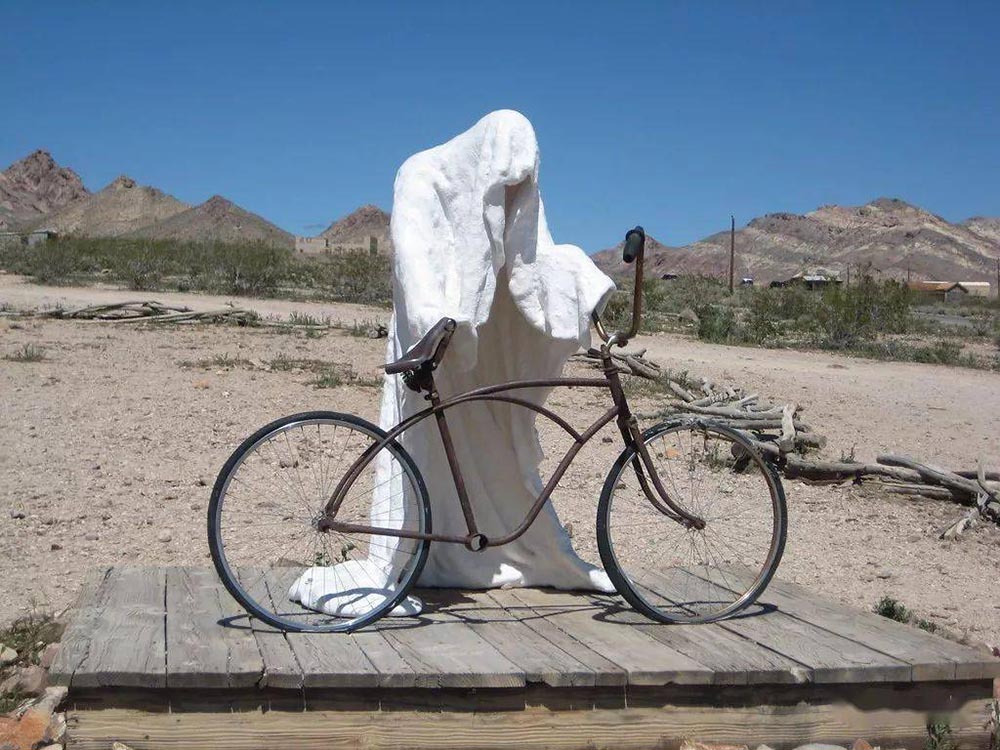
Just beyond the edge of the ghostly walls of Rhyolite, which itself totters on the edge of Nevada and California, sits the Goldwell Open Air Museum. The centerpiece of this outdoor sculpture garden is The Last Supper, created by Belgian artist Albert Szukalski (1945 – 2000) in 1984. Other artworks created by some of his Belgian colleagues stand nearby in perfect harmony with the desert environment.
Looking for a meal in Beatty after visiting the Rhyolite ruins? A colorful cast of characters—and good food—await you at the Beatty VFW Post.


No Comments